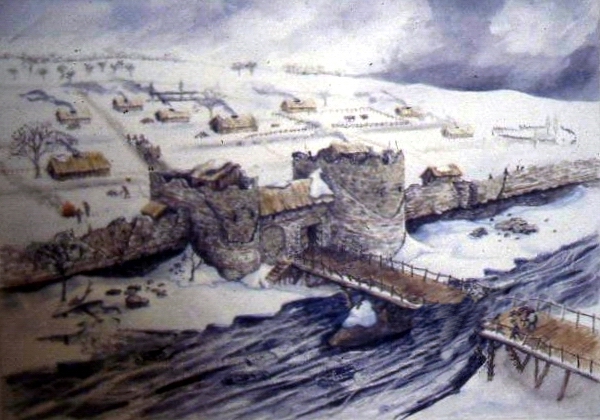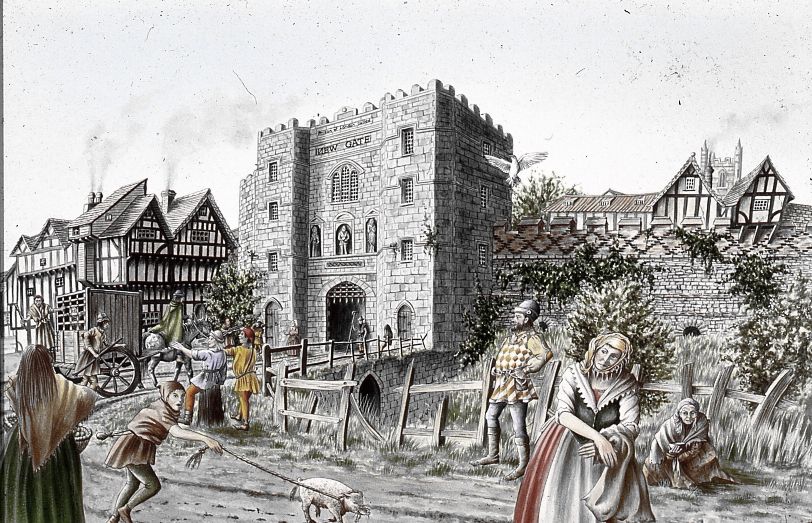
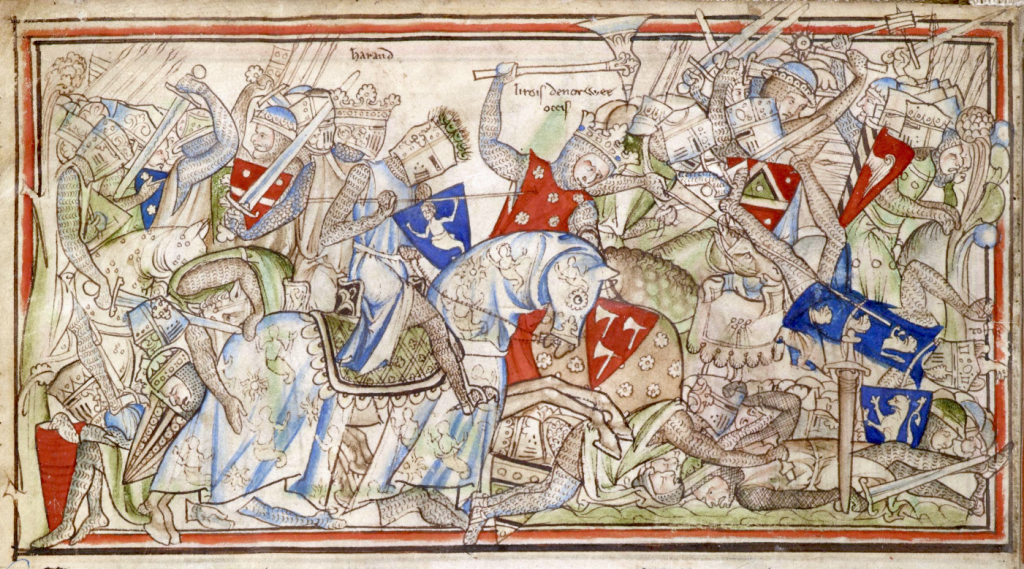
Following the Viking victory at the Battle of Fulford Bridge, York, on September 20th the Viking army camped at Stamford Bridge.This was on the River Derwent. Here they intended to rest and celebrate the defeat of the English Earls of Mercia and Northumbria. They were unaware that King Harold I of England had left London for the north on September 18th. (See my post on the Battle of Fulford Bridge here.)
Five days later, on September 25th, Harold’s army surprised the Vikings by marching towards the bridge over the Derwent. It is said that Harold’s army marched 185 miles from London in 4 days which is a scarcely believable 46 miles a day. But if they left on 18th and battle was 25th that’s as much as 7 days. This still means 26 miles a day which is still very quick for an army carrying weapons and armour. So no wonder the Vikings were surprised!
According to tradition, a large Viking held the English army as he blocked the narrow wooden bridge across the river. No one could defeat him. But an enterprising English soldier found a boat, floated under the bridge and killed the Viking by pushing his spear through the bridge timbers, killing the Viking.
According to the 13th Century Icelandic historian, Snorri Sturlson, the fight began only after a rider approached the Viking Army. He offered Harold’s Brother, Tostig back his Earldom if he would withdraw from the fight. Tostig asked what would be in it for his ally, the King of Norway? The reply was ‘Seven feet of English ground, as he is taller than other men’. The offer was refused. It was said that the rider was King Harold himself.
Once over the Bridge, the English found the Vikings had formed a defensive formation. However, they had left their armour behind at their boats. The battle lasted all day but ended with the slaughter of most of the Vikings. King Harold Hardrada, one of the greatest warriors of his age and Tostig were both killed. The extent of the slaughter is shown by the fact that of the 300 boats of the Viking army, only 24 returned to Norway.
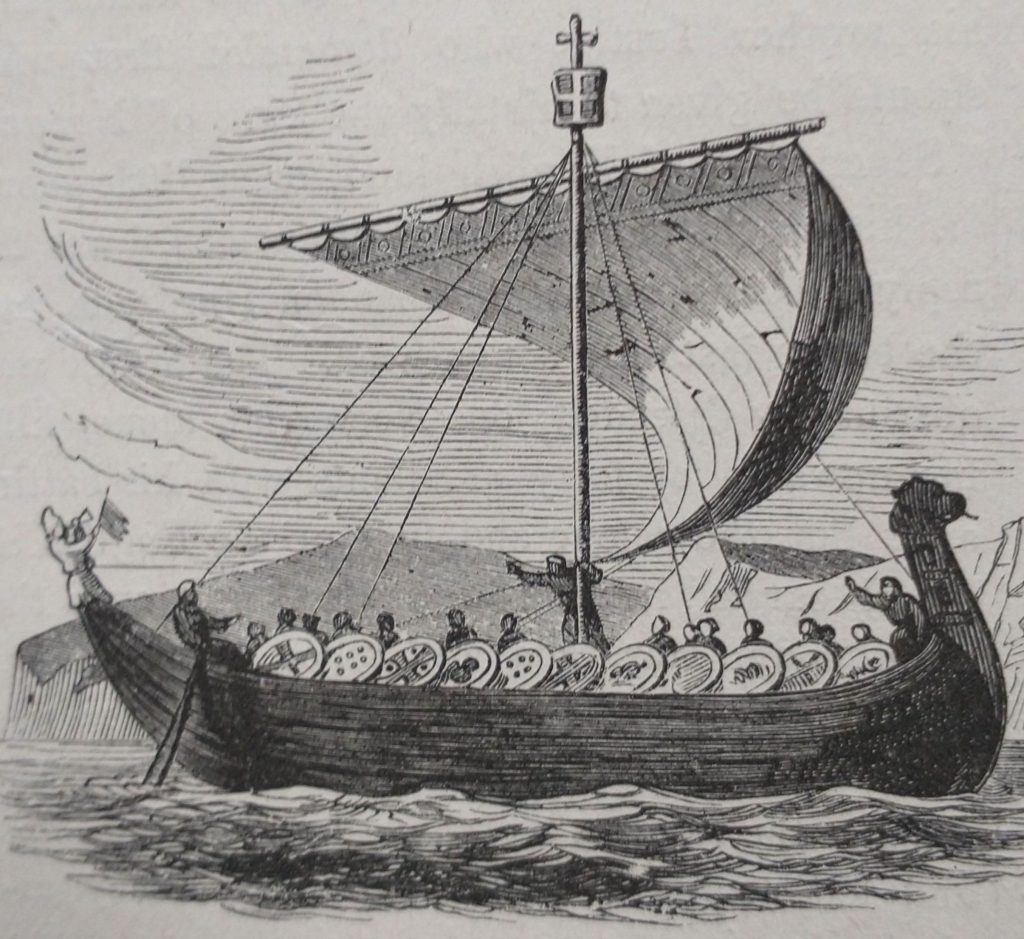
A stunning victory for Harold I. But, the English had suffered terrible losses at the battle of Fulford. Harold had also left the South Coast unguarded And three days later, on September 28th, William, Duke of Normandy landed with his army at Pevensey. 256 miles south.
First published in 2024 revised 2025