This was 5 years after his death. It is now celebrated around the world, making clear the importance of Robert Burns. Burns himself would have been astonished at the spread of Burn’s Night. He was modest about his attainments, saying, in his introduction to the Commonplace Book:
‘As he was but little indebted to scholastic education, and bred at a plough-tail, his performance must be strongly tinctured with his unpolished rustic way of life. ‘
Fair fa’ your honest, sonsie face, Great Chieftain o’ the Puddin-race! Aboon them a’ ye tak your place, Painch, tripe, or thairm: Weel are ye wordy of a grace As lang ‘s my arm.
The groaning trencher there ye fill, Your hurdies like a distant hill, Your pin wad help to mend a mill In time o’ need, While thro’ your pores the dews distil Like amber bead.
His knife see Rustic-labour dight, An’ cut ye up wi’ ready slight, Trenching your gushing entrails bright, Like onie ditch; And then, O what a glorious sight, Warm-reekin, rich!
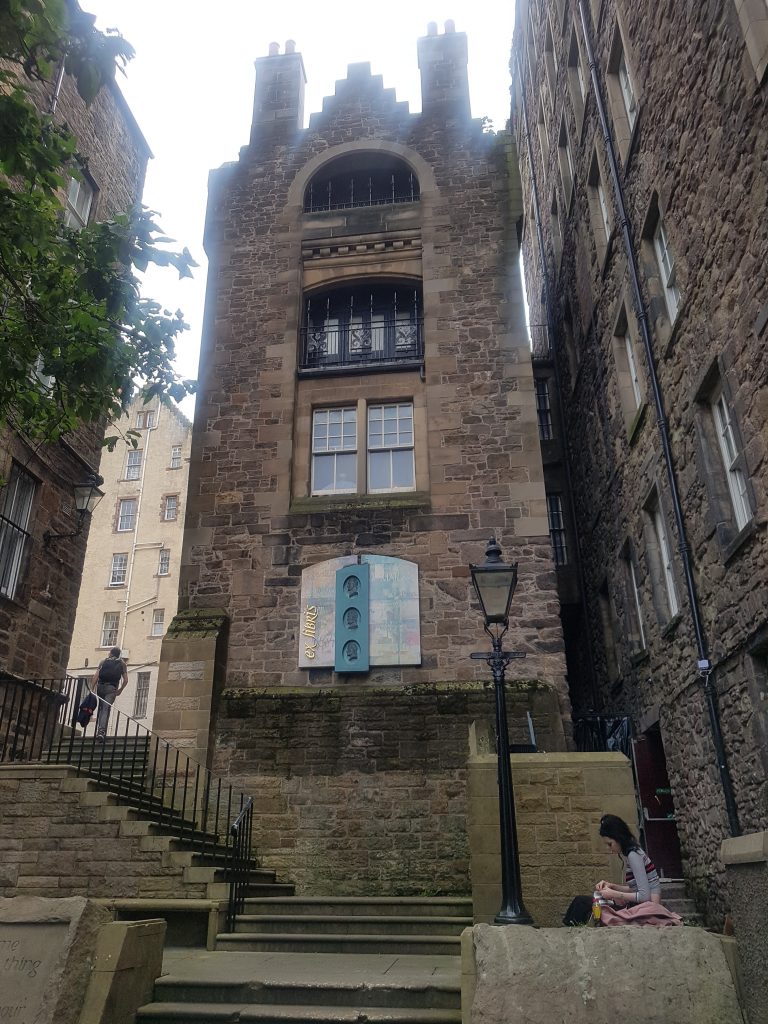
Often bypassed by the tourists on a visit to the wonderful City of Edinburgh is the Writer’s Museum. It is in one of those remarkable Tower houses which seem unique to the High Street in Edinburgh. Inside, it gives a great introduction to the great writers of Scotland.
‘Is it not strange’ wrote philosopher David Hume in 1757 ‘that a time when we have lost our Princes, our Parliament, Independent Government …..that we shou’d really be the people most distinguish’d for literature in Europe?’ (source: Museum display panel)
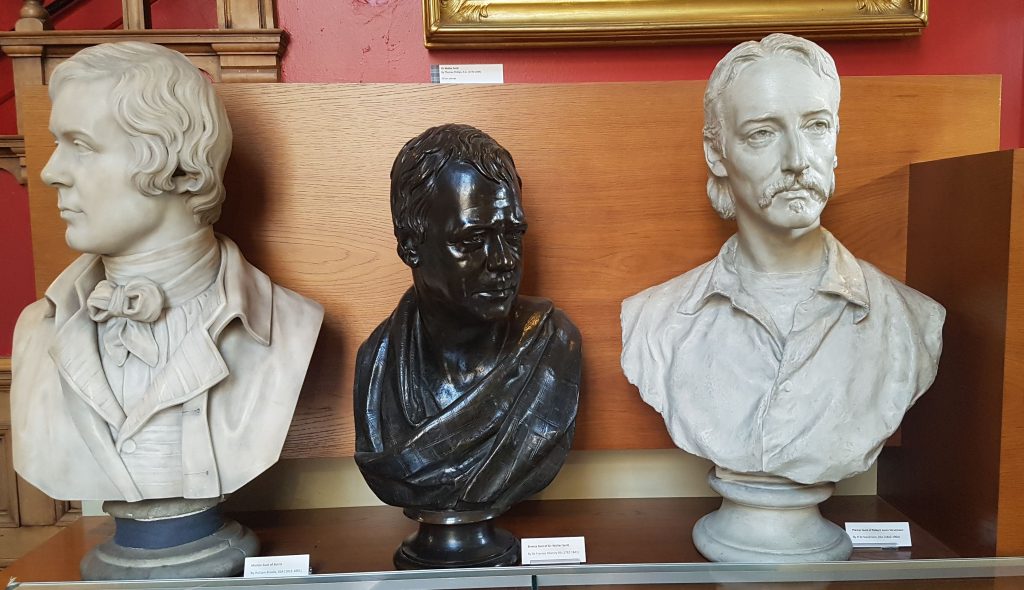
Edinburgh Writer’s Museum Burns, Scott, Stevenson.
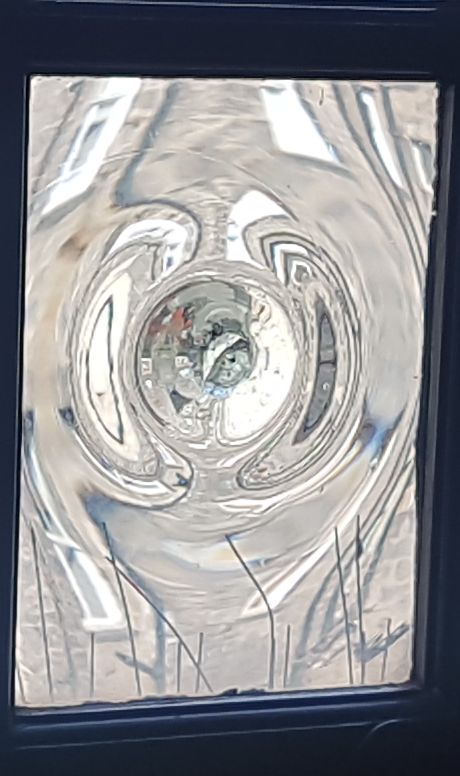
A Visual for Burn’s Night ‘Window in the Writer’s Museum, Edinburgh’ Photo by K Flude
1784 – The death in Edinburgh of Alexander Webster, a writer and church minister who is best remembered for the country’s first census. The first UK census was in 1801.
1817 – The Scotsman newspaper publishes its first edition in Edinburgh.
2012 – First Minister Alex Salmond launches a consultation on the SNP Government’s proposals for a referendum on Scottish independence. on the question “Should Scotland be an independent country?”. The voters answered “No” 55.3% and 44.7% voting in favour. (for more on Scottish Independence, see my post here.)
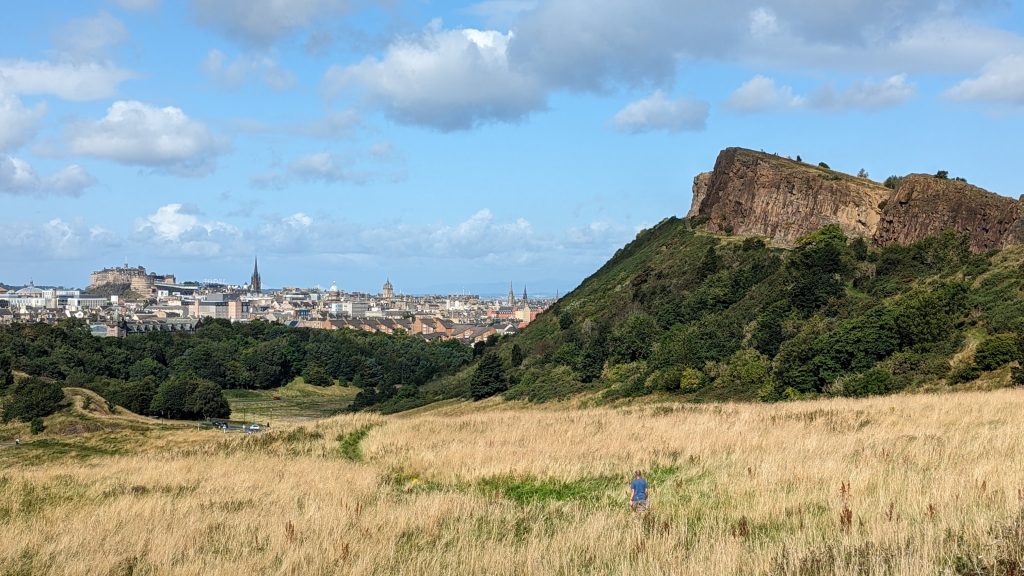
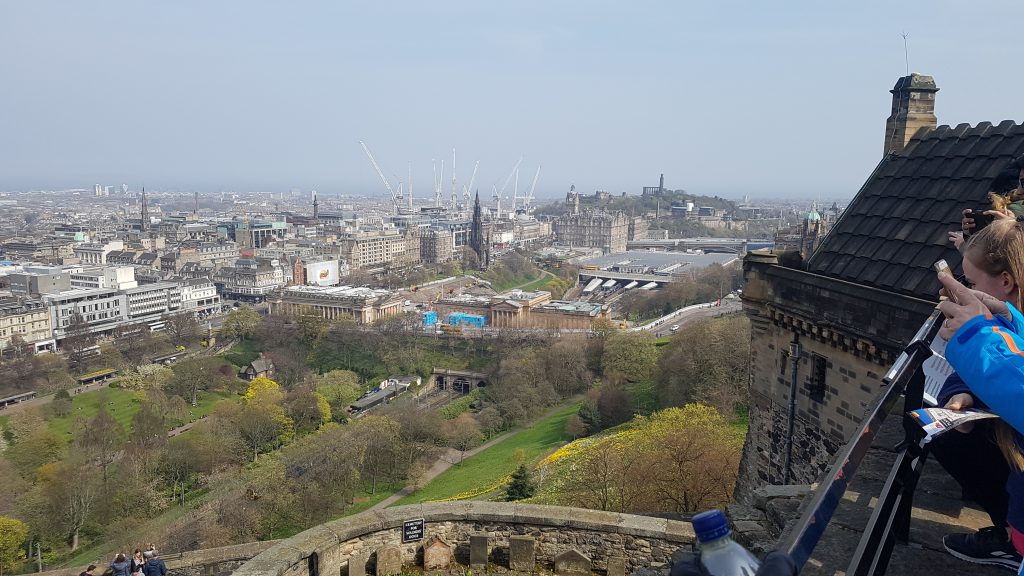
Edinburgh from Arthur’s Seat. Castle to the left, St Giles the ’rounded’ spire in the middle, and Salisbury Crags to the right
Strange Case of Dr Jekyll and Mr Hyde by Robert Louis Stevenson
This is my select booklist for Edinburgh, one of my favourite towns. Strangely, heading it up is a book based in London, and written in Bournemouth. However, Stephenson’s Strange Case of Dr Jekyll and Mr Hyde is a very Edinburgh book but published in London on January 9th 1886.
What makes it fit for an Edinburgh booklist? Firstly, Edinburgh is the best place for a science-based Gothic Horror Novella. A City made for Ghost Tours, but with a scientific legacy arguably second to none. One of the inspirations for the book was the story of Deacon Brodie. He was a cabinetmaker who rose to be Deacon (president) of the craft of cabinetmaking. Therefore, he had wealthy clients and was impeccably respectable. When he went to his clients houses, or made them locked cabinets, he would copy the locks using wax moulds. Then he and his team would rob the house. He hid a cache of keys underneath Salisbury Crags which you can see above.
To cut a long story short, he made an attempt on robbing the Excise Office in Canongate, Edinburgh, on March 5th 1788. The heist failed, one of the robbers turned King’s Evidence. So Brodie fled to one of his mistresses in London, then to the Continent. But he was relentlessly pursued and captured in Amsterdam. He was brought back to face trial, found guilty, and hanged on a new scaffold, which he may just have had a part in designing.
Stevenson had cabinets made by William Brodie and as a young man produced a play about him. He was intrigued by the idea of a wealthy man having a dual life. The idea itself, seems obvious but the expression a ‘Jekyll and Hyde’ character is still often used to describe someone with two opposing sides to their characters. The idea of duality provides many ways to look at the book. Edinburgh itself was a duality. There was the old, filthy, higgledy-piggledy Old Town on top of the Volcanic Ridge, with the spacious New Town in the Valley below, with modern wealthy houses providing healthy homes for the rich. The idea of Two Cities, of the rich and the poor; the good and the evil; rationality and sensuality; hetero and homosexual fits well with Victorian Britain, but perhaps best into Victorian Edinburgh, the City of Burke and Hare. These famous Edinburgh serial killers were working for one of Europe’s greatest medical centres, where debate about Darwinism, and the powers of the brain were hotly debated in a City with a strong Presbyterian background.
In Bournemouth, Stevenson befriended the former Reverend Walter Jekyll, younger brother of gardener Gertrude Jekyll. He was probably homosexual and the author borrowed the name for the rational part of Jekyll and Hyde. At a time when to be gay was a crime, most gay people had to live a Jekyll and Hyde existence. In fact, Sodomy was a capital offence in Scotland until the year after the publication of the ‘Strange Case of Dr. Jekyll and Mr. Hyde.
Strangely, in a book list I would encourage you to watch the 1920 silent film starring John Barrymore to enjoy its ghastly atmosphere. You can watch it for free on YouTube here.
Ian Rankin’s Rebus
Ian Rankin is a typographical author of the highest rank. Every story brings Edinburgh, its people and its history to life. And yet set in a very readable crime fiction envelope. The Rebus I chose was ‘Set in Darkness‘ because it has the Scottish Parliament at its heart. It begins with a body found in Queensbury House, which is being preserved and incorporated into the new Scottish Parliament buildings. Please read my post on the book (link below).
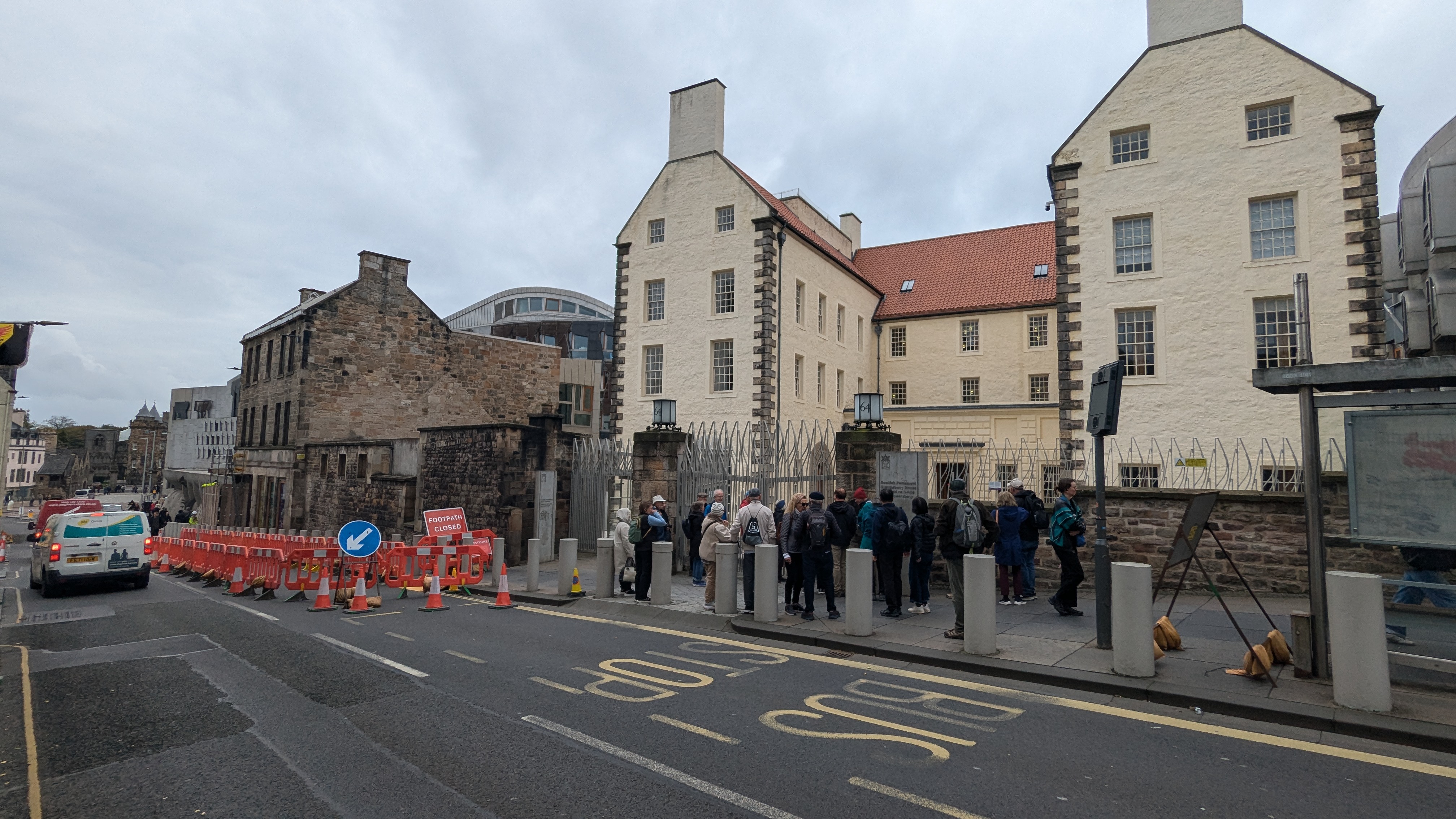
Queensberry House to the right, with the Scottish Parliament in the background. Royal Mile, Cannongate in the foreground. (Photo: K. Flude)
Recently published is ‘Edinburgh a New History’ by Alistair Moffat. This is an excellent summary of Edinburgh’s History. He has written a large number of books about Scotland. I particularly liked ‘Reivers‘ which is a great book about the border raiders, both North English and Scottish who raided the borderlands between Edinburgh and York during the 13th to the 17th Centuries. They inspired the young Walter Scott, who collected Reivers ballads before inventing the Historical Novel.
As to Walter Scot, our Blue Badge Guide for Edinburgh, considers his long descriptive passages unreadable. But I’m not so convinced, having read Ivanhoe and Rob Roy as a boy. But if I were to recommend a Walter Scot, it would be Heart of Midlothian as it is set in Edinburgh and deals with crime, poverty, urban riots and other manifestations of life in Edinburgh in the 18th Century.
Midlothian is the country around Edinburgh, named after the legendary Celtic King Loth. The Heart of Midlothian, is Edinburgh or more precisely, a heart marked out in the cobbles. It is located outside of St Giles, on the Royal Mile, where the Tollboth (townhall and prison) and execution site for the City used to be. To this day, Edinburghers (or more correctly, Dunediners) are supposed to spit on the heart for good luck.
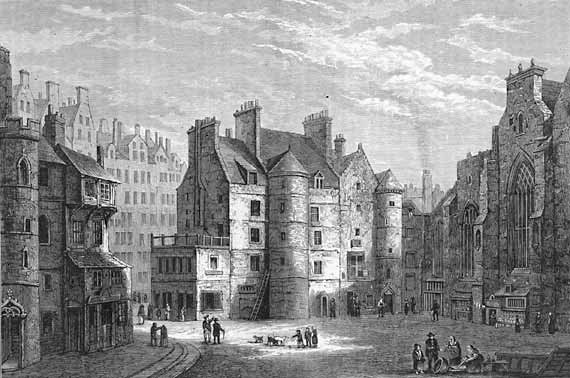
Old Print of the Tollbooth with St Giles to the right of the print.
It is hard to exaggerate the importance of Walter Scot. Byron said he had read his books 50 times, and never travelled without them. Goethe said ‘he was a genius who does not have an equal.’ Pushkin said his influence was ‘felt in every province of the literature of his age. Balzac described him as ‘one of the noblest geniuses of modern times’. Jane Austen and Dickens loved his books. The point is he invented the Historical Novel, and for the first time, as Carlyle wrote, he showed that history was made by people ‘with colour in their checks and passion in their stomachs.’ The only other person I can think of who was held in such universal regard was Tolstoy. There is also sense in which Scott invented our modern idea of Scotland, with its kilts and bagpipes.
The Scottish Enlightenment
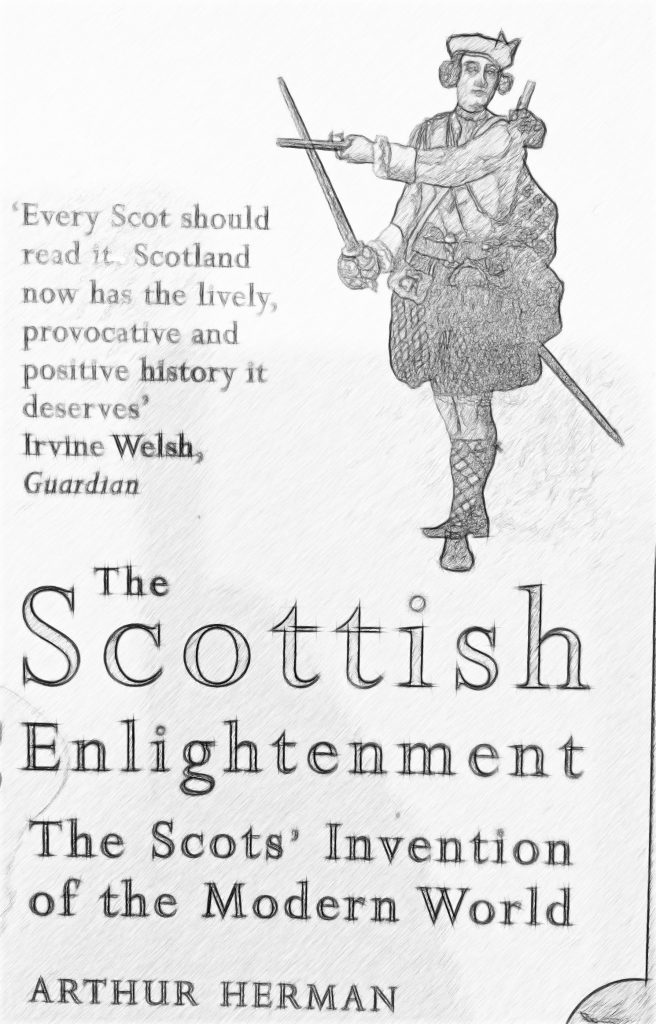
A walk through the centre of Edinburgh has so many statues of people who made the modern world it is astonishing. So you should read: ‘The Scottish Enlightenment – the Scots Invention of the modern world‘ by Arthur Herman.
Burke and Hare: The True Story Behind the Infamous Edinburgh Murderers by Owen Dudley-Edwards
The story of Burke and Hare is well known, but it shows how important Edinburgh was as a medical centre in the early 19th Century. Bodies were shipped to Edinburgh from the London docks, such was the demand for bodies for anatomy teaching. Arthur Conan Doyle got his medical training here from a man called Joseph Bell, whose logical mind was the model for Sherlock Holmes.
The Prime of Miss Jean Brodie
My last choice is Murial Spark’s The Prime of Miss Jean Brodie set in a school in Edinburgh where the teacher singles out 6 of her pupils for special education. She wants to give them a cultured outlook in life which includes her own fascistic views. Made into a wonderful film starring Maggie Smith, but also a great book. It also, in a strange way, reinforces the huge legacy of the Scottish Education system. It is said that the Reformation brought to the Scots the idea that everyone should be educated enough to read the Bible in their own language. But it seems to me the Scots had a particular understanding of the importance of Education before the Reformation. St Andrews University was founded in 1410, Glasgow in 1410, Aberdeen in 1495 and Edinburgh in 1510.
Of course, you should read some poetry by Burns, and I would begin with Tam O’Shanter the story of Tam, Maggie his horse and Nannie, the witch with the short skirt (Cutty Sark). The version above (see link) is read over a comic novel of the poem. But if you prefer the words, this is the one I read for my groups where I ruin the Scots dialect, and disgrace myself, but oh how I enjoy it! www.poetryfoundation.org tam-o-shanter
Queensberry House to the right, home of the The Queensberry House Cannibal. The Scottish Parliament in the background. Royal Mile, Cannongate in the foreground. (Photo: K. Flude)
Ian Rankin’s Edinburgh
One of my favourite books on Edinburgh is by Ian Rankin. It is one of the Inspector Rebus series. What makes Rankin a great crime writer is how the author makes Edinburgh central to the story. It adds realism to his stories. As you read the stories you enjoy learning about Edinburgh, its culture, history, people, streets and topography. And get insights into Edinburgh’s moods.
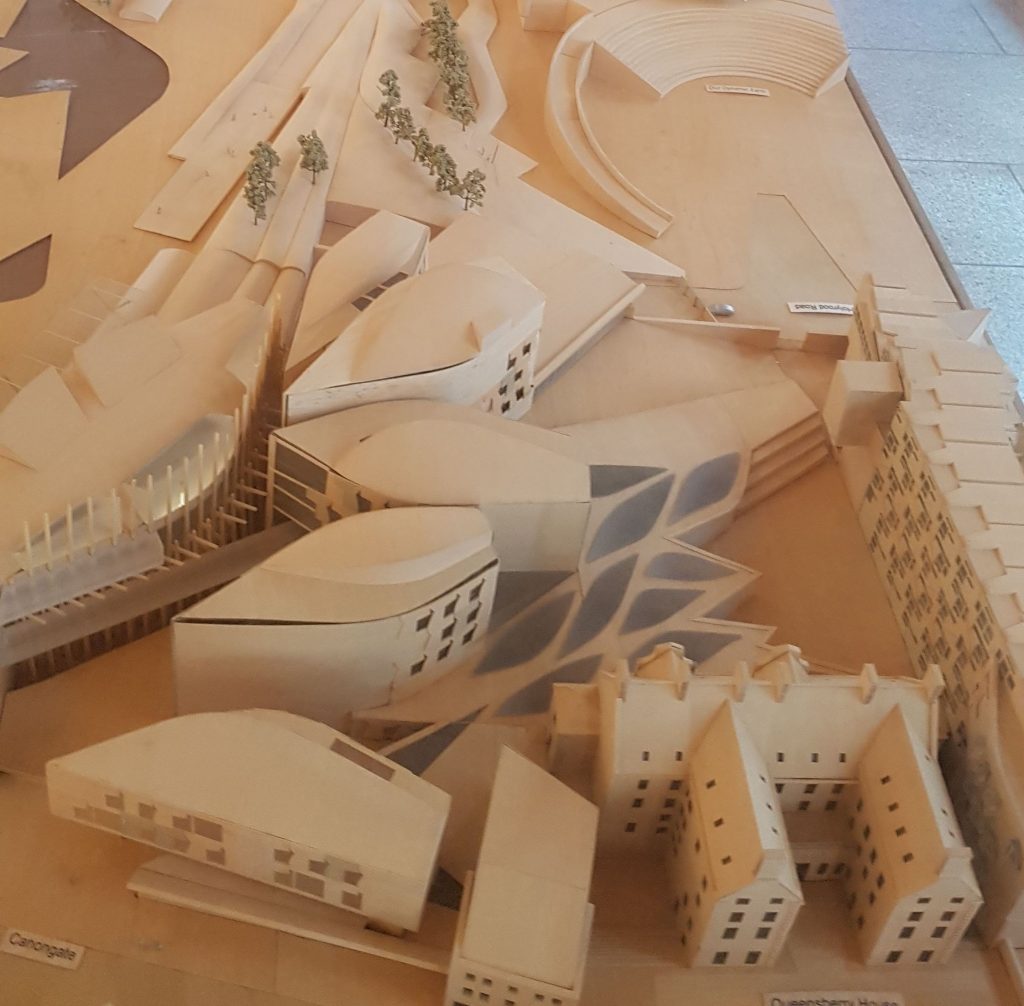
Model of the Scottish Parliament, with Queensberry House in the bottom right hand corner.
I haven’t read all the Rebus books but the one I want to feature is ‘Set in Darkness’ published in 2000. It is set in the period immediately after the success of the Scottish Referendum to set up a Scottish Parliament. The story also takes us back to 1979 when the first Scottish Referendum ‘failed’.
The Queensberry House Cannibal
The book begins with a body found in Queensbury House, which is being preserved and incorporated into the new Scottish Parliament buildings.
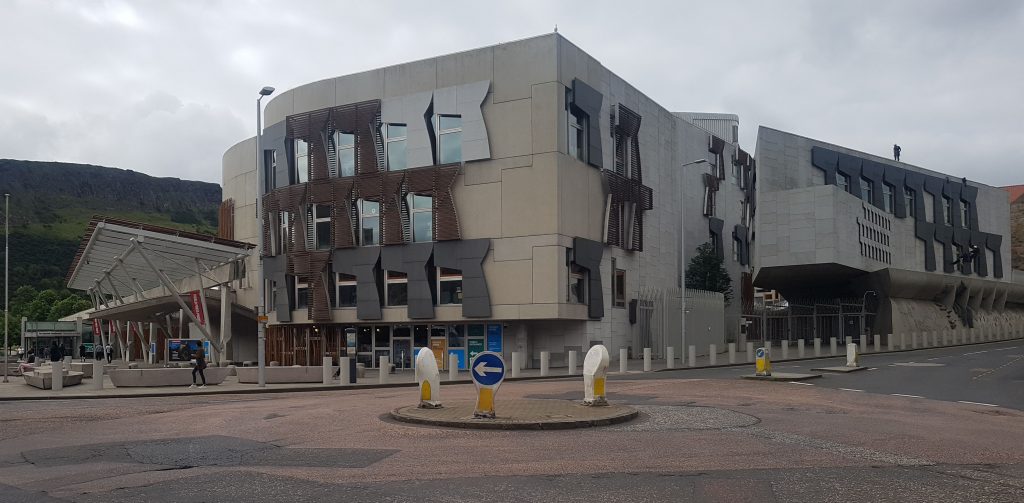
Scottish Parliament Building (photo by the author)
This setting was suggested by the well-known tale of the Queensberry House Cannibal; James Douglas the 3rd Marquess of Queensberry and, for a time, the Earl of Drumlanrig. The tale begins on the day, in 1707, that the Scottish Parliament agreed to disband itself. The Parliamentarians voted for an Act of Union with the United Kingdom.
On that day, the young Lord was left alone in Queensbury House with no one to look after him, except a kitchen boy. James had mental issues, and when the adults came home, they discovered that he had eaten the kitchen boy by spit-roasting him. The ghost of the boy is said to haunt the house. Or so the story goes. It’s always treated as a true story, but there is a suspicion it was a black calumny on those who agreed to the end of the Scottish Parliament.
The Restoration of the Scottish Parliament 11th September 1997
So, as today is the anniversary of the day the Scots voted Yes to a restoration of its Parliament (11th September 1997), let’s have a look at the long history of devolution. We will take the story backwards.
The referendum asked the Scots two questions. The first was: did they support a separate Parliament for Scotland? The second. Should it have the power to vary levels of taxation? 74.3% voted yes to the Parliament, and 63.5% voted yes for powers of taxation. On the 1st July 1999 the Scottish Parliament was set up by the Blair Government. The new Parliament was elected by the Additional Member system of proportional representation. The country is split into regions, the regions into constituencies, and each constituency elects a member of the Scottish Parliament by first part the post system. Each region has a party list of additional potential members, and the seats are allocated between the parties to make the final result as proportion as possible. This is said to combine the advantages of constituency MPs, and PR.
The ‘Failed’ 1979 Referendum
But this wasn’t the first vote for a measure of independence. In 1979, the Scottish Act set up a referendum for a Scottish assembly. James Callaghan was the Prime Minister, and the act followed a Royal Commision on the Constitution. The Referendum was won with a majority of 52%, but an amendment to the Act had a stipulation that there had to be a vote of at least 40% of the registered electorate for the vote to succeed. It won only 32% of the 62% turnout so the Act failed. (if only Cameron had done something similar for the Brexit Referendum!).
So it would be another almost 20 years before the Scots got their own debating chamber.
1707 Act of Union
The Scots lost their Parliament on the 1st May 1707 when the Act of Union with England was enacted. The Scottish Parliament had been in existence since the early 13th Century. The Scots had no House of Commons, but its unicameral Parliament had representatives from the Three Estates: prelates representing the Church; Aristocrats representing the nobility, and Burgh Commissioners representing the Towns. Later, Shire Commissioners were added to represent the countryside.
The decision to disband the Parliament of Scotland was very controversial, and blamed on the self-interest of the Nobility against the wishes of the people. Scotland had lost out on the huge profits being made by the Empire by England, excluded as the Scots were by the Navigation Acts from trading freely within the British Empire. So the Scots set up their own Company of Scotland Trading to Africa and the Indies which invested in the disastrous Darién scheme,
The idea was to build a colony on the Isthmus of Panama. 80% of the participants in the settlement died, and the 20% of Scottish wealth which was invested in the scheme was lost. Many of the Scottish members of Parliament lost money in the Scheme, and compensation and bribery offered by the English encouraged the Parliamentarians to accept the advantages of free trade within the British Empire and to join the Westminster Parliament.
Joint Monarchies
In 1603, the Scottish and English monarchies joined in the person of James VI of Scotland who became James 1st of England on the death of his childless aunt, Queen Elizabeth 1. But the Scots kept their own Parliament and legal system. There were attempts to bring a closer Union, but these all failed until 1707.
England Overlording it?
From the early beginnings of Scottish existence as an independent nation, the English Monarchy claimed to be the feudal overlord of Scotland. Scotland was normally able to deny this until the reign of Edward I. After the battle of Bannockburn the Scottish made a declaration of their complete independence from England at Arbroath. It was sent to the Pope who accepted it. This helped the Scots defy England until 1603 when the two monarchies joined.
This was 5 years after his death. It is now celebrated around the world, making clear the importance of Robert Burns.
Burns himself would have been astonished at the spread of Burn’s Night. He was modest about his attainments, saying, in his introduction to the Commonplace Book:
‘As he was but little indebted to scholastic education, and bred at a plough-tail, his performance must be strongly tinctured with his unpolished rustic way of life. ‘
Fair fa’ your honest, sonsie face, Great Chieftain o’ the Puddin-race! Aboon them a’ ye tak your place, Painch, tripe, or thairm: Weel are ye wordy of a grace As lang ‘s my arm.
The groaning trencher there ye fill, Your hurdies like a distant hill, Your pin wad help to mend a mill In time o’ need, While thro’ your pores the dews distil Like amber bead.
His knife see Rustic-labour dight, An’ cut ye up wi’ ready slight, Trenching your gushing entrails bright, Like onie ditch; And then, O what a glorious sight, Warm-reekin, rich!
Often bypassed by the tourists on a visit to the wonderful City of Edinburgh is the Writer’s Museum. It is in one of those remarkable Tower houses which seem unique to the High Street in Edinburgh. Inside, it gives a great introduction to the great writers of Scotland.
‘Is it not strange’ wrote philosopher David Hume in 1757 ‘that a time when we have lost our Princes, our Parliament, Independent Government …..that we shou’d really be the people most distinguish’d for literature in Europe?’ (source: Museum display panel)
Edinburgh Writer’s Museum Burns, Scott, Stevenson.
A Visual for Burn’s Night ‘Window in the Writer’s Museum, Edinburgh’ Photo by K Flude
Writer’s Museum photo K. Flude
First published Jan 2023, republished Jan 2024, 2025
Edinburgh from Arthur’s Seat. Castle to the left, St Giles the ’rounded’ spire in the middle, and Salisbury Crags to the right
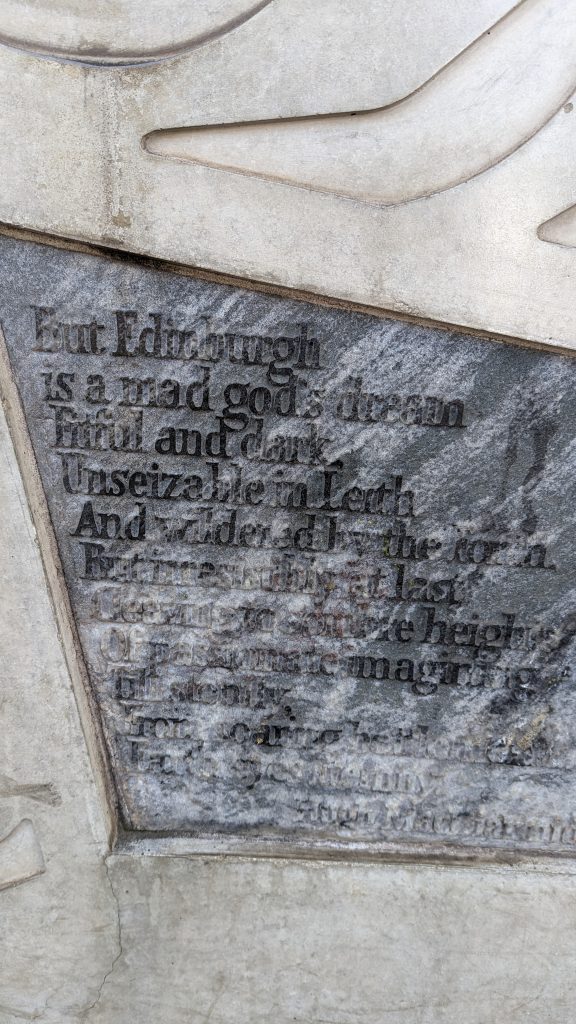
This is a poem which is ‘printed’ on the side of the Scottish Parliament.
by Hugh MacDiarmid
But Edinburgh is a mad god’s dream Fitful and dark, Unseizable in Leith And wildered by the Forth, But irresistibly at last Cleaving to sombre heights Of passionate imagining Till stonily, From soaring battlements, Earth eyes Eternity
This is the Podcast for the Virtual Tour of Edinburgh
To find out or book for the Edinburgh walk and other walks this week end click here
A Virtual Tour Through The Whole Island Of Great Britain. No.5 Edinburgh
Monday 2 May 2022 7 pm
A Virtual Walk Through the Athens of the North
Borrowing my title from Daniel Defoe’s early chorography, my first Circuit is from Chester to Edinburgh. Now on the last stop on this first circuit we are taking a virtual tour of the most extraordinary City – Edinburgh.
Edinburgh is a very unusual City as it was built on the saddle of a hill so its main street runs down the ridge of a hill and the City falls away on either side. This lack of flat land and restricted space led to the City growing upwards. This gave the City an extraordinary density and an unique atmosphere that we will be exploring.
In the Georgian period the City was extended with the addition of a new town quarter which was rationally planned and made a marked contrast on the old Town. Together it gives the Capital of Scotland, a combination of atmospheric and claustrophobic town planning with the elegance of a City that was one of the great Cities of the Enlightenment.
We will begin the virtual walk in the shadow of Arthur’s Seat at the shiny new Scottish Parliament and walk up the Royal Mile from Holyrood to Tollboth, to the Netherbow and onto the Castle at the pinnacle of the City