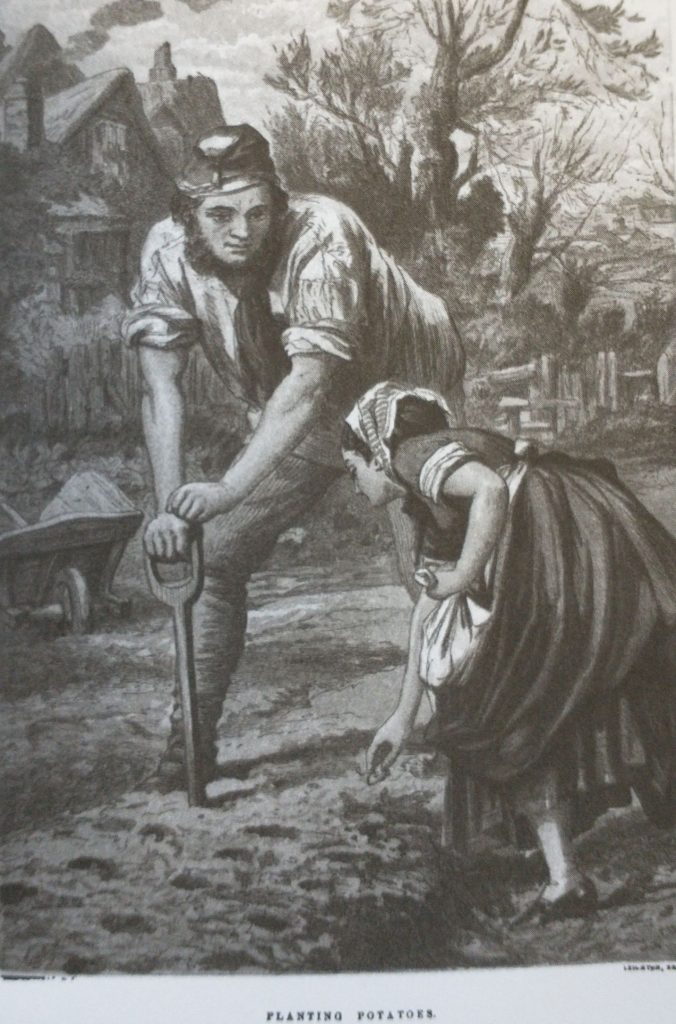
Candlemas February 2nd

February From the Illustrated London Almanac 0f 1873 for Candalmas

Candlemas is an important festival of the Church, celebrated throughout the Christian world. It is the day Jesus was presented to the Temple as a young boy and prophesied to be ‘a light to lighten the Gentiles’. The day is therefore celebrated by lighting candles. Hence its name.

It is also called the Feast of the Purification of the Blessed Virgin Mary. It is 40 days after the birth of Jesus which was fixed as the 25th December by Pope Liberius by AD 354. So it is the end of the postpartum period ‘as the mother’s body, including hormone levels and uterus size, returns to a non-pregnant state’. Mary went to the Temple to be ritually cleansed. This later became known as ‘churching’.

Candlemas a Cross Quarter Day.

It is also one of the cross quarter days of the Celtic tradition, that is halfway between Winter Solstice and May Day. The candles also suggest a light festival marking the lengthening days. It is probably another of those festivals where the Christian Church has taken on aspects of the pagan rituals, so Brigantia’s (celebrated at Imbolc on February 1st) role in fertility is aligned with the Virgin Mary’s.

Weather Lore for Candlemas

Folklore prophecies for today: ‘If it is cold and icy, the worst of the winter is over, if it is clear and fine, the worst of the winter is to come.’ Looking overhead I can see a little blue sky but I can’t say it is ‘clear and fine’. But it is certainly not ‘cold and icy’. So, for what it is worth, we are in for some cold weather.

Candlemas – the Last day of medieval Christmas and the Lords of Misrule.

It’s also the official end of all things Christmas. For most of us Christmas decorations were supposed to be pulled down on January 5th, but, the Church itself puts an end to Christmas officially at Candlemas so Cribs and Nativity tableaux need to be removed today.

John Stow, in the 16th Century describes the period between Halloween and Candlemas as the time when London was ruled by various Lords of Misrule and Boy Bishops (see my post here). In the piece below, Stow also talks about a terrible storm that took place in February 1444.

Against the feast of Christmas every man’s house, as also the parish churches, were decked with holm, ivy, bays, and whatsoever the season of the year afforded to be green. The conduits and standards in the streets were likewise garnished; amongst the which I read, in the year 1444, that by tempest of thunder and lightning, on the 1st of February, at night, Powle’s steeple was fired, but with great labour quenched; and towards the morning of Candlemas day, at the Leaden hall in Cornhill, a standard of tree being set up in midst of the pavement, fast in the ground, nailed full of holm and ivy, for disport of Christmas to the people, was torn up, and cast down by the malignant spirit (as was thought), and the stones of the pavement all about were cast in the streets, and into divers houses, so that the people were sore aghast of the great tempests.’

Robert Herrick has a 17th Century poem about Candlemas:

Ceremony Upon Candlemas Eve

Down with the rosemary, and so
Down with the bays and misletoe;
Down with the holly, ivy, all
Wherewith ye dress’d the Christmas hall;
That so the superstitious find
No one least branch there left behind;
For look, how many leaves there be
Neglected there, maids, trust to me,
So many goblins you shall see.

https://www.catholicculture.org

On This Day

1602Twelfth Night by William Shakespeare performed for the first time.
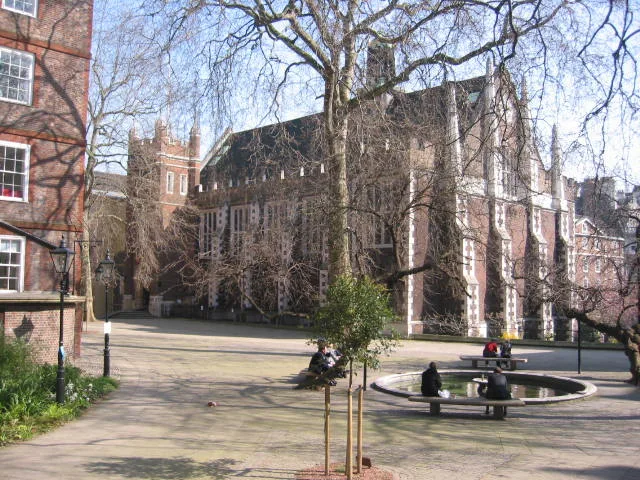
Middle Temple Hall. Photo K Flude.

This play was commissioned by the Lawyers of Middle Temple, in Fleet Street London for the end of the Christmas Season. It was written by Shakespeare and first performed in Middle Temple Hall which is still standing. For the folklore of Twelfth Night see my post here.

1880 – First shipment of frozen meat arrives in London from Australia. It was in excellent condition despite a leaving Melbourne in Dec 1879. Hay’s Gallerie in London was one of the world’s first warehouses with refrigeration.

1943 – German Army surrenders ending the Battle of Stalingrad, marking the beginning of the end of the WW2.

Today is Groundhog Day in the USA. This is when the groundhog comes out to see what the weather is like. If it is dull and wet he stays up because winter will be soon over, if it is sunny and bright he goes back to his burrow to hibernate for another 6 weeks. Originally, a German custom associated with the badger. A groundhog is a woodchuck which is a marmot. Does this workas a forecast method? Not being in America I don’t know but what I do know is:

How much wood could a woodchuck chuck
If a woodchuck could chuck wood?
As much wood as a woodchuck could chuck,
If a woodchuck could chuck wood.

https://www.poetryfoundation.org/poems/42904/how-much-wood-could-a-woodchuck-chuck-

First published 2022, revised 2023, 2024, 2025 On This day added February 2026
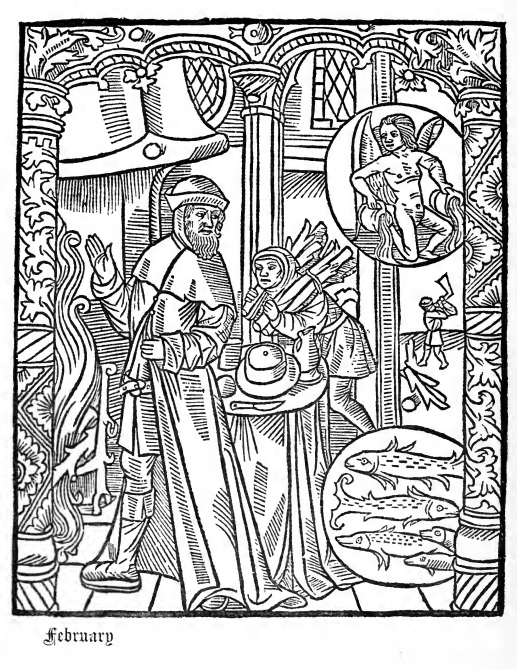
February – ‘the enemy to pleasure and the time of patience’

February Title page from Kalendar of Shepherds.

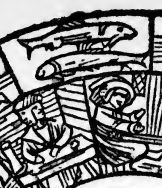
The 15th Century French illustration, above, shows February as a time to cut firewood, dress warmly and stay by the fire. Food on the table is a nutritious pie and the fish are there to remind us it is the month of Pisces. In the other roundel is the other February star sign the Water Carrier, Aquarius.

Star signs of February
February in the Kalendar of Shepherds

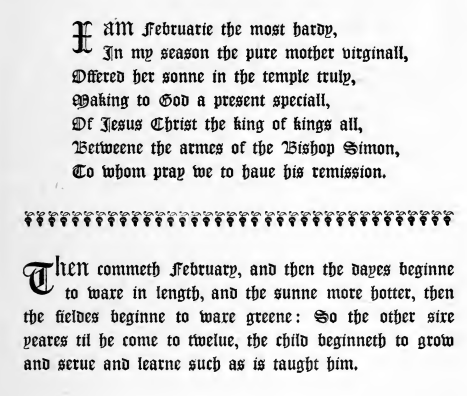
The poem above is a reference to the Candlemas celebration of the presentation of the child Jesus at the Temple. The paragraph below the line (above) gives a summary of February. It ends with the idea that runs through the Kalendar. There are twelve apostles, twelve days of Christmas, twelve months in the year. So, there are twelve blocks of six years in a person’s allotted 72 years of life. In the January entry the Kalendar suggests the essential uselessness of 0-6 year old children. But for February, it allows that 6-12 years old children are beginning to ‘serve and learn’.

The Kalendar’s View of February

pisces from the zodiac from kalendar of shepherds
Pisces From the zodiac from kalendar of shepherds

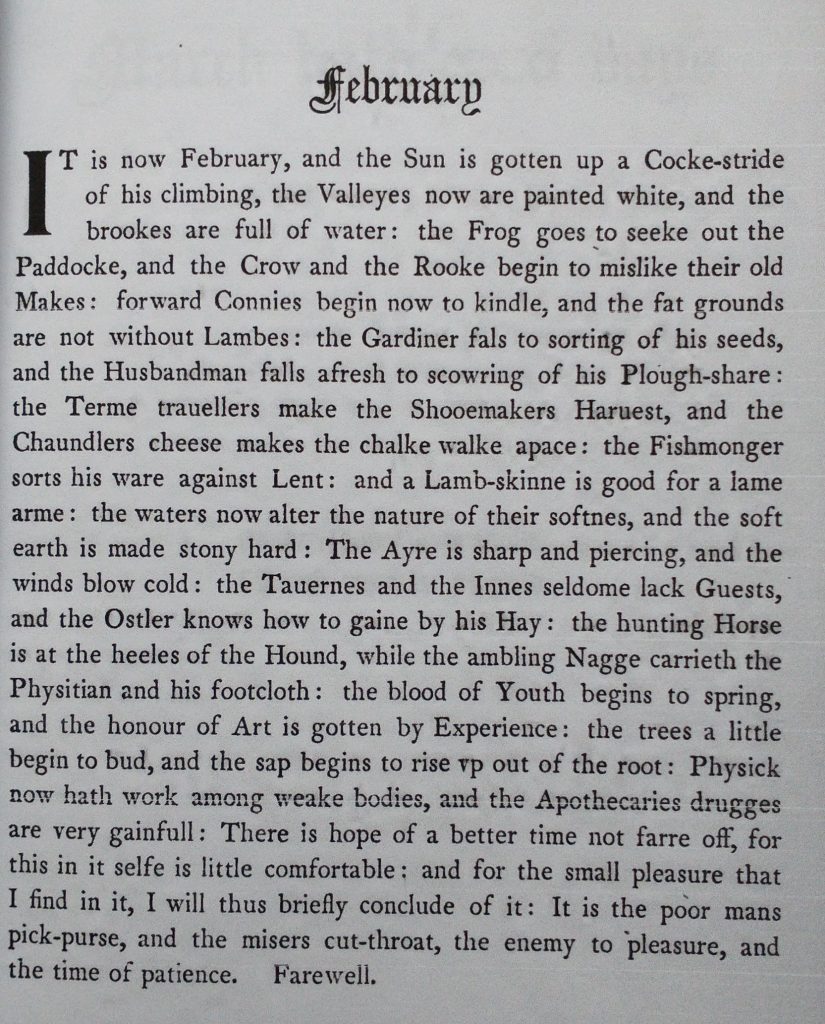
Below, is the text for February. This gives a rural view of life in winter. It ends with the line that February:

is the poor man’s pick-purse, the miser’s cut-throat, the enemy to pleasure and the time of patience.’

Description of February in the Kalendar of Shepherds

About the Kalendar of Shepherds.

The Kalendar was printed in 1493 in Paris and provided ‘Devices for the 12 Months.’ The version I’m using is a modern (1908) reconstruction of it. It uses wood cuts from the original 15th Century version and adds various texts from 16th and 17th Century sources. (Couplets by Tusser ‘Five Hundred Parts of Good Husbandrie 1599. Text descriptions of the month from Nicholas Breton’s ‘Fantasticks of 1626.) This provides an interesting view of what was going on in the countryside every month.

For more on the Kalendar look at my post here.

The original Kalendar can be read here: https://wellcomecollection.org/works/f4824s6t

Hesiod and February

Hesiod, in his ‘Works and Days’ describes February as a merciless cold, windy time. Hesiod was writing around 700BC. He gave us ‘the story of Prometheus and Pandora, and the so-called Myth of Five Ages.’ (Links are to Wikipedia.)

Avoid the month Lenaeon, (February) wretched days, all of them fit to skin an ox, and the frosts which are cruel when Boreas blows over the earth.
He blows across horse-breeding Thrace upon the wide sea and stirs it up, while earth and the forest howl.
On many a high-leafed oak and thick pine he falls and brings them to the bounteous earth in mountain glens: then all the immense wood roars and the beasts shudder and put their tails between their legs, even those whose hide is covered with fur; for with his bitter blast he blows even through them, although they are shaggy-breasted.
He goes even through an ox’s hide; it does not stop him. Also he blows through the goat’s fine hair.
But through the fleeces of sheep because their wool is abundant, the keen wind Boreas pierces not at all; but it makes the old man curved as a wheel.
And it does not blow through the tender maiden who stays indoors with her dear mother, unlearned as yet in the works of golden Aphrodite, and who washes her soft body and anoints herself with oil and lies down in an inner room within the house,
on a winter’s day when the Boneless One (an Octopus or a cuttle?) gnaws his foot in his fireless house and wretched home; for the sun shows him no pastures to make for, but goes to and fro over the land and city of dusky men, and shines more sluggishly upon the whole race of the Hellenes.
Then the horned and unhorned denizens of the wood,] with teeth chattering pitifully, flee through the copses and glades, and all, as they seek shelter, have this one care, to gain thick coverts or some hollow rock.
Then, like the Three-legged One (an old man with a stick) whose back is broken and whose head looks down upon the ground, like him, I say, they wander to escape the white snow.

Original text available here. and for more on Hesiod see my post here.

Februarius

The Roman month Februarius was the month of purification. Februa was the name of the purification ritual held on February 15 (full moon) in the old lunar Roman calendar. The Romans originally considered winter a monthless period of the year. So they only had 10 months to the year. Later they added January and February. March was the first month, so September was the 7th month, October the 8th, November 9th and December the 10th and final month. Names derived from the Latin for 7th, 8th, 9th, 10th.

For more on the Roman Calendar look at my posts

https://chr.org.uk/anddidthosefeet/march-1st-the-month-of-new-life/

https://chr.org.uk/anddidthosefeet/leap-day-february-29th/

First Published February 4th 2024, revised 2025, 2026

Annual Grimaldi Memorial Service, All Saints, Haggerston. First Sunday in February

Annual Grimaldi Memorial Service at All Saints Church, Haggerston.

Today, was the Annual Grimaldi Memorial Service in Haggerston, Hackney, London. It began as a memorial service for the famous Regency Clown Joseph Grimaldi. But it has become a service to celebrate Clowns. The service takes place on the first Sunday in February. The service used to be at Holy Trinity Church, but has switched to Haggerston.

Joseph Grimaldi

Grimaldi as Clown, showing his own make-up design. George Cruikshankhttp://www.vam.ac.uk/content/people-pages/grimaldi-the-clown/ Public Domain

Grimaldi was born on 18 December 1778. He died in poverty on 31 May 1837. In between, he was the most famous clown. He transformed the Harlequin role and made the white-faced clown the central part of the British Pantomime. The part became known as a Joey after Grimaldi. He performed at the Theatre Royal, Drury Lane, the Sadler’s Wells and Covent Garden theatres.

All Saints Church, Haggerston

Video by K Flude of Annual Grimaldi Clown Service in Haggerston

All Saints Church, Haggerston is 5 minutes walk from where I live and 2 minutes from where my Dad was born. (see my post here). So I popped in today and took this video. The service, which has been held since the 1940s, attracts clown performers from all over the world who attend the service in full clown costume. The Spitalfield’s Life blog has a very full description of the service, and lots of very good pictures. Follow the link below:

First Published February 1st 2026

Festival of Imbolc, St. Bridget’s Day February 1st

Imbolc and St Bridget’s Day

Today is Imbolc, one of the four Celtic Fire Festivals. It corresponds with St Bridget’s Day, which is a Christian festival for the Irish Saint, and is the eve of Candlemas. Bridget is the patron saint of all things to do with brides, marriage, fertility, and midwifery (amongst many other things, see below). And in Ireland, 2026 was the third St Bridget’s/ Imbolc Day Bank Holiday.

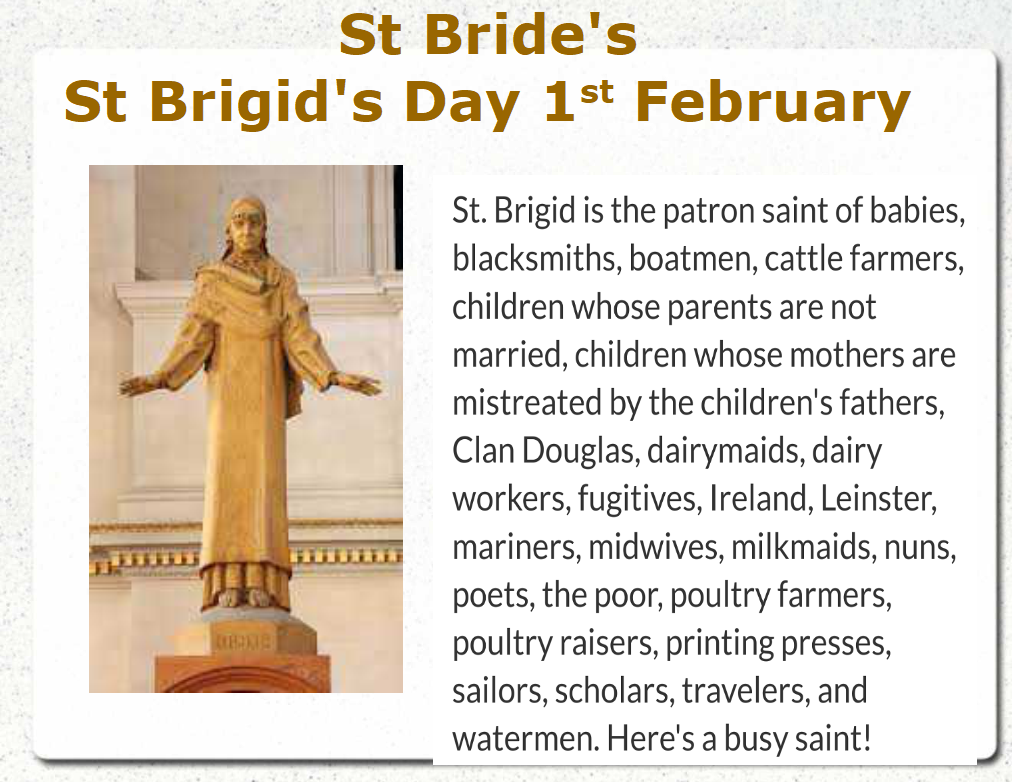
St Bride,s Statue St Bride's Church. Fleet Street
St Briget or St Bride’s Statue, St Bride’s Church. Fleet Street from K.Flude’s virtual tour on Imbolc

St Bridget, aka Briddy or Bride, converted the Irish to Christianity along with St Patrick in the 5th Century AD. Despite being a Christian, she appears to have taken on the attributes of a Celtic fertility Goddess. Her name was Brigantia, and it is difficult to disentangle the real person from the myth.

Brigantia

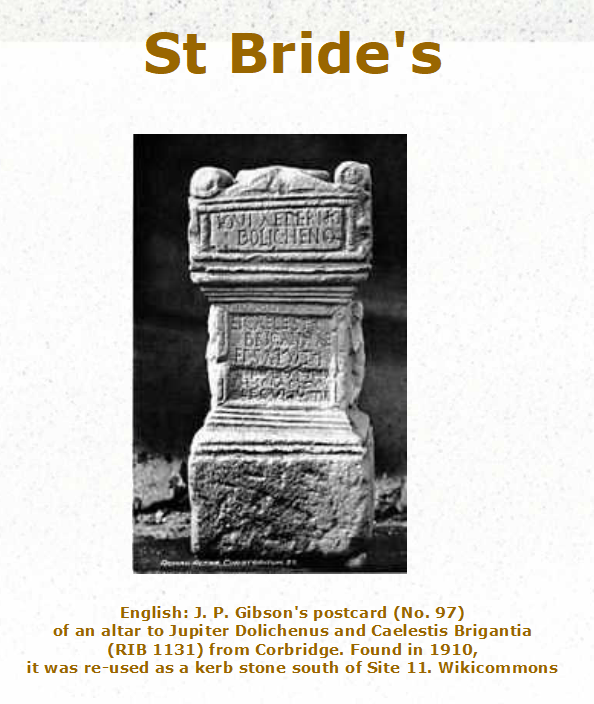
Archaeologists have found various Roman altars dedicated to Brigantia. The Brigantes tribe in the North are named after the Goddess (probably). They were on the front line against the invading Romans in the 1st Century AD, and led by Queen Cartimandua.  The Queen tried to keep her tribe’s independence by cooperating with the Romans. A few years later, Boudica took the opposite strategy. But both women had executive power as leaders of their tribes. This suggests a very different attitude to woman to the misogyny of the Romans.

altar to Brigantia
Altar to Brigantia from K Flude’s virtual tour on Imbolc

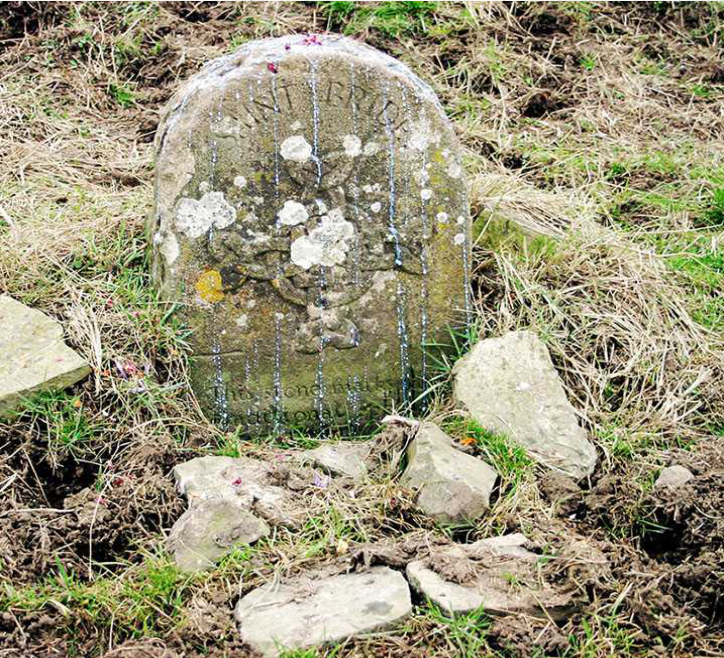
Wells dedicated to St Bridget

St Bridget's Well Glastonbury
St Bridget’s Well, Glastonbury

St Bride is honoured by many wells dedicated to her. Often they are associated with rituals and dances concerned with fertility and healthy babies. And perhaps, the most famous, was near Fleet Street. This was Bridewell, which became the name of Henry VIII’s Palace, and later converted into an infamous prison. St Bride’s Church, built near to the Well, has long been a candidate as an early Christian Church. Sadly, the post World War Two excavations found nothing to suggest an early Church. But, they did find an early well near the site of the later altar of the Church, and remains of a Roman building, possibly a mausoleum. Perhaps the Church may have been built on the site of an ancient, arguably holy, well. However, this is only a guess.

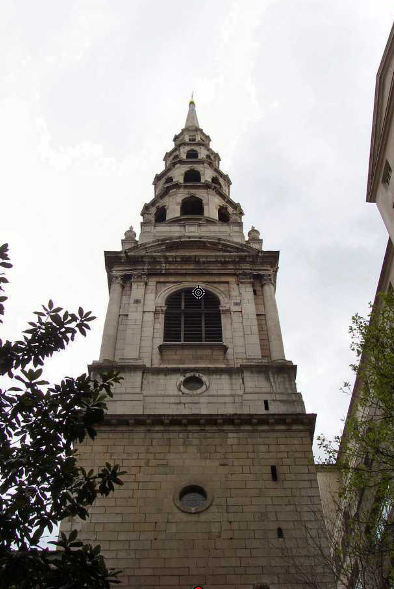
Steeple of St Brides Fleet Street
Steeple of St Brides Fleet Street, photo K Flude

The steeple of St Brides is the origin of the tiered Wedding Cake, which, in 1812, inspired a local baker to bake for his daughter’s wedding.

February signs of life

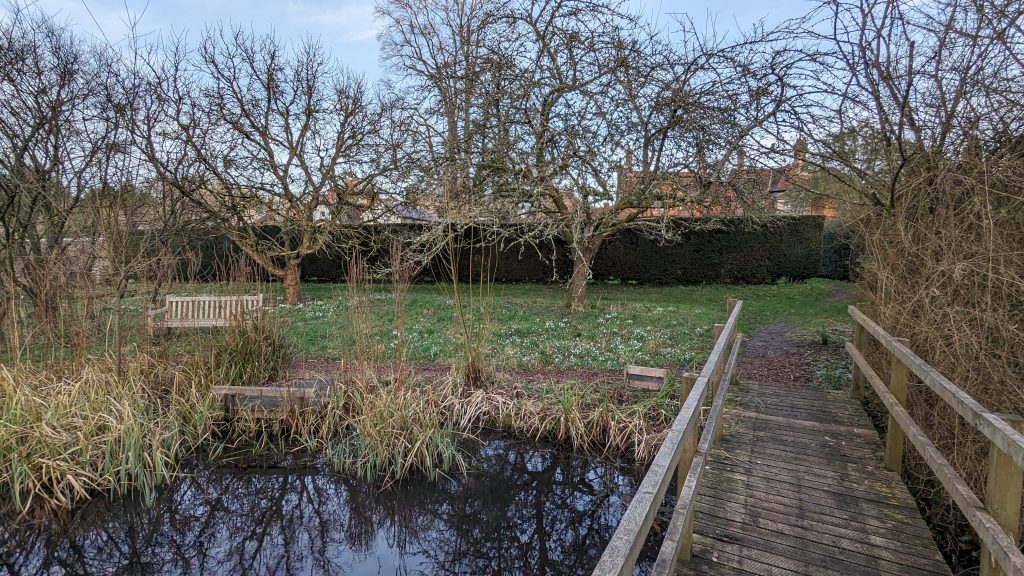
Imbolc and St Bridget’s Day are the time to celebrate the return of fertility to the earth as spring approaches. In my garden and my local park, the first snowdrops are out. Below the bare earth, there is a frenzy of bulbs and seeds budding, and beginning to poke their shoots up above the earth, ready for the Spring. In the meadows, ewes are lactating, and the first lambs are being born.

Violets, bulbs, and my first Daffodil of the year. Hackney (2022), London by K Flude

And let’s end with the Saint Brigid Hearth Keeper Prayer Courtesy of SaintBrigids.org

Brigid of the Mantle, encompass us,
Lady of the Lambs, protect us,
Keeper of the Hearth, kindle us.
Beneath your mantle, gather us,
And restore us to memory.
Mothers of our mother, Foremothers strong.
Guide our hands in yours,
Remind us how to kindle the hearth.
To keep it bright, to preserve the flame.
Your hands upon ours, Our hands within yours,
To kindle the light, Both day and night.
The Mantle of Brigid about us,
The Memory of Brigid within us,
The Protection of Brigid keeping us
From harm, from ignorance, from heartlessness.
This day and night,
From dawn till dark, From dark till dawn.

For more about go to this webpage St Bridget. To read my post on Mary Musgrove’s Candlemas Letter in Jane Austen’s Persuasion follow this link.

Imbolc and Myths and Legends Walks

I give walks about Imbolc and other Celtic festivals, and at May Eve, the Solstices, Equinoxes, Halloween and Christmas (when I have time). You might like to attend these walks or virtual tours. The following are currently in my calendar. I will be adding other walks to the calendar as the year progresses.

The Spring Equinox London Virtual Tour 7.30pm Fri 20th March26 To book

The London Equinox and Solstice Walk 2:30pm Sat 21st March26 To book

For more of my walks see the walks page of this blog here: https://www.chr.org.uk/anddidthosefeet/walks

First published in 2023, revised and republished Feb 2024, 2025, 2026