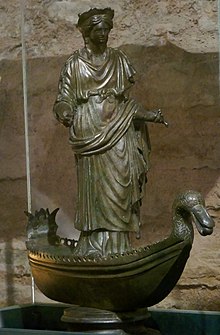

So, on St Lucy’s Day, you, being someone worried about your eyes, might have sought an altar dedicated to St Lucy, the patron saint of eye health. (see December 13th’s Post on St Lucy). Although you may be disappointed that there has been no miraculous cure for you, you might have been encouraged to do something about it. So that’s what this post is about.
There are only two churches in the UK dedicated to St Lucy or St Lucia. One run by the National Trust in Upton Magna, Shropshire, but there must have been a few chapels in Cathedrals and Abbeys dedicated to her. I have my eyes open for them!
For Redness of the Eye or Pink Eye
There are many household books still, existing. These show that much of medical practice was carried out in the home, by ordinary men and women. More often women, actively not only collected useful recipes and cures, but also tested them out and improved them. Here is an example:
For the redness of eyes, or bloodshot. Take red wine, rosewater, and women’s milk, and mingle all these together: and put a piece of wheaten bread leavened, as much as will cover the eye, and lay it in the mixture. When you go to bed, lay the bread upon your eyes calmer and it will help them.
Fairfax Household book, 17th/ 18th century. (Reported in The Perpetual Calendar of Folklore by Charles Kightly)
‘Pink eye’ is mentioned in a document unearthed at the Roman Fort of Vindolanda. It lists the troops of the Cohort in occupation. We read that of the garrison of 750, 474 are absent with 276 in the fort of which 38 are sick, 10 with ‘pink eye’. This is probably conjunctivitis.
Prevention is better than cure
Things hurtful to the eyes. Garlic, onions, radish, drunkenness, lechery, sweet wines, salt meats, coleworts, dust, smoke, and reading presently after supper.
Good for the eyes. fennel, celandine, eyebright, vervain, roses, cloves and cold water.
Whites Almanack 1627
Cataract operations
Cataract operations have been carried out since 800 BC using a method called ‘couching’.
“The practitioner would sit facing the patient and pass a long needle through the cornea to impale the lens. “He would then forcibly dislodge the lens — rupturing the zonules — and push it into the vitreous cavity, where it would hopefully float to the bottom of the eye and out of the visual axis.”
This was a last resort when the cataract was opaque and the patients nearly blind. It would mean they would need very thick lenses to see well again but, crude as it seems, it worked.
But the operation, without anaesthetics must have been a considerable ordeal. The recovery (still required today for those suffering from a displaced retina) means that the patient has to lie on their back for a week with supports on either side of the head to prevent movement. Of course, there was a serious risk of infection, so prophylactic visits to a chapel of St Lucy might be called for.
The modern treatment for cataracts was established in the 1940s and offers a great solution in 15 minutes surgery. Currently, the NHS has been having trouble dealing with all the cases required, (6% of surgery is for cataract operations). Before COVID-19, there was some talk about cataracts being, in practice, not readily available on the NHS. The waiting time is supposed to be 18 weeks but, for example, at NHS Chesterfield Royal Hospital the waiting time approaches almost 10 months. But waiting times around the country vary from 10 weeks to over a year.
Patrick Brontë’s Eye
On 26th August 1846 Charlotte Brontë took her father to Manchester from Haworth for Cataract surgery. The operation took 15 minutes but without anaesthesia. He was very calm and said the pain was ‘a burning pain.’ It was vital he stay still through the pain. Then, he had to remain in bed for a month in the dark, minimising movement. Leeches were applied to his face, to reduce the inflammation of the wound. He was looked after by a nurse 24 hours a day, supervised by Charlotte. She used the time she spent waiting in writing Jane Eyre. Her Father’s vision was significantly improved and he was able to resume his Parish duties.
Here is a youtube film about Patrick Brontë‘s operation:
Looking through Samuel Pepys’s eyes
You will note, above, that it was considered bad for the eyes to read in low light. It is a myth and not true. Poor Samuel Pepys was continually worried about his reading and writing habits ruining his eyesight. This is an extract from the poignant last entry in his famous diary:
And thus ends all that I doubt I should ever be able to do with my own eyes in the keeping of my journal, I being not able to do it any longer, having done now so long as to undo my eyes almost every time that I take a pen in my hand; and therefore, whatever comes of it, I must forbear: and therefore resolve from this time forward to have it kept by my people in long-hand. I must be consented to sit down no more than is fit for them and all the world to know; or, if they be anything, which cannot be much now my amores are past and my eyes hindering me almost all other pleasures. I must endeavour to keep a margin in my book open, to add, here and there, a note in shorthand with my own hand.
Samuel Pepys Diary, May 31st
The sad thing is that Pepys had another 38 years before he went blind, and what glorious diary entries have we missed because of his false fears of the effect of eye strain?
First published in 2022, updates 2023, 2024 and 2025