Scanned image and text by Simon Cooke https://victorianweb.org/art/illustration/wehnert/8.html
January 20th is the Eve of St Agnes & Keats wrote a poem on the subject. The poem is one of his most important and was written in 1819, published in 1820. Folklore held that a maid would dream of her future lover on St Agnes Eve if she took certain precautions. In particular, they had to go to bed without supper, and transfers pins from a pincushion to their sleeve while reciting the Lord’s Prayer. John Keats used this tradition in his epic poem.
St Agnes was a martyr who, at 13 years old, refused to marry a pagan. She was martyred by being stabbed in the throat. Agnes is well attested and on a list of martyrs dating to AD345. She is the patroness of young women and of chastity. Her feast day is January 21st. I wrote about St Agnes and the Fraternity of St Anne and St Agnes on Distaff Sunday.
The Eve of St. Agnes by John Keats
The poem begins with a great description of winter.
St. Agnes’ Eve—Ah, bitter chill it was!
The owl, for all his feathers, was a-cold;
The hare limp’d trembling through the frozen grass,
And silent was the flock in woolly fold:
Numb were the Beadsman’s fingers, while he told
His rosary, and while his frosted breath,
Like pious incense from a censer old,
Seem’d taking flight for heaven, without a death,
Past the sweet Virgin’s picture, while his prayer he saith.
Keats sets up the drama with a poetic description of the folklore:
They told her how, upon St. Agnes’ Eve,
https://www.poetryfoundation.org
Young virgins might have visions of delight,
And soft adorings from their loves receive
Upon the honey’d middle of the night,
If ceremonies due they did aright;
As, supperless to bed they must retire,
And couch supine their beauties, lily white;
Nor look behind, nor sideways, but require
Of Heaven with upward eyes for all that they desire.
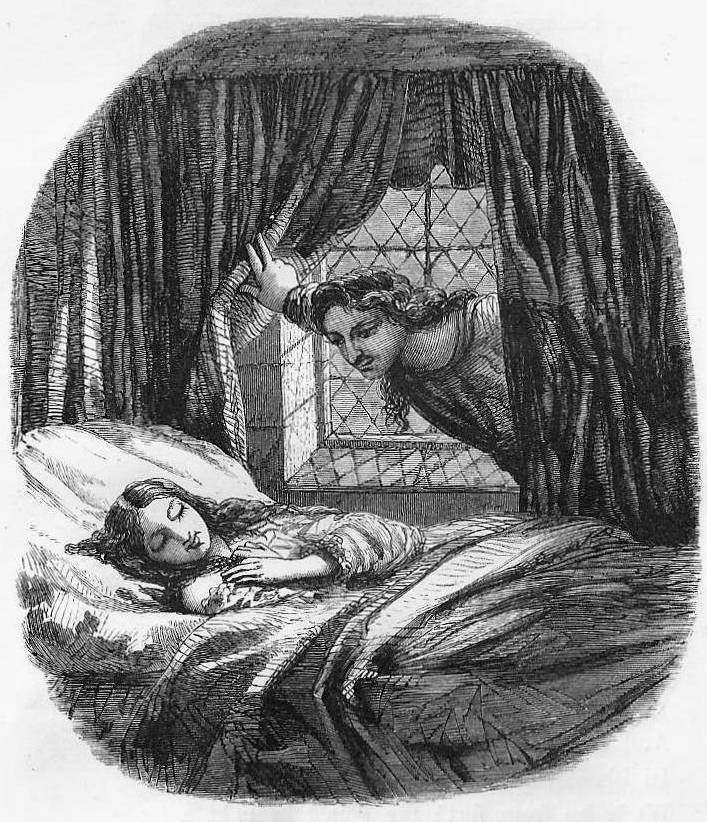
In the poem, the maid Madelaine goes to sleep to dream of her love Porphyro. He risks everything to visit the young girl, and watches her while she sleeps. She dreams of him. Waking up and seeing him, Madelaine lets him into her bed thinking she is still dreaming.
She realises her mistake and tells him she cannot blame him for taking advantage as she loves him so much. But if he leaves her, she will be like “A dove forlorn and lost / With sick unpruned wing”.
The two lovers escape and run away together.
Keats & TB
Keats was born in a livery inn in Moorgate, in the City of London. He lived in Cheapside, later in Hampstead, and was published in Welbeck Street in the West End. As a young man he trained as a surgeon at Guys Hospital, Southwark. But he never practised, although he did consider a post as a Ship’s Surgeon.
One wet, cold February he went home to Hampstead on the roof of a stage coach. But. he had forgotten his coat, so he got soaked and chilled to the bone. That night, he coughed up blood. His medical and family experience led him to believe it was a fatal sign of consumption. He had lived in a small house with his brother and mother, who both died of TB. Keats had helped nurse them.
Later on, however, he consulted a doctor. He was told his illness was psychosomatic. And his thwarted love for his next door neighbour, Fanny Brawne, was contributing to his illness. As his consumption advanced, he was advised to go to a warmer climate. So, he embarked at Tower Pier by the Tower of London. He transferred to a small sailing ship at Gravesend called the Maria Crowther. On the ship to Italy, he shared a cabin with another consumptive. The two consumptives, had opposite ideas as to whether the portholes needed to be open or closed for their health. Letters he wrote makes it clear he was desperate to stop himself thinking about Fanny Brawne. He got to Rome where he died, achieving, he felt, nothing worthwhile in his life. His memorial stone proclaimed:
“Here lies One Whose Name was writ in Water.”
On This Day
1265 – The first English parliament to include not only Lords but also representatives of the Commons holds its first meeting in the Palace of Westminster.
1649 – The High Court of Justice for the trial of Charles I begins its proceedings. The Solicitor General John Cook was appointed prosecutor, presided over by John Bradshaw
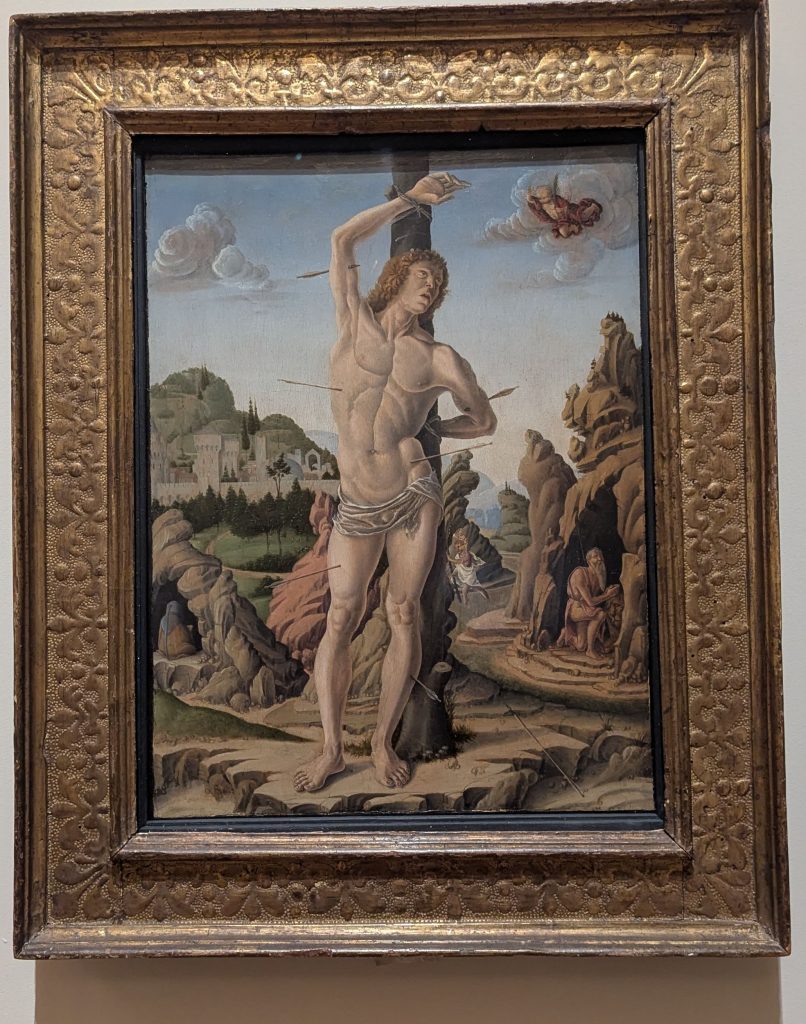
Today is also St Sebastian’s Feast Day. He has become a gay icon, and was celebrated in a Latin language film by Derek Jarman from 1976. (https://en.wikipedia.org/wiki/Sebastiane)
A full version of the film is available on Youtube, but here are some scenes:
Events Coming up!
January 25th 2026 Reenactors commemorating the execution of Charles I in Westminster
Kevin Flude’s walks to commemorate the Martyrdom of Charles I
Charles I and the Civil War. Martyrdom Anniversary Walk 2.30pm Jan 30th 26 To book
The Civil War, Restoration, and the Great Fire of London Virtual Tour 7:30pm Fri 30th Jan26 To book
First written on January 23, republished on January 20th 2024, 2025,2026
Discover more from And Did Those Feet
Subscribe to get the latest posts sent to your email.
Agnes comes from the Greek ‘agné’, which means ‘lamb’.
‘agnello’ in Italian and ‘agneau’ in French
The lamb is a symbol of purity, chastity