May Posts & Medieval Royal Horses

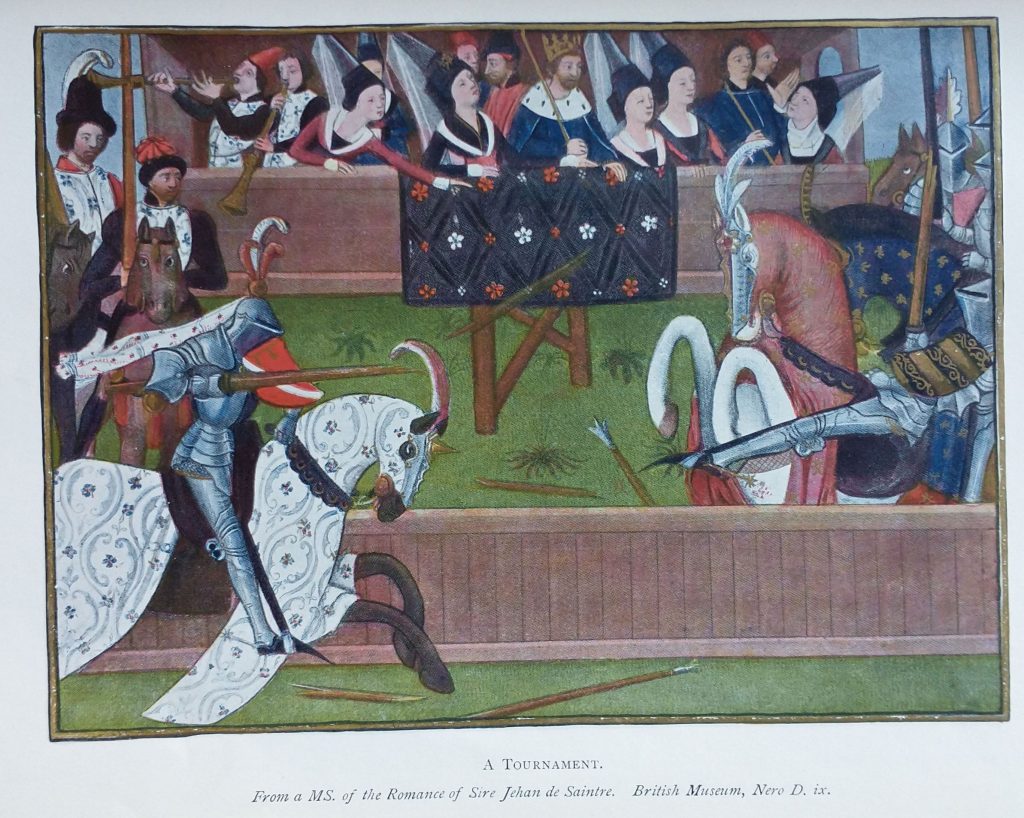
Medieval illumination of a medieval tournament

I’ve been taking groups around Britain from London to Edinburgh and have fallen behind on my postings.

So, I am going to post a few posts today to put them on my Almanac of the Past. They will be brief, and will be worked up for a re-publication in greater length next year.

Archaeological Discoveries at Elverton St. Westminster

Near the site of the medieval jousting arena in Westminster, London at Elverton St, archaeologists, nearly 30 years ago, excavated a Cemetery which contained the remains of horses. The University of Exeter has recently revealed the results of their analysis of the horses’ bones. The 15 animals studied were found to be above average in height, and marked by a life where they had been worked hard. Analysis of their teeth suggested they came from as far afield as Scandinavia, the Alps, Spain, and Italy.

Three of the animals are the largest found in England at the time. The findings suggest they might be from a Royal Stud farm, providing war, jousting or hunting animals for the elite.

For more details read: https://www.bbc.co.uk/news/uk-england-london-68632099

Boating adventure & the Second Best Modernist Building in London

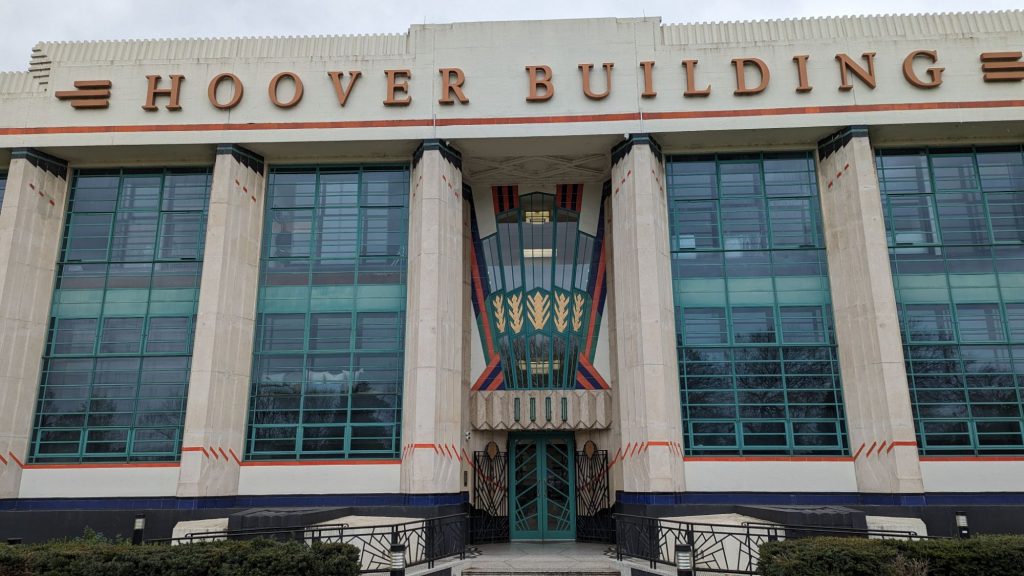
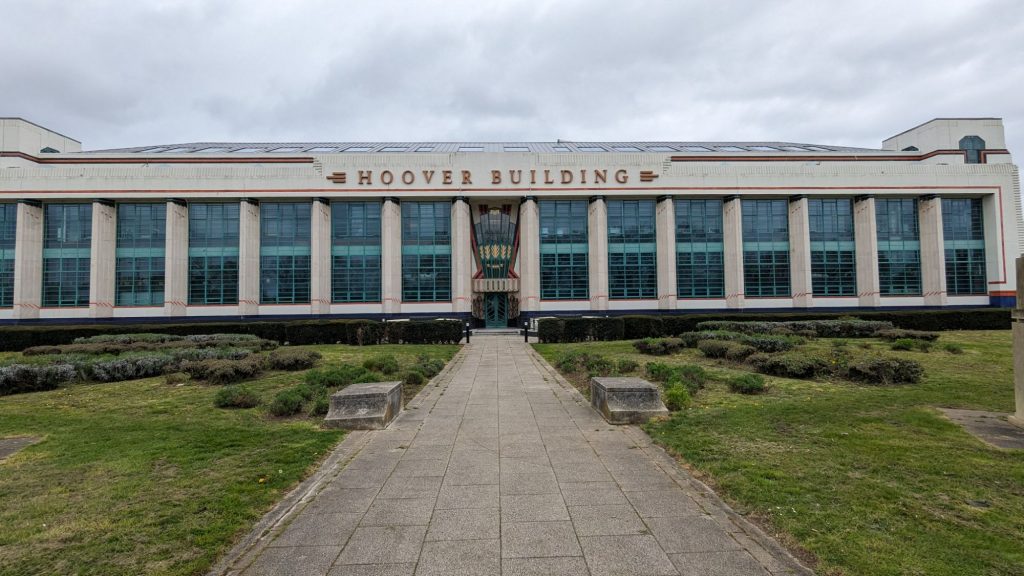
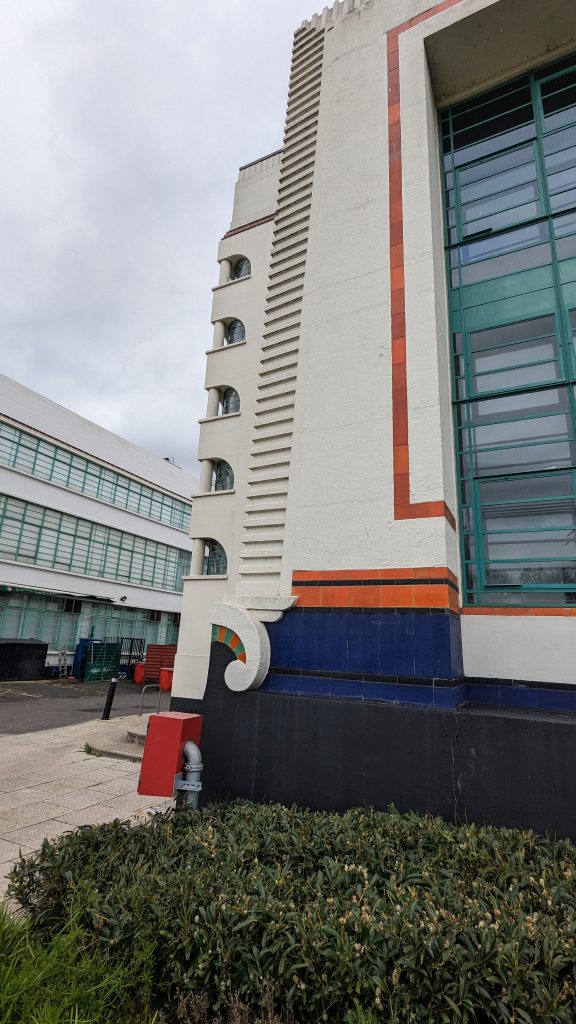
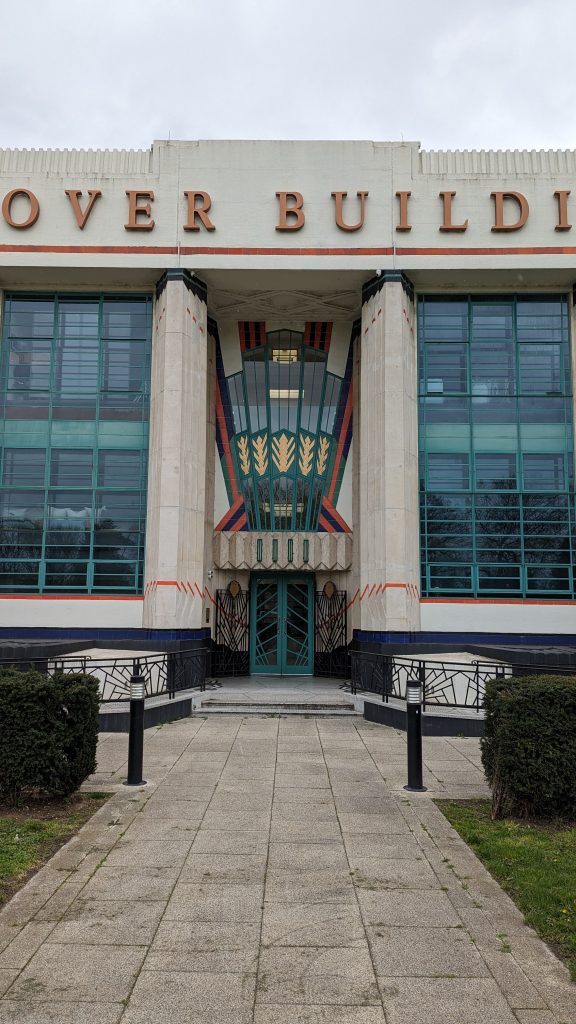
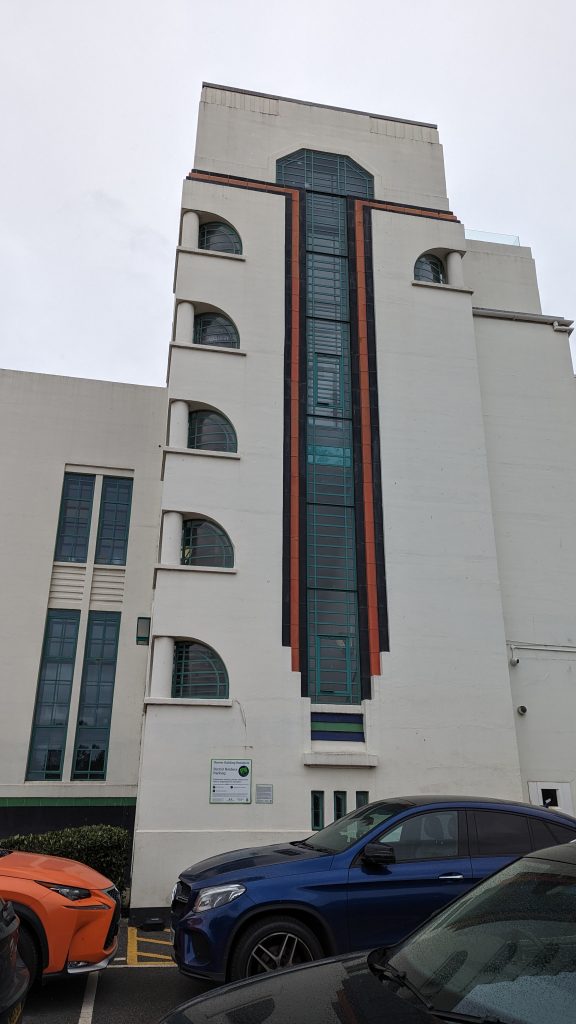
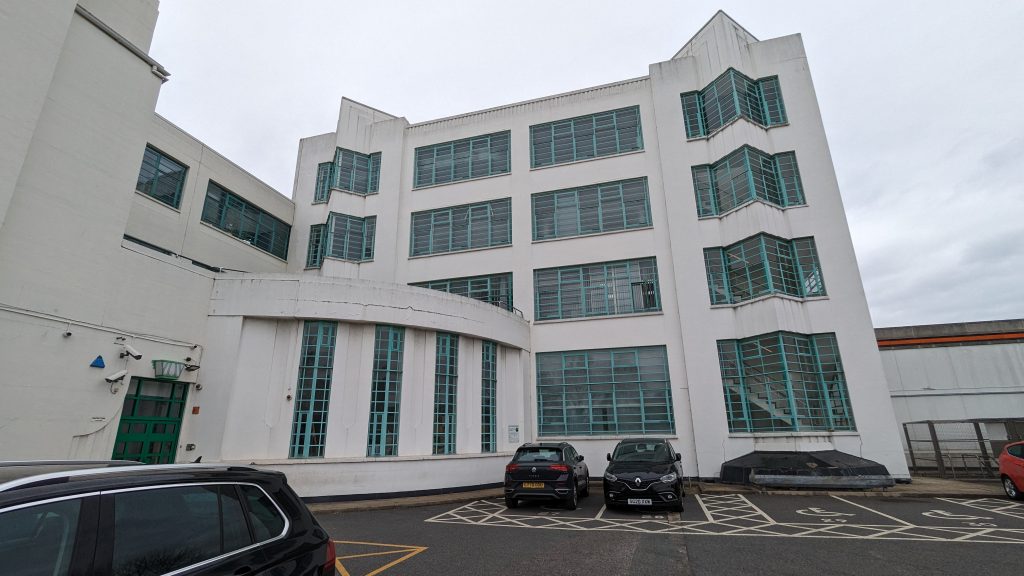
The Hoover Building in Perivale NW London, photo Kevin Flude

I published this piece in April, but for some reason to do with the fact that I published the posts from my phone rather than my computer, no email was sent to subscribers.

So, here is a chance to see it.

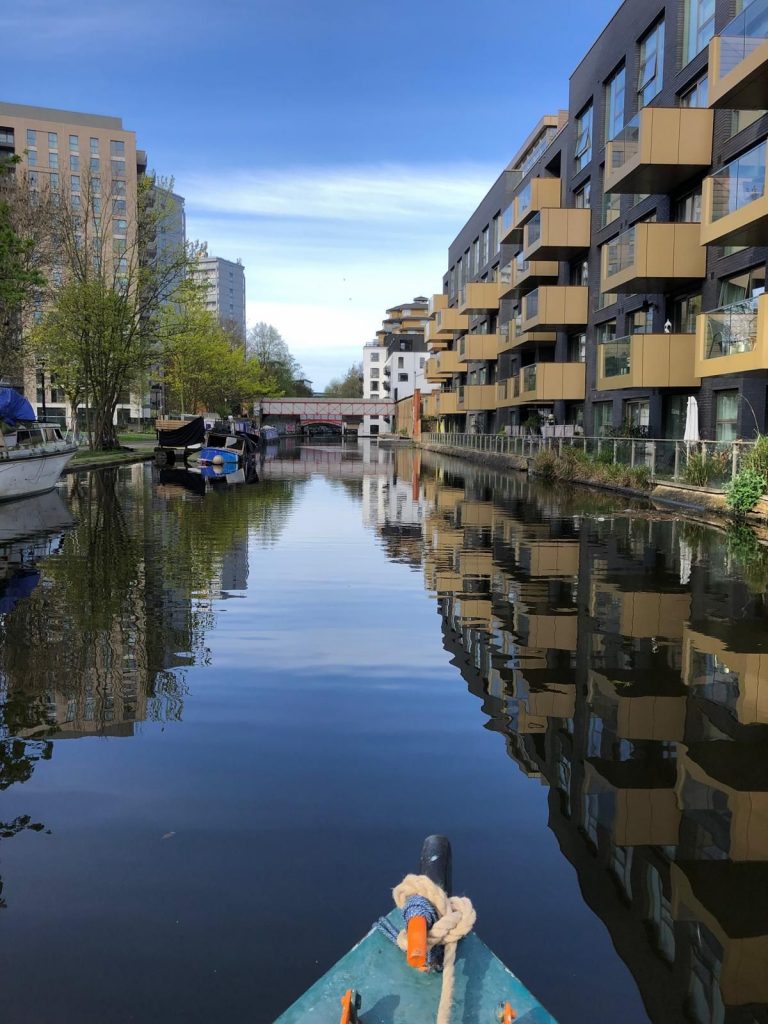
What makes owning a narrow boat so wonderful, apart from enjoying living amidst nature, is the accidental discovery of undreamt of wonders.  Last week, I moved my narrow boat from Westbourne Park, on the Grand Union Canal, to Perivale.  A 3-hour boat trip of less than 10 miles to a frankly uninspiring suburb.  But, as so often, mooring in an uninspiring place uncovered surprises that transform the mundane to the delightful.

Paddington branch of the Grand Union Canal heading west from Westbourne Park.  Photo Harriet Salisbury

We set off on a beautifully sunny April morning to move the boat the requisite distance to satisfy licence terms. Rain at 12 prompted a premature end to the trip.  We trudged to Perivale Underground Station, bemoaning our failure to get to Southall, to enjoy a Dosa In London’s Little India.

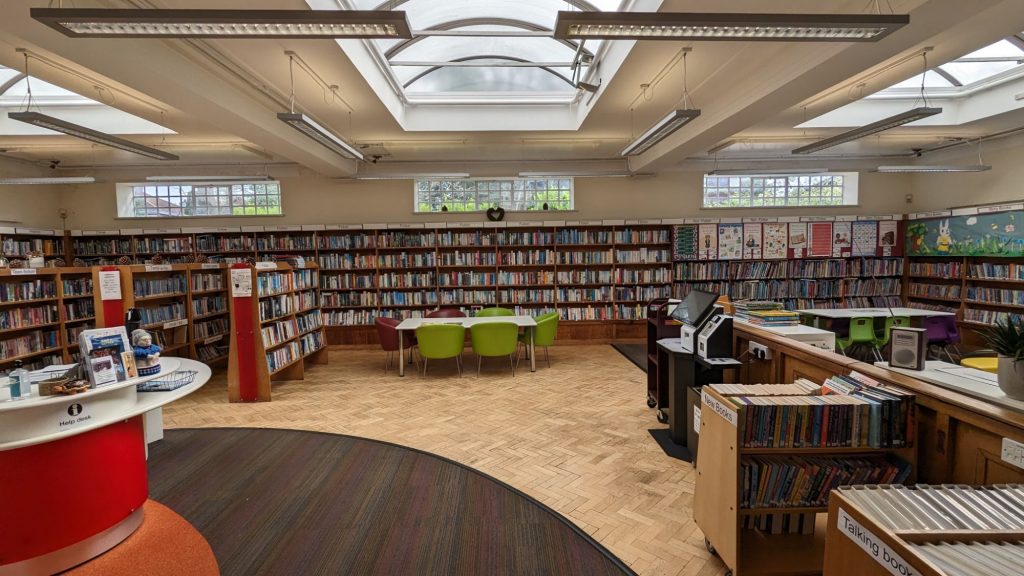
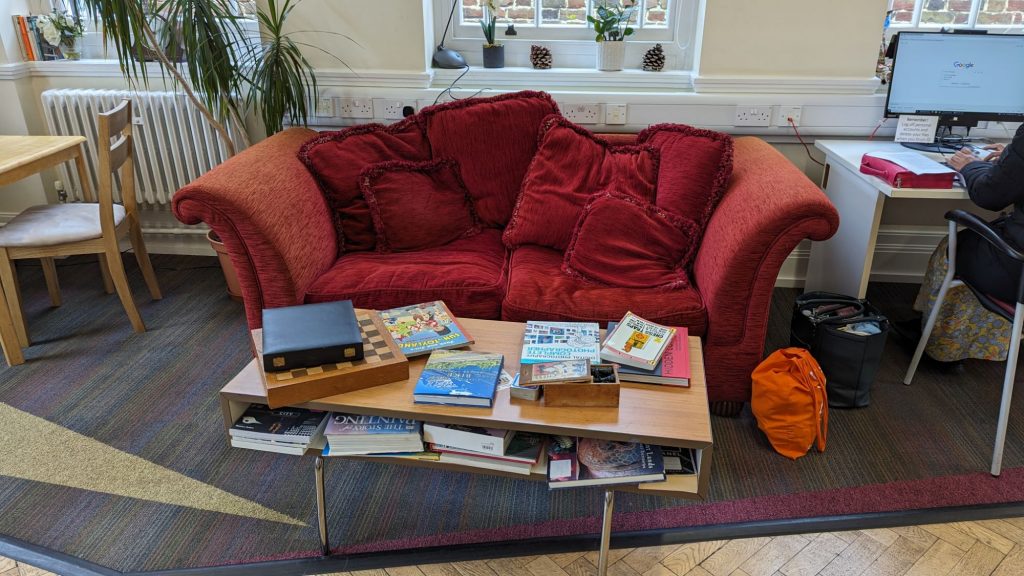
The road to Perivale is dull suburbia.  But we stopped at a library boasting a cafe, which turned out to be a really nice bit of early 20th Century library architecture, with a cheerful volunteer explaining they were keeping the library from closure due to council cost-cutting.

Perivale Library photo Kevin Flude

They had made the library really cosy with sofas and comfortably sitting areas. Sadly, the promised Café was not open.

Perivale Library. Interior. Photo Kevin Flude

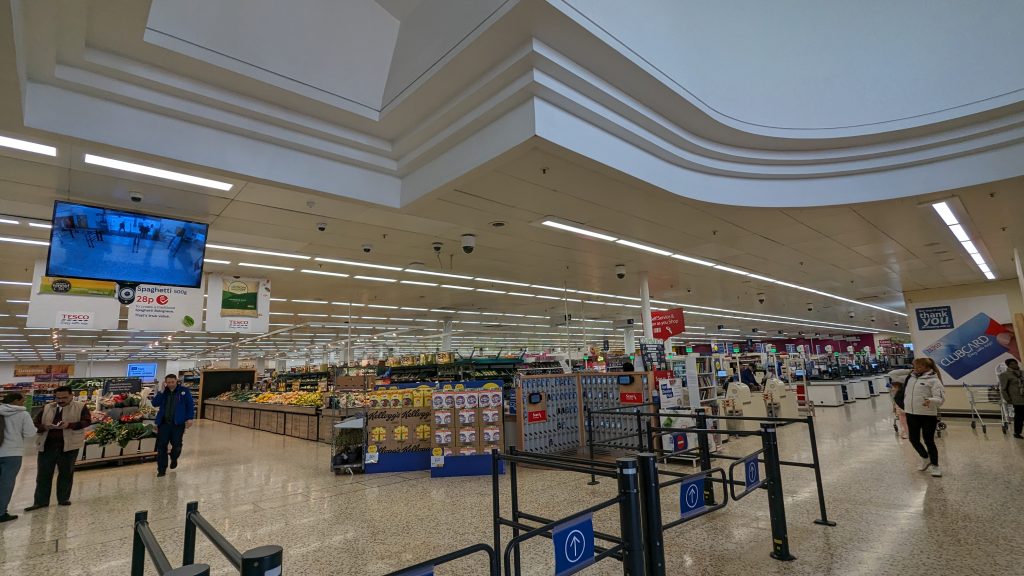
The volunteer pointed us in the direction of a sandwich at the Tesco in the Hoover Building. I had no idea this icon of Modernism was a short walk away, so we jumped at the chance to see, at close range, one of my favourite London buildings. 

The Hoover Building (photo K Flude)

I regularly point it out to the groups I take to Oxford.  But I have never seen it up close nor standing still. Not only is the building a fabulous cream and green, but it has a backstory of interest to London’s history.  As road transport began to remake the geography of London in the early 20th Century, factories in Hackney, Tower Hamlets, Southwark, Lambeth, and other Inner London Boroughs closed, and new factories were constructed on the roads out of London, mostly manufacturing consumer goods.  Park Royal, Greenford, Slough and Staines were among the areas to develop as consumerism powered the 20th Century with the production of irons, kettles, hairdryers, radios, washing machines, vacuum cleaners and suchlike delights for the workers and families. The fields around were turned into rows of semi-detached houses to mortgage to the workers.

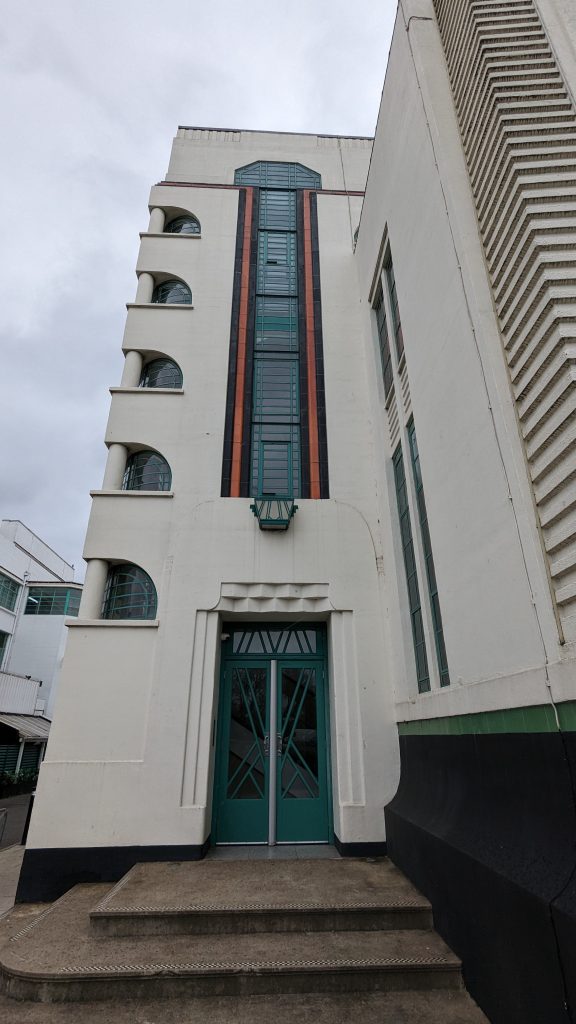
The Hoover Building is a Grade II* listed building of Art Deco architecture[1] designed by Wallis, Gilbert and Partners located in Perivale in the London Borough of Ealing. The site opened in 1933 as the UK headquarters, manufacturing plant and repairs centre for The Hoover Company.[2]‘ (Wikipedia). It has been converted to apartments and a Tesco occupies the Factory Floor.

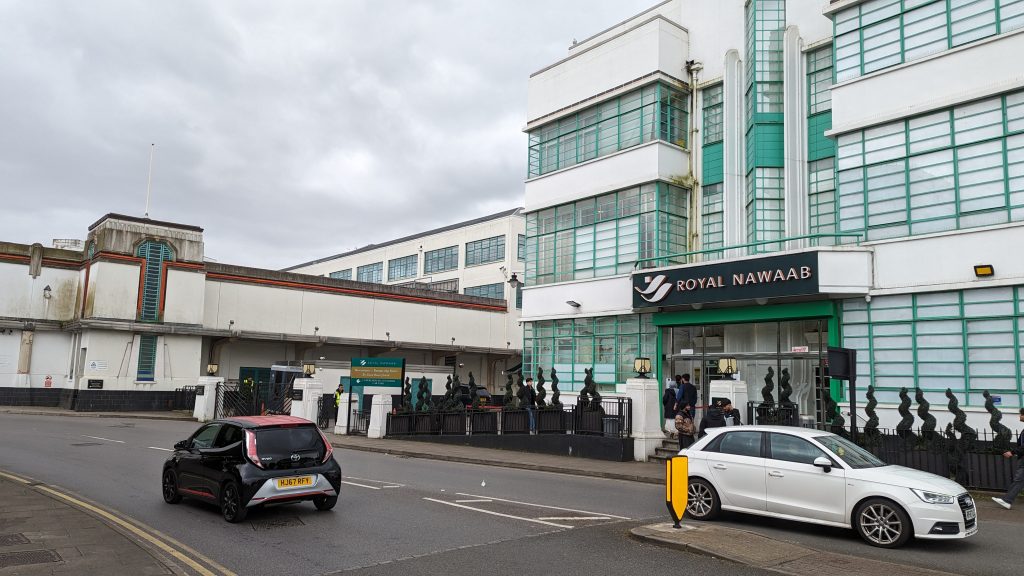
What made this trip even more special was that one of the original buildings has become a Hotel, in which we discovered a massive Indian Restaurant.  There, we found it full of about 500 people eating a fast-breaking Eid dinner. £26 to eat as much as you can, all self-service, with scores of chefs serving their delicious tureens of Asian food. Such a great cultural experience, and rather better than the tasteless Tesco sandwich we were expecting.

If I’m passing the factory on a tour, I tend to read to my group Sir John Betjeman’s patronising poem ‘Slough’ which is about the horror of the new consumer society.   ‘Slough’ is wonderful to read and, yet, also, awful, not just the Oxbridge author looking down his long privileged nose at the lower classes but going to the extreme of suggesting Slough would be better off bombed to smithereens.

Guernica was bombed on 26th April 1937 and ‘Slough appeared’ in a Betjeman collection called ‘Continual Dew’ in the same year (I havent located a reference with the actual date of publication).  Bad taste in the extreme, hardly mitigated by the fact that it was originally written in 1928 and was about trading estates in general rather than Slough in particular.  Still, despite all it is still one of my favourite poems for the insight it gives to attitudes of the British class system.

So, here it is.

Slough

Come friendly bombs and fall on Slough!
It isn’t fit for humans now,
There isn’t grass to graze a cow.
Swarm over, Death!

Come, bombs and blow to smithereens
Those air-conditioned, bright canteens,
Tinned fruit, tinned meat, tinned milk, tinned beans,
Tinned minds, tinned breath.

Mess up the mess they call a town-
A house for ninety-seven down
And once a week a half a crown
For twenty years.

And get that man with double chin
Who’ll always cheat and always win,
Who washes his repulsive skin
In women’s tears:

And smash his desk of polished oak
And smash his hands so used to stroke
And stop his boring dirty joke
And make him yell.

But spare the bald young clerks who add
The profits of the stinking cad;
It’s not their fault that they are mad,
They’ve tasted Hell
.

It’s not their fault they do not know
The birdsong from the radio,
It’s not their fault they often go
To Maidenhead

And talk of sport and makes of cars
In various bogus-Tudor bars
And daren’t look up and see the stars
But belch instead.

In labour-saving homes, with care
Their wives frizz out peroxide hair
And dry it in synthetic air
And paint their nails.

Come, friendly bombs and fall on Slough
To get it ready for the plough.
The cabbages are coming now;
The earth exhales.

850 new factories were built in Slough before the outbreak of world war two, and the Trading Estate was first seen here. And yes, they are bleak, and Slough is even now, not the most exciting or architecturally sophisticated of towns.  But to imagine bombing a town in a time when there was a real fear of mass destruction from the air?

I particularly object to the line about tinned food because I was brought up on tinned beans, peas, steak and kidney pudding, pineapple chunks, peaches, and rhubarb.  And exactly what is wrong with a hair-dryer?

Before I read Slough, I recount an experience I had years ago with an American group who suddenly started laughing for no reason.  I enquired, and they pointed to a huge advertising hoarding with a poster about the Electrolux Vacuum Cleaner.  Its location near the Hoover building, I imagine might have been deliberate, but what made the Americans laugh was the slogan:

‘Nothing sucks like an Electrolux’

To a British person, the slogan works in a positive sense and we appreciate the wit.  For the Americans, it made them all laugh with shock as to why anyone would pay to say their vacuum cleaner was complete pants.

Oh, and second best? Well, the best Modernist Building in London is the Daily Express Building, Fleet Street.

Mothering Sunday & Simnel Cake

In 2026 Mothering Sunday is on March 15th. In 2027 it will be on March 7th. Strangely, very little to do with Mothers! Mothering Sunday is the 4th Sunday in Lent and is a day in which we are enjoined to visit our Mother Churches. It, therefore, became a day when people made processions to their Churches.  Servants and workers could go to their home parishes, and not only go to the Mother Church but also to say hello to their mothers.

It was called Mothering Sunday when I was little but since then has morphed into the Americanism that is Mother’s Day.

In Church the Reading is often Isaiah 66:10–11

‘Rejoice ye with Jerusalem; and be ye glad for her, all ye that delight in her: exult and sing for joy with her, all ye that in sadness mourn for her; that ye may suck, and be satisfied with the breasts of her consolations.

Jerusalem is personified, here, as the Mother. Further associations with motherhood came from the Gospel for the day which is John 6:1–14, the story of the Feeding of the Five Thousand, which led to associations with the bounty of Mother Earth.

In the medieval period visits to the Mother Church seem to have become fiercely competitive. The Bishop of Lincoln, Robert Grosseteste decreed:

In each and every church you should strictly prohibit one parish from fighting with another over whose banners should come first in processions at the time of the annual visitation and veneration of the mother church. […] Those who dishonour their spiritual mother should not at all escape punishment, when those who dishonour their fleshly mothers are, in accordance with God’s law, cursed and punished with death.

(Letter 22.7 – Wikipedia)

Simnel Cake

It was also the Sunday in the fasting period of Lent in which the restrictions were relaxed, so you could eat what is called Simnel Cake.

I’ll to thee a Simnel bring
‘Gainst thou goest a-Mothering
So that, when she blesseth thee
Half that blessing thou’lt give me.

Herrick Hesperides 1647

Photo: James Petts from London, England – Simnel cake (wikipedia
Easter 2012

The Simnel cake is a fine flour light fruit cake (Latin simila, fine flour), with layers of marzipan in it. It often has 11 balls of marzipan on the top, representing the 11 (not Judas) apostles. The cake is first boiled for two hours and then baked.

Now, I know 95% of my American readers hate fruit cake, but believe me when I tell you – you are completely wrong! Its delicious, and here is the BBC’s recipe for you to try:

https://www.bbcgoodfood.com/recipes/easter-simnel-cake

And I’m beginning to see that cake is an emerging theme of this Almanac of the Past.

Written in March 23, slightly revised in March 24, and 25

Leap Day & and the Roman Calendar February 29th

Druids at All Hallows, by the Tower

I have just come back from my very first Leap Year Walk, which I gave tonight for London Walks. It was one of a series of my walks, which are about the year through London’s History. So far, I have done, a New Year Walk, an Imbolc Walk (1 February, St Brigid’s Day), a Spring Equinox Walk, a May Day Walk, a Summer Solstice Walk, an Autumn Equinox Walk, a Halloween Walk, and a Winter Solstice Walk. All, at their core, have the subject of the year, how it is arranged, and celebrated in different cultures and different times in London.

I hoped to get this post done, today, but on arrival at home my burglar alarm was ringing, so had to get an emergency electrician out to pacify my neighbours, and tracking down the fault meant turning my house upside down. I rushed it out, with many bad proof reading errors and ommissions, And have now, on the dawn of a new month, and a new Season, updated it. Probably, knowing me, it still has a far few errors! Now, I am rushing to look after my Grandson!

So, the reason there is a leap year, is that the Sun and the Moon have different cycles, which cannot be easily aligned. And secondly, the solar year is not a fixed number, it is not 365 days, but 365 days and a bit.

Originally though, probably, most cultures lived their lives with time keeping controlled by time markers from their everyday environment, days and nights, the waning and waxing of the moon, the seasons, and the changes in the rising and setting of the Sun. Budding nature would have provided other markers as to when to sow, to harvest, to prune, to slaughter, to worship and marry.

The months were given by the cycle of the Moon, which also gave us tides and menstrual cycles. The months were given names, which were often associated with the weather. The trouble was that the Solar year did not align with the Moon, soon the months would get out of kilter with the seasons. So over time, the society would find it was winter in June, or summer in December. (which is OK if you live in Australia).

Society dealt with this in a number of ways. It could be ignored, why shouldn’t it be cold in June, why should June always be in Summer? Another way was to add in extra days, or months, every so often to make sure June remained in the Summer. This is what Egypt, the early Romans and the Celts did. They kept their months aligned to the actual movements of the Moon, and aligned their Solar Year with it by the addition of extra days or a month or two. or a combination of both.

I reported on this in my post on the Terminalia for February 23rd. As I wrote:

Terminus was an old ancient God who was the God of the boundary, the border, the edge, the liminal God. February was the last month of the original Roman year, but the rulers of Rome added an intercalary month every so often, called Mercedonius in an attempt to keep the Solar year in tune with the seasons. And when the intercalary month was added, the last five days of February were given to Mercedonius and the resulting leap year was either 377 or 378 days long.. So, in those years, the 23rd of February was the Terminus of the year. (For more on Terminalia look at my post for February 23rd on Terminalia-god-of-the-boundary)

Now, as the Roman Republic became more sophisticated, the intercalary months were added at the direction of the Pontiffs, supposedly every two and sometimes every three years. But the Pontiffs were often swayed by political advantage, and by the time of Julius Caesar the seasons had got wildly out of sync with the calendar year. The Dictator, therefore, instituted ‘the Year of Confusion’ which was over 400 days long and brought in the Julian Calendar which realigned the calendar back in line with the seasons.

Caesar spent time with Egyptian Astronomers, trying to understand their solution to the problem. They identified that the year was not 365 days long but 356.25 days, so JC ‘fixed’the issue with a leap day every four years. Based on the almost correct calculation of a solar year being 365.25 days. The new calendar was inaugurated on the Kalends of Januarius 709 AUC, or as we would call it I January 45 BC. It became, in time, something the Romans were very proud of – rationalising, measuring, time itself. Romans counted their dates from the time their City was founded by Romulus in what we call 753 BC or 753 BCE. So, 45 BCE in our reckoning is 709 ab urbe condita (AUC ‘from the founding of the City) as the Romans saw it.

I prefer not to use BCE because it seems ‘dishonest’ to me. The idea of AD BC was made up based on a guess as to when Jesus was born. Changing BC to BCE may rid the date of an explicit Christian identification but masks the fact that there is no such thing as the ‘Common Era. What the Common Era is, is the idea made up in the Late Roman period guessing when Jesus was born/ So I think call a spade a spade, even if it’s a broken meaningless spade that is not fit for purpose, either replace it with something rational, or real or call it what it is.

The interesting thing is that Caesar put the leap year in on the 24th February. Why? Because February, being the month of death, was the end of the year. March 25th was originally the beginning of the Roman year (Caesar moved it to January 1st). Why March 25th? Because it was the Spring Equinox. If you look at my post for March 25th you will find out it is the date of the creation of Humanity, the Birthday of Adam, the conception of Jesus, and until 1752, the day the year number changed in Britain.

The other strange thing about the new leap day was that it was not called February 25th. It was not given a number. Rather, February 24th was two days long. This continued in Britain until the date February 29th started appearing in calendars in the 15th Century, although the legendary Lawyer, Edward Coke (1552 – 1634), refers to the two days of February 24th, but the two day 24th was completely replaced by February 29th in the 16th Century.

One slight complication to the story of February 29th was that February 29th did exist before the Julian reforms. When February was not interrupted by the intercalary month, as described above, it was 29 days long. Julius Caesar made the months alternate 30 and 31 except for February which was 29 days long. When the Senate gave Julius the honour of having the 7th Month named after him, things were OK, but then Augustus wanted the same thing. The Senate duly gave him the next month, which became known as August, but it only had 30 days. This could not be allowed! So they made it up to 31 and stole the 29th from February and made February only 28 days long. This change also meant that there were now three 31 days months in a row, so they reduced September from 31 to 30, boosted October to 31, reduced November to 30 and boosted December to 31,

Hence, we can no longer remember Caesar rational allotment of days in the month, and we need to hum to ourselves:

Thirty days have September
April, June, and November
February has twenty-eight alone.
All the rest have thirty-one.
Excepting leap year – that’s the time
When February’s days are twenty-nine.

But Caesar had not solved the problem of the shifting year, he had just minimised it. By the Council of Nicea in the early 4th Century (and not yet called AD!) the small error had changed the date of the Spring Equinox, from March 25th to March 21st. So, when Constantine convened the Council to bang the heads together of the Church leaders to unify their religion, particularly in regard to the date of Easter, and whether Jesus was equal to God. They fudged the complex issue of the date of Christ’s death, and used March 21st as the foundation of their calculation on the moon-based festival of Easter (more of which at Easter!)

It wasn’t until the 16th Century that Pope Gregory, solved the problem of the inaccuracy of Caesar’s solution, by introducting the Gregorian Calendar, for which see my post here.

See the following posts for the Roman Year:

Romulus’s 10 month year here

Roman Months here and more on the Ides of March here

Archaeology discoveries, February 2024

Sketch of a Roman skull of a man who was crucified.
Archaeology discoveries. The Image is a sketch of the ‘Facial Reconstruction, Impossible Factual/BBC’

Interesting Archaeology discoveries.

The following discoveries were reported in Salon IFA the newsletter of the Society of Antiquaries of London in Salon: Issue 526  7 February 2024, which you can see here:

Pliny the Elder’s Villa found near Vesuvius?

The 1st Century seafront villa, with views of the Bay of Naples and of Mount Vesuvius, has been excavated at the town of Bacoli, which was the port of Misenum. Pliny commanded the fleet as ‘Praefectus classis Misenensis’. Pliny tried to rescue his friends and family, ignoring warnings saying ‘Fortune favours the brave’, ‘Audentes Fortuna luvat’. It didn’t and he died, at Stabiae, by toxic fumes. Read more about the villa here:

Face Reconstructed for a Victim of Roman Crucifixion

A male skeleton found, 4 years ago, in a Roman cemetery in Fenstaton in Cambridgeshire was found with a 2-inch nail through his heel bone. BBC 4 has made a documentary about the recent reconstruction of the man’s face by, as Salon reports it:

‘US forensic artist Joe Mullins, of George Mason University, Virginia. He usually works with law enforcement agencies, reconstructing the faces of modern-day crime victims. ‘

To follow the details, read more here, or watch the BBC documentary, ‘The Cambridgeshire Crucifixion’, which can be viewed on BBC iPlayer.

For more archaeology read my post: https://www.chr.org.uk/anddidthosefeet/london-before-london-and-dna/

Published in February 2024, revised 2025

Coltsfoot & Smoking & Blossom & Cholera February 24th

Coltsfoot by Andreas Trepte Wikipedia

Coltsfoot is a daisy-like plant which is flowering about now. Gerard’s Herbal of 1633 suggests that the ‘fumes of the dried leaves taken through a funnel’ is good for those with coughs and shortness of breath. He suggests that it is smoked like tobacco and it ‘mightly prevaileth.’

This idea, Mrs Grieves says in her herbal (1931), is endorsed by ‘Dioscorides, Galen, Pliny, and Boyle’. And Coltsfoot is ‘nature’s best herb for the lungs’. (This is historic information re herbs and NOT current medical advice, as Coltsfoot can be very dangerous!).

engraving of a man smoking
Lobspruch deß edlen hochberühmten Krauts Petum oder Taback Nuremberg, 1658 New York Public Library Public Domain
Detail from Lobspruch deß edlen hochberühmten Krauts Petum oder Taback Nuremberg, 1658 New York Public Library Public Domain

My grandson and parents found a 19th Century pipe bowl, much like the one above, by the Thames where there were many fragments of clay pipe. For more on 17th Century smoking, have a look here.

Blossom is also coming out in London a little early. (2022 we had a false spring when Cherry Blossom came out, and I think we are now just getting used to it, so I don’t think it is being noted so much in 2024). Blackthorn (I think) is coming out in profusion in my local park. Photos below by the Author of Haggerston Park in East London. Left February 2022, Right Feb 23.

One thing I am trying to improve in my Almanac of the Past, is to include more specific London content. This can be difficult on a daily basis. But I think I have, by chance, found a solution. I was trying to glue the toe flap on a perfectly good pair of trainers so that it did not flap, and I needed a heavy weight to press the two edges together. I found a random couple of heavy books for the purpose. 24 hours later, I lifted the books to discover the failure of my project. But, as I returned the books to their place in the book case, I found the heaviest was called ‘A London Year. 365 Days of City Life in Diaries, Journals, and Letters.’ Compiled by Travis Elborough and Nick Bennison, published in 2013, and the price on it of £5.99 makes me feel I must have bought it second hand. Have I opened it before now? Indeed, I had forgotten its existence, but Cometh the Hour, Cometh the Book! What a timely rediscovery.

Cholera in London.
The news of the Cholera being in London has been received abroad. According to the feelings of the different nations towards England, France, who wish to court us has ordered a quarantine in her ports of three days; Holland, who feels aggrieved by our conduct at the conference, one of 40 days. The fog so thick in London that the illuminations for the Queen’s Birthday were not visible.

24th February 1832 Thomas Raikes, Diary 1832 (from ‘A London Year’ Compiled by Travis Elborough and Nick Bennison, 2013,

I think the Conference mentioned above was the London Conference of May 1832, which aimed to establish a Kingdom of Greece with a King, It was set up by Foreign Secretary Lord Palmerston without discussion with the Greeks and ended up giving them a Bavarian King. King Otto. Otto was forced from the throne in a revolution in 1862, and replaced by a Danish King, from whom Prince Philip, Duke of Edinburgh was descended.

Turning down Corners

CFDinosaur> - Home

Image borrowed from cfdinosaur.weebly.com

I have a friend with whom I argue about the sanctity of the book. She believes they need to be treated like the priceless spear carriers of culture that they are. While I, read them in the bath; turn down corners to mark my place; underline interesting phrases,  mark paragraphs and commit other forms of libricide. (is there such a word?)

In my defense I note that I used to work at the Freud Museum, where they studied the marginalia in Freud’s Library to gain insight into his thought processes and influences.

I can cite other examples of exquisite marginal drawings found in medieval manuscripts. (see this  excellent article in atlas obscura https://www.atlasobscura.com/articles/medieval-marginalia-books-doodles)

But I recently came across the clincher to my ongoing argument in Charles Nicholls’ marvelous book on Shakespeare’s life as a lodger (‘The Lodger’) in Silver St. just down the road from the Guildhall in the City of London.

He quotes Shakespeare’s Cymberline where Iachino finds a book by Imogen’s bed and says:

‘She hath been reading late:
The Tale of Tereus. Here, the leaf’s turn’d down.

I rest my case.

Festival of Imbolc, St. Bridget’s Day February 1st

Today is Imbolc, one of the four Celtic Fire Festivals. It corresponds with St Bridget’s Day, which is a Christian festival for the Irish Saint, and is the eve of Candlemas. Bridget is the patron saint of all things to do with brides, marriage, fertility, and midwifery (amongst many other things, see above). And in Ireland, last year (2024) was the very first St Bridget’s/ Imbolc Day Bank Holiday!

St Bride,s Statue St Bride's Church. Fleet Street
St Bride’s Statue, St Bride’s Church. Fleet Street from K.Flude’s virtual tour on Imbolc

St Bridget, aka Briddy or Bride, converted the Irish to Christianity along with St Patrick in the 5th Century AD. She appears to have taken on the attributes of a Celtic fertility Goddess, called Bridget or Brigantia, so some doubt she was a real person.

Brigantia

There are Roman altars dedicated to Brigantia The Brigantes tribe in the North were named after the Goddess. The Brigantes were on the front line against the invading Romans in the 1st Century AD, and led by Queen Cartimandua.  Cartimandua tried to keep her independence by cooperating with the Romans, while, a few years later, Boudica took the opposite strategy. But both women appear to have had agency as leaders of their tribes and show a great contrast with Roman misogyny.

altar to Brigantia
Altar to Brigantia from K Flude’s virtual tour on Imbolc

Last day of medieval Christmas and the Lords of Misrule.

This was the end of the Christmas period. John Stow, in the 16th Century describes the period between Halloween and Candlemas being the time that London was ruled by various Lords of Misrule and Boy Bishops (see my post here). In the piece below Stow goes on to talk about a terrible storm that took place on st February 1444.

Against the feast of Christmas every man’s house, as also the parish churches, were decked with holm, ivy, bays, and whatsoever the season of the year afforded to be green. The conduits and standards in the streets were likewise garnished; amongst the which I read, in the year 1444, that by tempest of thunder and lightning, on the 1st of February, at night, Powle’s steeple was fired, but with great labour quenched; and towards the morning of Candlemas day, at the Leaden hall in Cornhill, a standard of tree being set up in midst of the pavement, fast in the ground, nailed full of holm and ivy, for disport of Christmas to the people, was torn up, and cast down by the malignant spirit (as was thought), and the stones of the pavement all about were cast in the streets, and into divers houses, so that the people were sore aghast of the great tempests.’

Wells dedicated to St Bridget

There are many wells dedicated to St Bride. They were often used in rituals and dances concerned with fertility and healthy babies. And perhaps, the most famous, was near Fleet Street. Henry VIII’s Palace of Bridewell, later an infamous prison, was named after the Well. St Bride’s Church has long been a candidate as an early Christian Church, and although the post World War Two excavations found nothing to suggest an early Church, they did find an early well near the site of the later altar of the Church, and by the remains of a Roman building, possibly a mausoleum. Therefore, it is possible that the Church was built on the site of an ancient, arguably holy, well.

St Bridget's Well Glastonbury
St Bridget’s Well, Glastonbury

The steeple of St Brides is said to be the origin of the tiered Wedding Cake, which, in 1812, inspired a local baker to bake for his daughter’s wedding.

Steeple of St Brides Fleet Street

Imbolc and St Bridget’s Day are the time to celebrate the return of fertility to the earth as spring approaches. In my garden and my local park, the first snowdrops, violets, and daffodils are coming out, and below the bare earth, there is a frenzy of bulbs and seeds budding, and beginning to poke their shoots up above the earth, ready for the Spring. In the meadows, ewes are lactating, and the first lambs are being born.

Violets, bulbs, and my first Daffodil of the year. Hackney (2022), London by K Flude

I, occasionally, do walks about Imbolc and other Celtic festivals, in conjunction with the Myths and Legends of London, and at May Eve, the Solstices, Halloween and Christmas (when I have time). See the walks page of this blog

https://www.chr.org.uk/anddidthosefeet/walks

And let’s end with the Saint Brigid Hearth Keeper Prayer Courtesy of SaintBrigids.org

Brigid of the Mantle, encompass us,
Lady of the Lambs, protect us,
Keeper of the Hearth, kindle us.
Beneath your mantle, gather us,
And restore us to memory.
Mothers of our mother, Foremothers strong.
Guide our hands in yours,
Remind us how to kindle the hearth.
To keep it bright, to preserve the flame.
Your hands upon ours, Our hands within yours,
To kindle the light, Both day and night.
The Mantle of Brigid about us,
The Memory of Brigid within us,
The Protection of Brigid keeping us
From harm, from ignorance, from heartlessness.
This day and night,
From dawn till dark, From dark till dawn.

For more about St Bridget.

First published in 2023, revised and republished Feb 2024, 2025

I have republished my post of the Chinese New Year which you can see here:

Mary Musgrove’s Letter to Anne Elliot (In Jane Austen’s Persuasion’) February 1st

Letter from Jane Austen to her sister, Cassandra

I have been waiting to post this for a long time, as it relates to Christmas. (Was it really a month ago?) By the way, I have added to some text to yesterday’s Brexit posts.

This evening is also Imbolc, the Celtic Festival to Brigantia and St. Bridget of Kildare. Candlemas tomorrow.

This is a letter from Mary Musgrove in Persuasion (Chapter 18). This is Jane Austen’s most mature and probably the best novel,. Here the moany Mary Musgrove writes a typically FOMO letter which illustrates how Christmas, for the well, off really continued to February 1st and Candlemas.

February 1st
“My dear Anne,–I make no apology for my silence because I know how little people think of letters in such a place as Bath. You must be a great deal too happy to care for Uppercross, which, as you well know, affords little to write about. We have had a very dull Christmas; Mr. and Mrs. Musgrove have not had one dinner party all the holidays. I do not reckon the Hayters as anybody.

The holidays, however, are over at last: I believe no children ever had such long ones. I am sure I had not. The house was cleared yesterday, except of the little Harvilles; but you will be surprised to hear they have never gone home. Mrs. Harville must be an odd mother to part with them so long. I do not understand it. They are not at all nice children, in my opinion; but Mrs. Musgrove seems to like them quite as well, if not better, than her grandchildren.

What dreadful weather we have had! It may not be felt in Bath, with your nice pavements; but in the country it is of some consequence. I have not had a creature call on me since the second week in January, except Charles Hayter, who had been calling much oftener than was welcome.

Between ourselves, I think it a great pity Henrietta did not remain at Lyme as long as Louisa; it would have kept her a little out of his way. The carriage is gone to-day, to bring Louisa and the Harvilles to-morrow. We are not asked to dine with them, however, till the day after, Mrs. Musgrove is so afraid of her being fatigued by the journey, which is not very likely, considering the care that will be taken of her; and it would be much more convenient to me to dine there to-morrow.

I am glad you find Mr. Elliot so agreeable, and wish I could be acquainted with him too; but I have my usual luck: I am always out of the way when any thing desirable is going on; always the last of my family to be noticed. What an immense time Mrs. Clay has been staying with Elizabeth! Does she never mean to go away? But perhaps if she were to leave the room vacant, we might not be invited. Let me know what you think of this. I do not expect my children to be asked, you know. I can leave them at the Great House very well, for a month or six weeks.

I have this moment heard that the Crofts are going to Bath almost immediately; they think the Admiral gouty. Charles heard it quite by chance; they have not had the civility to give me any notice, or of offering to take anything. I do not think they improve at all as neighbours. We see nothing of them, and this is really an instance of gross inattention.

Charles joins me in love, and everything proper.


Yours affectionately,.”

It is my paragraphing rather than the original. The mystery of the book is how such a lovely, considerate, able daughter like Anne, can be from the same family as both her awful sisters, and her monstrous, egotistical father.

Archive of Events and Walks (2024)

I keep an archive of the walks I have done each year.

Ring in the New Year Virtual Walk

Old New Year Card


Monday 1st January 2024 7.00pm
On this Virtual Walk we look at how London has celebrated the New Year over the past 2000 years.

The New Year has been a time of review, renewal and anticipation
of the future from time immemorial. The Ancient Britons saw the Solstice as a symbol of a promise of renewal as the Sun was reborn. As the weather turns to bleak mid winter, a festival or reflection and renewal cheers everyone up. This idea of renewal was followed by the Romans, and presided over by a two headed God called Janus who looked both backwards and forwards. Dickens Christmas Carol was based on redemption and his second great Christmas Book ‘The Chimes’ on the renewal that the New Year encouraged.

We look at London’s past to see where and how the New Year was celebrated. We also explore the different New Years we use and their associated Calendars – the Pagan year, the Christian year, the Roman year, the Jewish year, the Financial year, the Academic year and we reveal how these began. We look at folk traditions, Medieval Christmas Festivals, Boy Bishops, Distaff Sunday and Plough Monday, and other Winter Festival and New Year London tradition and folklore.

At the end we use ancient methods to divine what is in store for us in 2024

ROMAN LONDON – A LITERARY & ARCHAEOLOGICAL WALK

Reconstruction View of Roman Riverside Wall being built

Sunday 21st Jan & 3rd March 2023 11.30 am Monument Underground Station

Our Guides will be Publius Ovidius Naso and Marcus Valerius Martialis who will be helped by Kevin Flude, former Museum of London Archaeologist, Museum Curator and Lecturer.

To book

We disembark at the Roman Waterfront by the Roman Bridge, and then explore the lives of the citizens as we walk up to the site of the Roman Town Hall, and discuss Roman politics. We proceed through the streets of Roman London, with its vivid and cosmopolitan street life via the Temple of Mithras to finish with Bread and Circus at the Roman Amphitheatre.

REVIEWS
“Kevin, I just wanted to drop you a quick email to thank you ever so much for your archaeological tours of London! I am so thrilled to have stumbled upon your tours! I look forward to them more than you can imagine! They’re the best 2 hours of my week! 🙂 Best, Sue


Jane Austen’s London Sunday Jan 21st 2.30 pm Green Park underground station,

Georgian female engraving

An exploration of Mayfair, the centre of the London section of Sense & Sensibility and where Jane came to visit her brother

“It is a truth universally acknowledged, that a Jane Austen devotee in possession of the good fortune of a couple of free hours today must be in want of this walk.”

People associate Jane Austen and her characters with a rural setting. But London is central to both Jane Austen’s real life and her literary life. So, this tour will explore Jane’s connections with London and give the background to Sense and Sensibility, a good part of which is based in this very area. We begin with the place Jane’s coach would arrive from Hampshire, and then walk the streets haunted by Willougby; past shops visited by the Palmers, the Ferrars; visit the location of Jane Austen’s brother’s bank and see the publisher of Jane’s Books. The area around Old Bond Street was the home of the Regency elite and many buildings and a surprising number of the shops remain as they were in Jane Austen’s day.

This is a London Walk Guided Walk lead by Kevin Flude


Sat 6pm 25th May 2024 Green Park Tube


Myths, Legends, Archaeology and the Origins of London

Druids at All Hallows, by the Tower

Sunday 4th February & Saturday 23 March 2024 11.30pm Tower Hill Underground

The walk tells the stories of our changing ideas about the origins of London during the Prehistoric, Roman and Saxon periods.

The walk is led by Kevin Flude, a former archaeologist at the Museum of London, who has an interest both in myths, legends and London’s Archaeology.

The walk will tell the story of the legendary origins of London which record that it was founded in the Bronze Age by an exiled Trojan and was called New Troy, which became corrupted to Trinovantum. This name was recorded in the words of Julius Caesar; and, then, according to Legend, the town was renamed after King Ludd and called Lud’s Dun. Antiquarians and Archaeologists have taken centuries to demolish this idea, and became convinced London was founded by the Romans. Recently, dramatic evidence of a Bronze Age presence in London was found.

When the Roman system broke down in 410 AD, historical records were almost non-existent, until the Venerable Bede recorded the building of St Pauls Cathedral in 604 AD. The two hundred year gap, has another rich selection of legends. which the paucity of archaeological remains struggles to debunk.

The walk will explore these stories and compare the myths and legends with Archaeological discoveries.

The route starts at Tower Hill, then down to the River at Billingsgate, London Bridge, and into the centre of Roman London

Tudor London – The City of Wolf Hall

Sunday 4th February 2024 2.15pm Barbican Underground Station

Tudor London – The City of Wolf Hall Virtual Tour Sunday 4th February 2024 7.30 pm To book

Thomas Bilney martyred in Smithfield. Black and white engraving
Thomas Bilney martyred in Smithfield.


The Walk creates a portrait of London in the early 16th Century, with particular emphasis on the life and times of Thomas Cromwell and Thomas More during the Anne Boleyn years.


More and Cromwell had much in common, both lawyers, commoners, who rose to be Lord Chancellor to Henry VIII, and ended their careers on the block at Tower Hill.

The walk starts with an exploration of Smithfield – site of the stake where heretics were burnt alive and of St Bartholomew’s Monastery – given to Richard Rich after his decisive role in the downfall of Thomas More. We continue to St Paul where Martin Luther’s books were burnt, and later, where Puritans preached against dancing round the Maypole.

We walk along the main markets streets of London, to Thomas More’s birthplace, and to the site of More’s and Cromwell’s townhouses before, if time allows, finishing at the site of the Scaffold where More and Cromwell met their ends, overlooking where Anne Boleyn was incarcerated in the Tower of London

The Leap Year Pub Walk Thurs 6pm 29 February 2024 Tower Hill Underground

Sketch of the text 29 February, in brown and black
Sketched from a photo by simple-aign on pixaby

Thurs, 29 February 2024, 6pm Tower Hill Underground

We explore London, the Leap Year and 29th February through history
A strange amazing day – and walk – that comes only once every four years. For the rest of the time it does not “exist.” A day – and walk – of temporal tune-up. A day – and walk – of unlocked potential. A day – and a walk – of unlocked London.

As the Sun, Moon and Seasons have different cycles and don’t fit into a set number of days, Londoners have had to cope with fixes to their Calendars to align the Cosmos with everyday life. As we walk through the streets of the ancient City of London, we explore how Londoners organised and celebrated their year throughout history

One of the most popular forms of publication in London was the Almanac. It was full of seasonal advice, of prophecy, traditional wisdom, and important events past and future. We will look at Almanacs and Diaries to find how Londoners spent their Leap Year.

We start with the Romans at the City Wall, near the Tower of London, and walk through history until we reach a historic pub to celebrate the New Year.

The Leap Year Almanac of the Past Pub Walk is led by Kevin Flude, a lecturer, curator and former archaeologist at the Museum of London. Join him to explore London’s History through its celebrations, festivals, calendars and almanacs.

This is a London Walks Guided Walk.

Roman London – A Literary & Archaeological Walk Sun 11.30 am 3rd March 2024 Monument Underground Station To book
Jane Austen’s London Sun 2.30 pm 3rd March 2024 Green Park Underground station (Green Park Exit. Fountain in Green Park), To book
Myths, Legends, Archaeology and the Origins of London Sunday 11.30am 23rd March 2024 Tower Hill Underground

London. 1066 and All That Walk

Black and white engraving of Chapel of St Johns Tower of London
Old illustration Chapel of St Johns Tower of London


Sunday 2.30pm 23rd March 2024 Blackfriars Underground Station
The Archaeological Walk that explores the City of London at the end of the Saxon period and at the beginning of the Norman.

The Norman Conquest of 1066 defines Britain in a way unmatched by any other event. And on this walk we explore the London that William conquered and how he changed England for all time.

London was England’s most important City, but not yet the capital. It was crucial to William in his attempt to conquer the realm. But his army could not fight their way across the heavily defended London Bridge after the defeat of the English King, Harold, at the Battle of Hastings.

The future of England was in the balance as he ravaged the country seeking a way across the river and to persuade the English that resistance was hopeless.

Once across the river, the English leaders sued for peace, and William was crowned at the newly built Westminster Abbey. The English hoped for a strong King who would rule with the people. But William began by building Castles to oppress the Citizens, and soon swept aside the English Aristocracy and establishment and replaced them with the Conquerors.

This was a death blow to Anglo-Saxon culture, but the City made an accommodation with the new regime and the first Lord Mayor of London was an Englishman.

So, on the walk we explore the Late Saxon City of London, and how it changed in the last 11th and 12th Centuries.

Walk is by Kevin Flude, former Archaeologist at the Museum of London
Kevin

Chaucer’s Medieval London Guided Walk

Medieval Newgate reconstruction painting
Medieval Newgate


Sunday 7th April 2024 11.30pm & Saturday 6th July 2.30 Aldgate Underground

A Walk around Medieval London following in the footsteps of its resident medieval poet – Geoffrey Chaucer
One of the spectators at the Peasants Revolt was Geoffrey Chaucer, born in the Vintry area of London, who rose to be a diplomat, a Courtier and London’s Customs Officer. He lived with his wife in the Chamber above the Gate in the City Wall at Aldgate. His poetry shows a rugged, joyous medieval England including many scenes reflecting life in London. His stories document the ending of the feudal system, growing dissatisfaction with the corruption in the Church, and shows the robust independence with which the English led their lives.

His work helped change the fashion from poetry in French or Latin to acceptance of the English language as suitable literary language. This was helped by the growth of literacy in London as its Merchants and Guildsmen became increasingly successful. In 1422, for example, the Brewers decided to keep their records in English ‘as there are many of our craft who have the knowledge of reading and writing in the English idiom.’

Chaucer and other poets such as Langland give a vivid portrait of Medieval London which was dynamic, successful but also torn by crisis such as the Lollard challenge to Catholic hegemony, and the Peasants who revolted against oppression as the ruling classes struggled to resist the increased independence of the working people following the Black Death.

A walk which explores London in the Middle Ages, We begin at Aldgate, and follow Chaucer from his home to his place of work at the Customs House, and then to St Thomas Chapel on London Bridge, and across the River to where the Canterbury Tales start – at the Tabard Inn.

This is a London Walks event by Kevin Flude

The Decline And Fall Of Roman London Walk

Reconstruction of Dark Age London Bridge
London in the 5th Century Reconstruction painting.

Sat 1.30pm 25th May 2024Exit 2 St Pauls Underground Station

An exploration of what happened at the end of the Roman Period, and how the City became deserted, and then, reborn as an English City

The first British Brexit?   The Roman Britons kicked out the Romans in 407AD, and, soon, asked them to come back after a catastrophic collapse.  Faced with plague, civil war, invasion, mass immigration,  industrial decline, reversion to barter; the authorities struggled against anarchy and descent into a dark age.

But was that how it was?  Wasn’t it a rather a transition into the Late Antique period in which life for most people went on much as before except paying taxes to local rulers rather than distant Romans?

The walk investigates why the Roman system in London broke down, and what really was the impact of the end of the Roman system in London? What is the evidence?  and can we trust it? Or can we really do nothing much more than guess? 

We tramp the streets of London in search of light to shine on the dark age of London.

This is a London Walks event by Kevin Flude, ex Museum of London Archaeology and Museum Curator.

Jane Austen’s London Walk

Georgian female engraving

Saturday 25th May 6pm 2024 Green Park underground station (Green Park exit, by the fountain)


An exploration of Mayfair, the centre of the London section of Sense & Sensibility and where Jane came to visit her brother

“It is a truth universally acknowledged, that a Jane Austen devotee in possession of the good fortune of a couple of free hours today must be in want of this walk.”

People associate Jane Austen and her characters with a rural setting. But London is central to both Jane Austen’s real life and her literary life. So, this tour will explore Jane’s connections with London and give the background to Sense and Sensibility, a good part of which is based in this very area. We begin with the place Jane’s coach would arrive from Hampshire, and then walk the streets haunted by Willougby; past shops visited by the Palmers, the Ferrars; visit the location of Jane Austen’s brother’s bank and see the publisher of Jane’s Books. The area around Old Bond Street was the home of the Regency elite and many buildings and a surprising number of the shops remain as they were in Jane Austen’s day.

This is a London Walk Guided Walk lead by Kevin Flude

The Peasants Revolt Anniversary Guided Walk

Mediaeval Manuscript of Peasants Revolt at Smithfield
Medieval Manuscript of Peasants Revolt at Smithfield


Aldgate Underground Thursday 6.30 13th June 2024

An Anniversary Walk tracking the progress of the Peasants as they take control of London in June of 1381

The Summer of Blood

The Peasants’ Revolt. The greatest popular rising in English history. This is the anniversary walk. The London Walk that heads back to 1381, back to the Peasants’ Revolt. You want a metaphor, think stations of the cross. This is the stations of the Peasants’ Revolt walk. We go over the ground, literally and metaphorically. Where it took place. Why it took place. Why it took place at these places. What happened. The walk is guided by the distinguished Museum of London Archaeologist His expertise means you’ll see the invisible. And understand the inscrutable.

On the anniversary of the Peasants Revolt we reconstruct the events that shook the medieval world. In June 1381, following the introduction of the iniquitous Poll Tax, England’s government nearly fell, shaken to the core by a revolt led by working men. This dramatic tour follows the events of the Revolt as the Peasants move through London in June 1381.

We met up with the Peasants at Aldgate, force our way into the City. We march on the Tower of London as the King makes concessions by ending serfdom, at Mile End. But the leaders take the mighty Tower of London and behead the leaders of Richard’s government. Attacks follow on the lawyers in the Temple, the Prior at St. John’s of Jerusalem, Flemish Londoners, and on Lambeth and Savoy Palaces.

The climax of the Revolt comes at Smithfield where a small Royal party confront the 30,000 peasants.

Chaucer’s Medieval London Guided Walk

Medieval Newgate reconstruction painting
Medieval Newgate

Sat 2.30 6th July 2024 Aldgate Underground

A Walk around Medieval London following in the footsteps of its resident medieval poet – Geoffrey Chaucer

One of the spectators at the Peasants Revolt was Geoffrey Chaucer, born in the Vintry area of London, who rose to be a diplomat, a Courtier and London’s Customs Officer. He lived with his wife in the Chamber above the Gate in the City Wall at Aldgate. His poetry shows a rugged, joyous medieval England including many scenes reflecting life in London. His stories document the ending of the feudal system, growing dissatisfaction with the corruption in the Church, and shows the robust independence with which the English led their lives.

His work helped change the fashion from poetry in French or Latin to acceptance of the English language as suitable literary language. This was helped by the growth of literacy in London as its Merchants and Guildsmen became increasingly successful. In 1422, for example, the Brewers decided to keep their records in English ‘as there are many of our craft who have the knowledge of reading and writing in the English idiom.’

Chaucer and other poets such as Langland give a vivid portrait of Medieval London which was dynamic, successful but also torn by crisis such as the Lollard challenge to Catholic hegemony, and the Peasants who revolted against oppression as the ruling classes struggled to resist the increased independence of the working people following the Black Death.

A walk which explores London in the Middle Ages, We begin at Aldgate, and follow Chaucer from his home to his place of work at the Customs House, and then to St Thomas Chapel on London Bridge, and across the River to where the Canterbury Tales start – at the Tabard Inn.

This is a London Walks event by Kevin Flude

Myths, Legends, Archaeology and the Origins of London

Bran's head taken to Tower Hill
King Bran’s head buried at Tower Hill

Sat 6pm 6th July 2024 Tower Hill Underground

The walk tells the stories of our changing ideas about the origins of London during the Prehistoric, Roman and Saxon periods.

The walk is led by Kevin Flude, a former archaeologist at the Museum of London, who has an interest both in myths, legends and London’s Archaeology.

The walk will tell the story of the legendary origins of London which record that it was founded in the Bronze Age by an exiled Trojan and was called New Troy, which became corrupted to Trinovantum. This name was recorded in the words of Julius Caesar; and, then, according to Legend, the town was renamed after King Ludd and called Lud’s Dun. Antiquarians and Archaeologists have taken centuries to demolish this idea, and became convinced London was founded by the Romans. Recently, dramatic evidence of a Bronze Age presence in London was found.

When the Roman system broke down in 410 AD, historical records were almost non-existent, until the Venerable Bede recorded the building of St Pauls Cathedral in 604 AD. The two hundred year gap, has another rich selection of legends. which the paucity of archaeological remains struggles to debunk.

The walk will explore these stories and compare the myths and legends with Archaeological discoveries.

The route starts at Tower Hill, then down to the River at Billingsgate, London Bridge, and into the centre of Roman London.

Roman London – A Literary & Archaeological Walk

Reconstruction View of Roman Riverside Wall being built

Sat 11.30 am 21st August 2024 Monument Underground Station To book

This is a walking tour that features the amazing archaeological discoveries of Roman London, and looks at life in the provincial Roman capital of Londinium.

Our Guides will be Publius Ovidius Naso and Marcus Valerius Martialis who will be helped by Kevin Flude, former Museum of London Archaeologist, Museum Curator and Lecturer.

We disembark at the Roman Waterfront by the Roman Bridge, and then explore the lives of the citizens as we walk up to the site of the Roman Town Hall, and discuss Roman politics. We proceed through the streets of Roman London, with its vivid and cosmopolitan street life via the Temple of Mithras to finish with Bread and Circus at the Roman Amphitheatre.

Zinger Read: Talk about a high-quality one-two punch. This walk investigates the groundbreaking archaeological discoveries of Roman London. And then it reconstructs life in a provincial Roman capital using archaeological and literary sources. Discoveries – insights – like flashes of lightning in a cloud. We begin at the site of the Roman bridge. We might be decent young Roman citizens in togas, having this and that bit of
explained to us as we make our way towards the Roman Town Hall. From there we head to the site of the excavation called ‘the Pompeii of the North.’ Followed by the Temple of Mithras. We finish with a walk along the Roman High Street in order to end at the site of the Roman Amphitheatre. So, yes, welcome to London as it was 2,000, 1,900, 1,800, 1,700 and 1,600 years ago. And, yes, the walk’s guided by a real expert, the distinguished emeritus Museum of London archaeologist Kevin Flude. That means you’ll see things other people don’t get to see, delve into London via fissures that aren’t visible, let alone accessible, to non-specialists.

REVIEWS
“Kevin, I just wanted to drop you a quick email to thank you ever so much for your archaeological tours of London! I am so thrilled to have stumbled upon your tours! I look forward to them more than you can imagine! They’re the best 2 hours of my week! 🙂 Best, Sue

To Book:

Tudor London – The City of Wolf Hall

Old Print showing the beheading of Anne Boleyn


Sunday 1.30pm 8th September 2024 Barbican Underground Station

To Book:

The Walk creates a portrait of London in the early 16th Century, with particular emphasis on the life and times of Thomas Cromwell and Thomas More during the Anne Boleyn years

More and Cromwell had much in common, both lawyers, commoners, who rose to be Lord Chancellor to Henry VIII, and ended their careers on the block at Tower Hill.

The walk starts with an exploration of Smithfield – site of the stake where heretics were burnt alive and of St Bartholomew’s Monastery – given to Richard Rich after his decisive role in the downfall of Thomas More. We continue to St Paul where Martin Luther’s books were burnt, and later, where Puritans preached against dancing round the Maypole.

We walk along the main markets streets of London, to Thomas More’s birthplace, and to the site of More’s and Cromwell’s townhouses before, if time allows, finishing at the site of the Scaffold where More and Cromwell met their ends, overlooking where Anne Boleyn was incarcerated in the Tower of London

To Book:

Jane Austen’s London

Georgian female engraving
Lady’s Maid from an 18th Century Print


Sunday 6pm 8th September 2024 Green Park underground station (Green Park exit, by the fountain)
To Book:


An exploration of Mayfair, the centre of the London section of Sense & Sensibility and where Jane came to visit her brother

“It is a truth universally acknowledged, that a Jane Austen devotee in possession of the good fortune of a couple of free hours today must be in want of this walk.”

People associate Jane Austen and her characters with a rural setting. But London is central to both Jane Austen’s real life and her literary life. So, this tour will explore Jane’s connections with London and give the background to Sense and Sensibility, a good part of which is based in this very area. We begin with the place Jane’s coach would arrive from Hampshire, and then walk the streets haunted by Willougby; past shops visited by the Palmers, the Ferrars; visit the location of Jane Austen’s brother’s bank and see the publisher of Jane’s Books. The area around Old Bond Street was the home of the Regency elite and many buildings and a surprising number of the shops remain as they were in Jane Austen’s day.

This is a London Walk Guided Walk lead by Kevin Flude

To Book:

Chaucer’s Medieval London Walk Sat 11.30 5th October 24 Aldgate Underground


London Before And After The Roman Invasion 3pm Saturday 5th October 2024 Tower Hill Underground

London before the Romans
View of London from the SE as it might have looked before the Roman Invasion

Tower Hill Underground 3pm Saturday 5th October 2024

The walk looks into the evidence for a prehistoric London and tells the story of the coming of the Romans in AD43

The walk is led by Kevin Flude, a former archaeologist at the Museum of London.

The walk investigates the City of London before and after the the Roman Conquest. What is the evidence for settlement before the Romans set up town of Londinium? Why did the Romans establish the town on this spot? Who were the early Roman Londoners and what made their choice of site so successful?

The fledgling Town was then burnt down by Queen Boudiccan and her Icenian rebels. We look at the evidence for the Revolt and London’s recovery to became the capital of Britain.

This is a London Walks Guided Walk. Look at their web site for a list of other of their amazing walks.

REVIEWS (from London Walks website)
“Kevin, I just wanted to drop you a quick email to thank you ever so much for your archaeological tours of London! I am so thrilled to have stumbled upon your tours! I look forward to them more than you can imagine! They’re the best 2 hours of my week! 🙂 Best, Sue

Myths, Legends & Halloween Virtual Walk Thu 8.00pm 31st October 2024


The walk tells the story of London’s myths and legends and the Celtic origins of Halloween.
The virtual walk is led by Kevin Flude, a former archaeologist at the Museum of London, who has an interest both in the archaeological evidence as well as the myths and legends of London’s origin.

The virtual walk will tell the story of a selection of London’s Myths and Legends, beginning with the tale of London’s legendary origins in the Bronze Age by an exiled Trojan called Brutus. Stories of Bladud, Bellinus, Bran and Arthur will be interspersed with how they fit in with archaeological discoveries.

As we explore the City we also look at the origins of Halloween celebrations and how they may have been celebrated in early London.

The virtual route starts at Tower Hill, then down to the River Thames at Billingsgate, to London Bridge and Southwark Cathedral, to the Roman Forum at the top of Cornhill, into the valley of the River Walbrook, passed the Temple of Mithras, along Cheapside to the Roman Amphitheatre, and finishing up in the shadow of St Pauls.

This is a London Walks Guided Walk. Look at their web site for a list of other of their amazing walks.

REVIEWS (from London Walks website)
“Kevin, I just wanted to drop you a quick email to thank you ever so much for your archaeological tours of London! I am so thrilled to have stumbled upon your tours! I have wanted to be an archaeologist since 1978 at the ripe old age of 8 years,… I was told for years that I could not be an archaeologist [for any number of reasons, which I now realise are completely ridiculous!], so I ended up on a different course of study. And now at the age of 50, it is my one great regret in life. So, I am thoroughly enjoying living vicariously through you, the digs you’ve been on, and the history you bring to life for us! British archaeology would have been my specific area of study had I pursued it. ?? Thank you SO MUCH for these! I look forward to them more than you can imagine, and honestly, I’ll be sad if you get them down to 1.5 hours! They’re the best 2 hours of my week! 🙂 Best, Sue

Roman London – Literary & Archaeology Walk Sat 11.30 am,9th November 2024


London: 1066 and All That Walk Sat 2.30pm 9th Nov 24

Black and white engraving of Chapel of St Johns Tower of London
Old illustration Chapel of St Johns Tower of London


Sat 2.30pm 9th November 2024 Blackfriars Underground Station
The Archaeological Walk that explores the City of London at the end of the Saxon period and at the beginning of the Norman.

The Norman Conquest of 1066 defines Britain in a way unmatched by any other event. And on this walk we explore the London that William conquered and how he changed England for all time.

London was England’s most important City, but not yet the capital. It was crucial to William in his attempt to conquer the realm. But his army could not fight their way across the heavily defended London Bridge after the defeat of the English King, Harold, at the Battle of Hastings.

The future of England was in the balance as he ravaged the country seeking a way across the river and to persuade the English that resistance was hopeless.

Once across the river, the English leaders sued for peace, and William was crowned at the newly built Westminster Abbey. The English hoped for a strong King who would rule with the people. But William began by building Castles to oppress the Citizens, and soon swept aside the English Aristocracy and establishment and replaced them with the Conquerors.

This was a death blow to Anglo-Saxon culture, but the City made an accommodation with the new regime and the first Lord Mayor of London was an Englishman.

So, on the walk we explore the Late Saxon City of London, and how it changed in the last 11th and 12th Centuries.

Walk is by Kevin Flude, former Archaeologist at the Museum of London
Kevin

London Before London – Prehistoric London Virtual Walk

Sat 7.30pm 9th November 2024

London before the Romans
View of London from the SE as it might have looked before the Roman Invasion


An exploration of London before the foundation of Londinium

It was long thought that London was founded by a Trojan Exile in the Late Bronze Age. But historical analysis and archaeological excavation gradually demoted the idea to a myth.

On this tour we explore what was in the London area before the Romans. We begin at Heathrow and tour Greater London for evidence from the Paleolithic to the invasion of the Emperor Claudius.

We concentrate on the period since the introduction of farming, and bring together evidence for the prehistoric Kingdoms that controlled the area on the eve of the Invasion. We look for henges, barrows, hill forts, hut circles and look at genetic evidence for identity of prehistoric Londoners. The tour will end in the City.

This is a London Walks event by Kevin Flude, ex Museum of London Archaeology and Museum Curator

The Decline And Fall Of Roman London Walk Sat 11.30am 23rd November 24
Jane Austen’s London Sat 3.00 pm 23rd November

Christmas With Jane Austen Virtual London Tour Mon 9 Dec 24 7.30pm


We look at how Jane Austen spent Christmas and at Georgian Christmas traditions and amusements.

“It is a truth universally acknowledged, that a Jane Austen devotee in possession of the good fortune of a couple of free hours must be in want of this virtual walk.”

This is a special walk, which looks at the traditions of Christmas during the Regency period and how Jane Austen might have celebrated it. It will give some background to Jane Austen’s life and her knowledge of London. We used her novels and her letters to find out what she might have done at Christmas, but also at how Christmas was kept in this period, and the range of ‘Curiosities, Amusements, Exhibitions, Public Establishments, and Remarkable Objects in and near London available to enjoy.

This is a London Walks Guided Walk by Kevin Flude, Museum Curator and Lecturer.

Reviews: ‘Thanks, again, Kevin. These talks are magnificent!’
“1 am glad to see there are a few more virtual presentations scheduled, they are wonderful!


Dickens London. Life, Work and Christmas Virtual Tour Mon 16 Dec 24 7.30pm

Dickens character Trotty Veck waits to run a message
Trotty Veck 1889 Dickens The Chimes by Kyd (Joseph Clayton Clarke)

A Virtual Tour of Dickens London with a dash of Dickensian Christmas

The Virtual Tour weaves an exploration of Victorian London with Dickens London Life and writing. On the tour we have a look at London at Christmas and the contribution Dickens made to it by his Christmas Books

Dickens writing always has a moral element as exemplified by his Christmas Books. ‘Christmas Carol’ was based on redemption and his second great Christmas Book ‘The Chimes’ on the renewal that the New Year encouraged.

We start in Southwark, visit sites associated with the Christmas Books and others and end at Staple Inn with the Christmas Book ‘The Haunted Man’.

The London Winter Solstice Virtual Tour Sat 7:30pm 21 Dec 24


We explore London’s History through its celebrations, festivals, calendars, and almanacs of the Winter Solstice


Winter Solstice festivals have been a time of review, renewal and anticipation of the future from time immemorial. The Ancient Britons saw the Solstice as a symbol of a promise of renewal as the world entered bleak mid winter. The Roman season was presided over by Janus, a two headed God who looked both backwards and forwards, and Dickens based his second great Christmas Book on the renewal that the New Year encouraged.

We look at London’s past to see where and how the Solstice might be celebrated. We also explore the different Calendars – the Pagan year, the Christian year, the Roman year, the Jewish year, the Financial year, the Academic year and we reveal how these began. We look at folk traditions, Medieval Christmas Festivals, Boy Bishops, Distaff Sunday and Plough Monday, and other London winter traditions and folklore.

At the end we use ancient methods to divine what is in store for us in 2023.