This day is the anniversary of the bombing of Guernica in the Spanish Civil War but first we find out the origins of the London Cocktail Party.
The first Cocktail Party
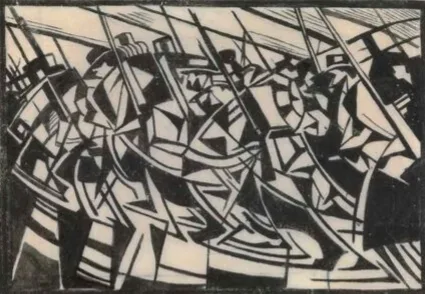
The brother of Evelyn Waugh, Alex put on the first Cocktail party in 1924, or so he claims. He organised it at the studio of celebrated war painter C. R. W. Nevinson, in Haverstock Hill. Waugh felt there was nothing much to do between 5 and 7 except tea parties where tea, crumpets and cake were eaten. As he said to the Newinsons:
“What one needs, is some kind of a party that starts at half-past five, that lasts ninety minutes, at which alcohol is served but not much food.”
The first drink boded well:
‘I opted for rum. Jamaican rum had been blended with Rose’s (Newinson) lime juice and sharpened with Angostura. Large nuggets of ice kept the mixture cool. It was very potent. The first sip made me shiver, in the way that a dry martini does. It also sent a glow along my veins. “This,” I said, “is going to be a party.”‘
But it wasn’t as only one person turned up. So a year, later he tried again, but this time he disguised the event as a ‘Tea party’. But served, “A Daiquiri. It’s sweet, like a dessert, and very strong. It will produce the precise effect you need.” at the suggestion of a member of the US Embassy. As the drink tasted like sherbet, everyone drunk lots of them and the tea party went with a swing unlike any other. And thus, it caught on and became a part of the London scene.
To read Alex Waugh’s account of the invention please read here.
Guernica
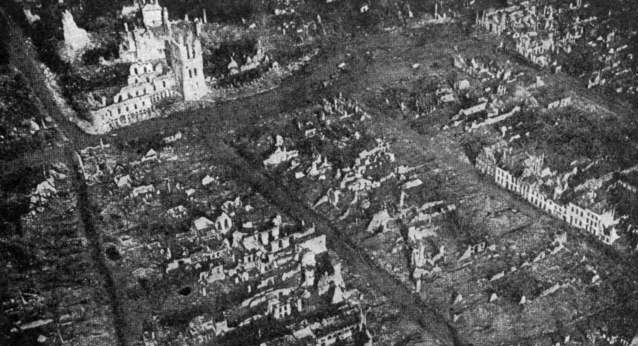
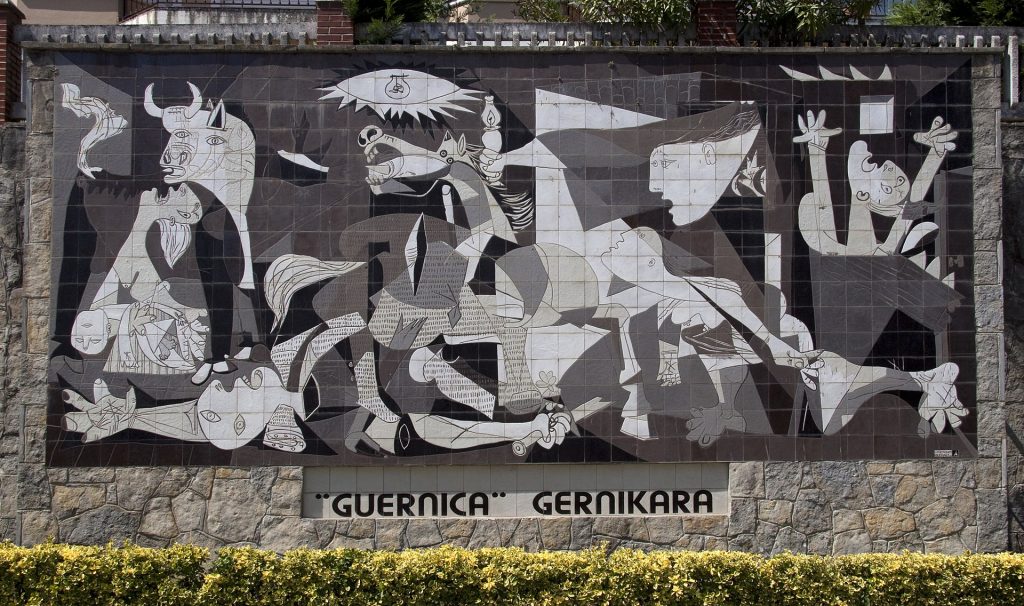
Franco ordered the bombing as part of his campaign to overthrow the Basque Government. The Town was devasted and 1,654 civilians were killed. The bombing was undertaken by ‘the Condor Legion of Nazi Germany’s Luftwaffe and the Italian Aviazione Legionaria’ (Wikipedia). Picasso began his famous painting almost immediately after he heard an eyewitness account of the attack. The iconic painting was finished by 4 June 1937. The bombing showed the potential damage war from the air could do to crowded Cities. The painting became one of the most famous campaigning works of art.
The War from the Air
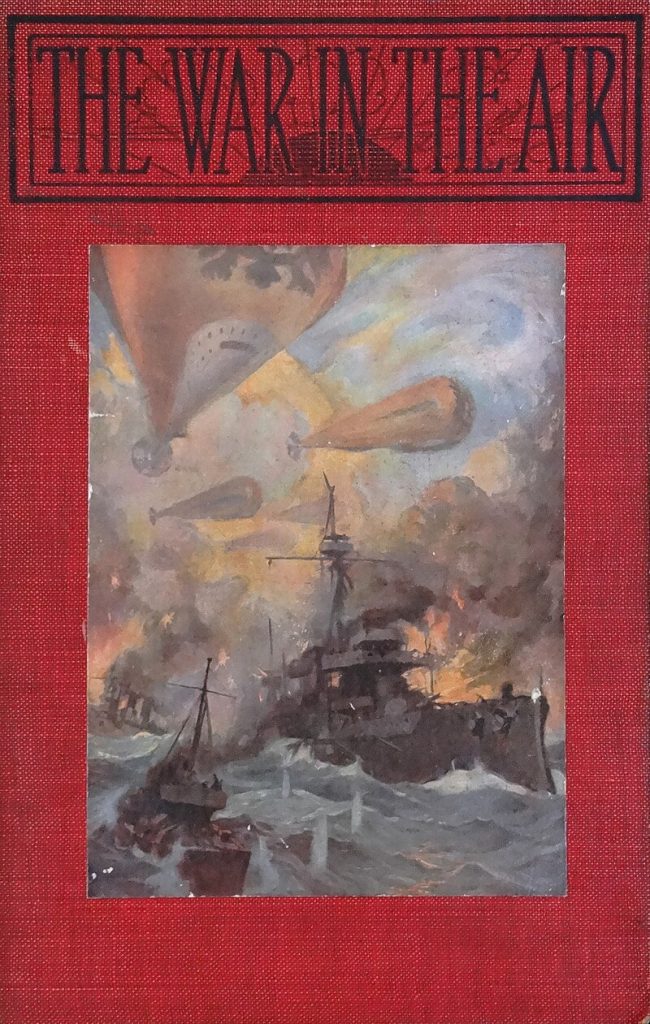
Illustration by A. C. Michael of Pall Mall Magazine –
Aerial warfare became a reality as soon as the Montgolfier Brothers flew the first Hot Air Balloon. (On 19 September 1783, they flew a balloon with a sheep called Montauciel (“Climb-to-the-sky”), a duck and a rooster in the basket). In the Revolutionary Wars, the French used hot air balloons for reconnaissance. Napoleon considered transporting troops by balloon in an invasion of Britain. With the arrival of planes and the development of the Zeppelin. Air warfare became a feature of speculative fiction, and began to absorb the planners.
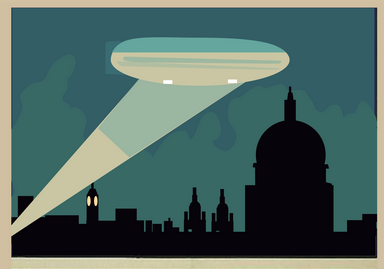
H G Wells book, illustrated above, featured a war between Germany and the United States in which New York is obliterated by Aerial Bombing. This was written in 1908. In World War 1 London was the focus of a series of Zeppelin and Aeroplane raids. These killed over 500 people. (see my post on the London Zeppelin raid of Sept 8th 1916).
As planes developed in capacity, war departments created plans that seem now to have been exaggerated. It is thought that Appeasement was partly a response to the feared casualties from war in the air. The authorities were planning for 1 million killed in London and double that number of people deranged by fear. In the event, casualties were far less, some 43,000 killed. However, 2 million houses were destroyed. The scale of destruction was fairly accurately predicted but the casualties greatly exaggerated.
(see my post on the-ultimate-raf-london-blitz-story)
On this Day
1564 – Shakespeare Baptised at Holy Trinity Church, Stratford on Avon.
1925 – World War 1 General von Hindenburg returned as the first directly elected President of the Weimar Republic. He played a crucial role in Hitler’s ascent to power. Hindenburg’s example is one of the main reasons I prefer an unelected powerless Royal Head of State, rather than an elected one.
1994 – The new South African constitution set up and democratic elections were held.
First Published on April 26th 2025, revised First Cocktail Party added 2026