Jane Austen’s London Walk 2.30pm Sun 31st May 2026 To Book
The First Blitz – Zeppelin London New Walk! 6pm Sun 31 May 2026 To Book
Roman London – Literary & Archaeology Walk 3pm Sat 6th June 2026 Tobook
The Rebirth Of Saxon London Archaeology Walk 11am Sun 7th June 2026 To book
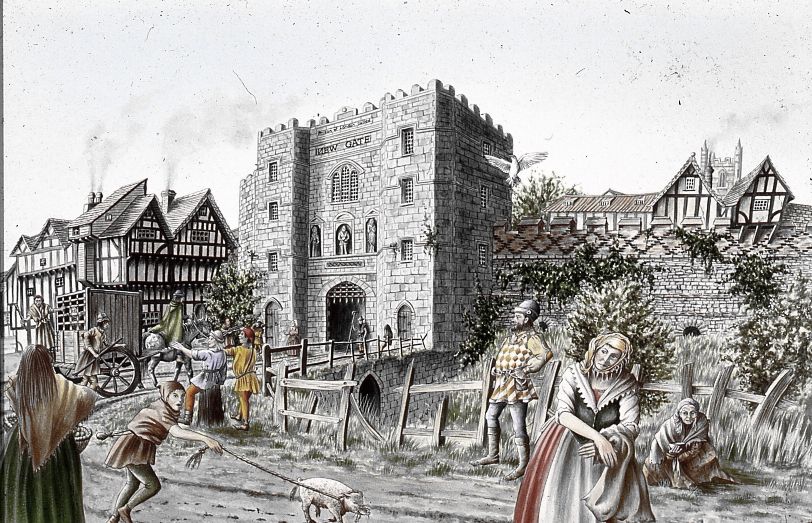
Tudor London – The City of Wolf Hall 3pm 4th July 2026 To Book
Jane Austen’s London Walk 2:30pm Sun 5th July 2026 To book
London. 1066 and All That Walk 11.30am Sun 12th July 26 Tobook
Bloody, Flaming, Poxy London 3pm Sun 12th July 26 To book
Myths, Legends, Archaeology and the Origins of London 3pm Sat 1 Aug 2026 Tower Hill Underground To book
The Decline And Fall Of Roman London Walk 11:15am 2nd Aug 26 To book
Jane Austen’s London Walk 2:30pm Sun 2nd Aug 26 To book
Chaucer’s Medieval London Guided Walk 11.00am Sat 5th Sept 2026 To book
Jane Austen’s London Walk 2:30pm Sun 5th Sept 2026 To book
Jane Austen’s London Walk 2:30pm Sat 24th Oct 2026 To book
For a complete list of my guided walks for London Walks in 2026 look here
Archive of Guided Walks/Events for 2025
Every year I keep a list of my guided walks, and tours on my blog the ‘Almanac of the Past’. Here are the walks I have so far done in 2025.
Here is my ‘Almost Complete List of Guided Walks, Study Tours, Lectures’
Ring in the New Year Virtual Guided Walk
Monday 1st January 2025 7.00 pm
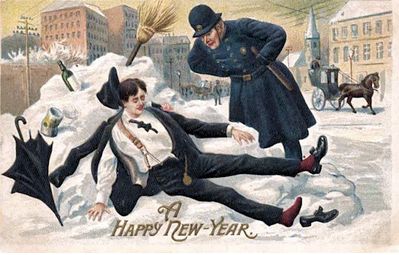
On this Virtual Walk we look at how London has celebrated the New Year over the past 2000 years.
The New Year has been a time of review, renewal, and anticipation of the future from time immemorial. The Ancient Britons saw the Solstice as a symbol of a promise of renewal as the Sun was reborn. As the weather turns to bleak mid winter, a festival or reflection and renewal cheers everyone up. This idea of renewal was followed by the Romans, and presided over by a two headed God called Janus who looked both backwards and forwards. Dickens Christmas Carol was based on redemption and his second great Christmas Book ‘The Chimes’ on the renewal that the New Year encouraged.
We look at London’s past to see where and how the New Year was celebrated. We also explore the different New Years we use and their associated Calendars – the Pagan year, the Christian year, the Roman year, the Jewish year, the Financial year, the Academic year and we reveal how these began. We look at folk traditions, Medieval Christmas Festivals, Boy Bishops, Distaff Sunday and Plough Monday, and other Winter Festival and New Year London traditions and folklore.
At the end, we use ancient methods to divine what is in store for us in 2023.
The virtual walk finds interesting and historic places in the City of London to link to our stories of Past New Year’s Days. We begin, virtually, at the Barbican Underground and continue to the Museum of London, the Roman Fort; Noble Street, Goldsmiths Hall, Foster Lane, St Pauls, Doctors Commons, St. Nicholas Colechurch and on towards the River Thames.
The Civil War, Restoration and the Great Fire of London Virtual Tour
7:30pm Fri 30th January 2025
January 30th is the Anniversary of the execution of Charles I and to commemorate it we explore the events and the aftermath of the Civil War in London.
Along with the Norman Conquest of 1066 and winning the World Cup in 1966 the Great Fire in 1666 are the only dates the British can remember!
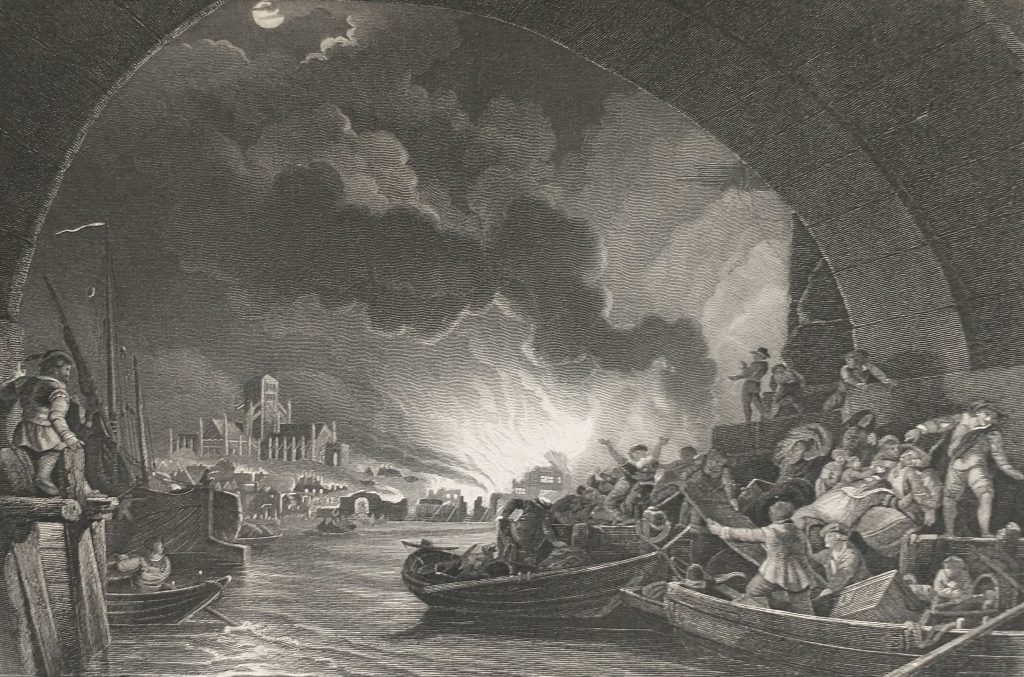
And we remember the Great Fire because it destroyed one of the great medieval Cities in an epic conflagration that shocked the world.
But it wasn’t just the Great Fire that made the 17th Century an epic period in English History. There was a Civil War, beheading of the King, a Republic, a peaceful Restoration of the Monarch, the last great plague outbreak in the UK, the Glorious Revolution and the Great Wind.
The Virtual Walk puts the Great Fire in the context of the time – Civil War, anti-catholicism, plague, and the commercial development of London.
The walk brings to life 17th Century London. It starts with the events that lead up to the Civil War concentrating on Westminster and ends with a vivid recreation of the drama of the Fire as experienced by eye-witnesses. Route includes: Westminster, Fish Street Hill, Pudding Lane, Monument, Royal Exchange, Guildhall, Cheapside, St Pauls, Amen Corner, Newgate Street, Smithfield.
Roman London – Literary & Archaeology Walk
11.30 am Sun 9th Feb 2025 Monument Underground Station
also on 11.30am Sun 27th Apr 25 but starting from Moorgate
This is a walking tour features the amazing archaeological discoveries of Roman London, and looks at life in the provincial Roman capital of Londinium.
This is a walking tour that features the amazing archaeological discoveries of Roman London, and looks at life in the provincial Roman capital of Londinium.
Our Guides will be Publius Ovidius Naso and Marcus Valerius Martialis who will be helped by Kevin Flude, former Museum of London Archaeologist, Museum Curator and Lecturer.
We disembark at the Roman Waterfront by the Roman Bridge, and then explore the lives of the citizens as we walk up to the site of the Roman Town Hall, and discuss Roman politics. We proceed through the streets of Roman London, with its vivid and cosmopolitan street life via the Temple of Mithras to finish with Bread and Circus at the Roman Amphitheatre.
Zinger Read: Talk about a high-quality one-two punch. This walk investigates the groundbreaking archaeological discoveries of Roman London. And then it reconstructs life in a provincial Roman capital using archaeological and literary sources. Discoveries – insights – like flashes of lightning in a cloud. We begin at the site of the Roman bridge. We might be decent young Roman citizens in togas, having this and that bit of
explained to us as we make our way towards the Roman Town Hall. From there we head to the site of the excavation called ‘the Pompeii of the North.’ Followed by the Temple of Mithras. We finish with a walk along the Roman High Street in order to end at the site of the Roman Amphitheatre. So, yes, welcome to London as it was 2,000, 1,900, 1,800, 1,700 and 1,600 years ago. And, yes, the walk’s guided by a real expert, the distinguished emeritus Museum of London archaeologist Kevin Flude. That means you’ll see things other people don’t get to see, delve into London via fissures that aren’t visible, let alone accessible, to non-specialists.
REVIEWS
“Kevin, I just wanted to drop you a quick email to thank you ever so much for your archaeological tours of London! I am so thrilled to have stumbled upon your tours! I look forward to them more than you can imagine! They’re the best 2 hours of my week! 🙂 Best, Sue
Jane Austen’s London Anniversary Guided Walk
2.30 pm Sunday 9th Feb 2025
Green Park underground station, Green Park exit, by the fountain To book
| Also | |||||
| 9 February 2025 | Sunday | 2.30 pm | 4.30 pm | ||
| 8 March 2025 | Saturday | 2.30 pm | 4.30 pm | ||
| 6 April 2025 | Sunday | 11.30 am | 1.30 pm |
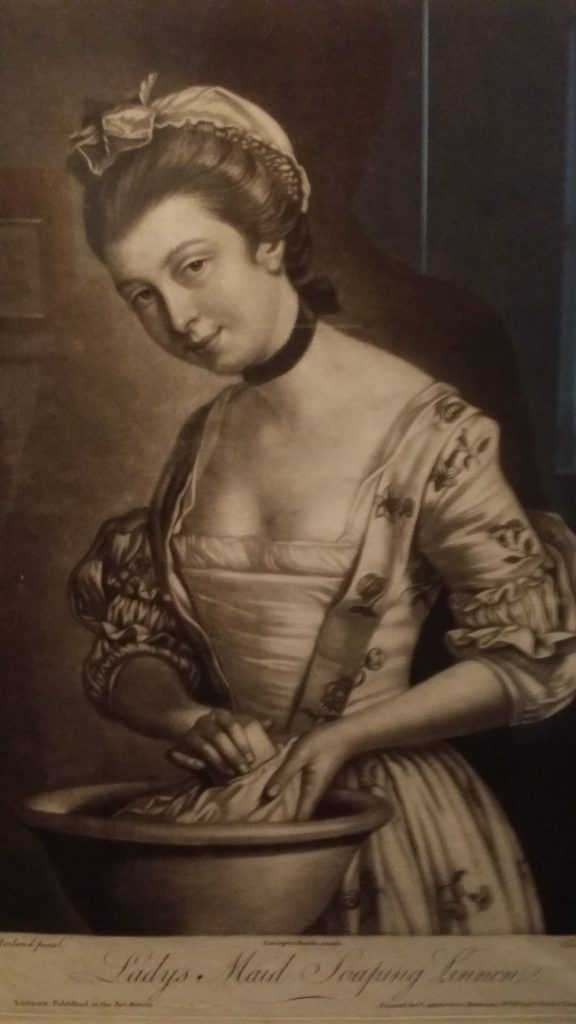
2025 is the 250th Anniversary of Jane Austen’s Birth in Steventon, Hampshire. We celebrate her fictional and real life visits to Mayfair, the centre of the London section of Sense & Sensibility and where Jane came to visit her brother
“It is a truth universally acknowledged, that a Jane Austen devotee in possession of the good fortune of a couple of free hours today must be in want of this walk.”
People associate Jane Austen and her characters with a rural setting. But London is central to both Jane Austen’s real life and her literary life. So, this tour will explore Jane’s connections with London and give the background to Sense and Sensibility, a good part of which is based in this very area. We begin with the place Jane’s coach would arrive from Hampshire, and then walk the streets haunted by Willougby; past shops visited by the Palmers, the Ferrars; visit the location of Jane Austen’s brother’s bank and see the publisher of Jane’s Books. The area around Old Bond Street was the home of the Regency elite and many buildings and a surprising number of the shops remain as they were in Jane Austen’s day.
Jane Austen’s ‘A Picture of London’ in 1809 Virtual Walk
7.30 27th January 2025
With the help of a contemporary Guide Book, Jane Austen’s letters, and works we explore London in 1809.
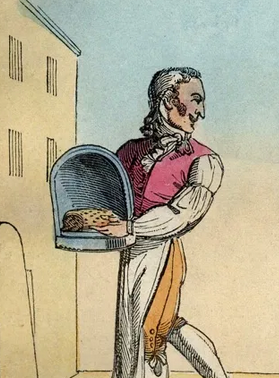
‘The Picture of London for 1809 Being a CORRECT GUIDE to all the Curiosities, Amusements, Exhibitions, Public Establishments, and Remarkable Objects in and near London.’
This Guide Book to London might have been on Henry Austen’s shelf when his sister, Jane, came to visit him in London. But it enables us to tour the London that Jane Austen knew in some detail. We will look at the Curiosities as well as the shopping, residential, theatres areas as well as the Port, the Parks and the Palaces.
The guided walk is a thank you to Alix Gronau, who, having been to one of my lectures in 1994, wanted the book to come to me. I have had the book restored and am using it to explore London in 1809.
Jane Austen’s London Anniversary Walk
Jane Austen’s London Anniversary Walk 2.30 pm Sunday 9th February 25 To book
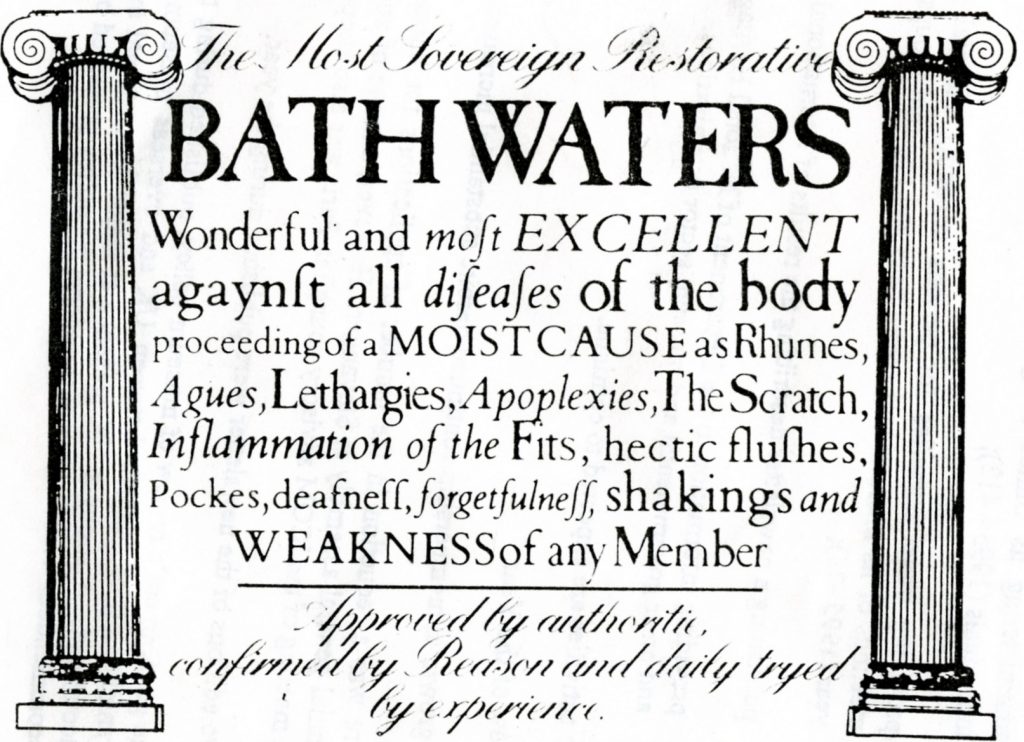
A Virtual Tour of Jane Austen’s Bath
7.30pm 10th February 2025
Tudor London – The City of Wolf Hall 11.30am Sat 22nd Feb 25
Myths, Legends, Archaeology and the Origins of London
2.30pm Sat 22nd February 2025 Tower Hill Underground
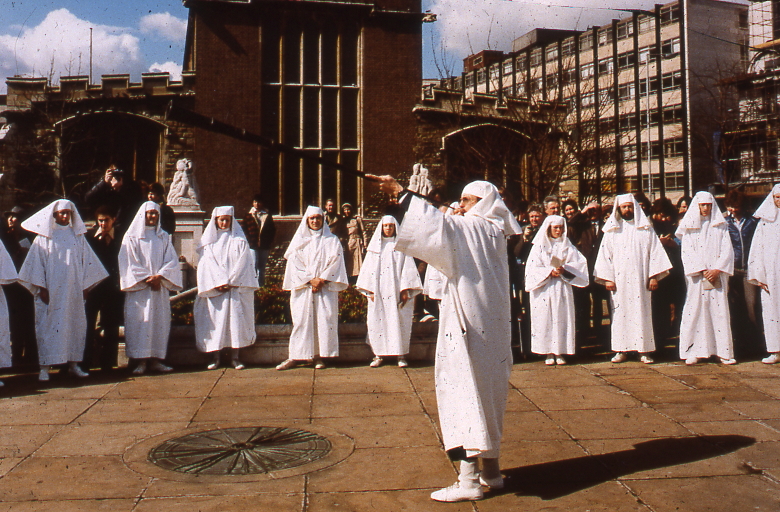
The walk tells the stories of our changing ideas about the origins of London during the Prehistoric, Roman and Saxon periods.
The walk is led by Kevin Flude, a former archaeologist at the Museum of London, who has an interest both in myths, legends and London’s Archaeology.
The walk will tell the story of the legendary origins of London which record that it was founded in the Bronze Age by an exiled Trojan and was called New Troy, which became corrupted to Trinovantum. This name was recorded in the words of Julius Caesar; and, then, according to Legend, the town was renamed after King Ludd and called Lud’s Dun. Antiquarians and Archaeologists have taken centuries to demolish this idea, and became convinced London was founded by the Romans. Recently, dramatic evidence of a Bronze Age presence in London was found.
When the Roman system broke down in 410 AD, historical records were almost non-existent, until the Venerable Bede recorded the building of St Pauls Cathedral in 604 AD. The two hundred year gap, has another rich selection of legends. which the paucity of archaeological remains struggles to debunk.
The walk will explore these stories and compare the myths and legends with Archaeological discoveries.
The route starts at Tower Hill, then down to the River at Billingsgate, London Bridge, and into the centre of Roman London.
Roman London – Literary & Archaeology Walk 11.30am Sat Mar 8th 25
Jane Austen’s London Anniversary Walk 2.30pm Sat 8th Mar 25
The Decline And Fall Of Roman London Walk 11.30 Sat 22nd March 2025
London. 1066 and All That Walk Sat 2.30pm 22nd March 2025
Jane Austen’s London Anniversary Walk 11.30am Sun 6th Apr 25
Chaucer’s Medieval London Guided Walk 2:30pm Sun 6th Apr 25
and
Chaucer’s London To Canterbury Virtual Pilgrimage 7.30pm Friday 18th April 25 To book
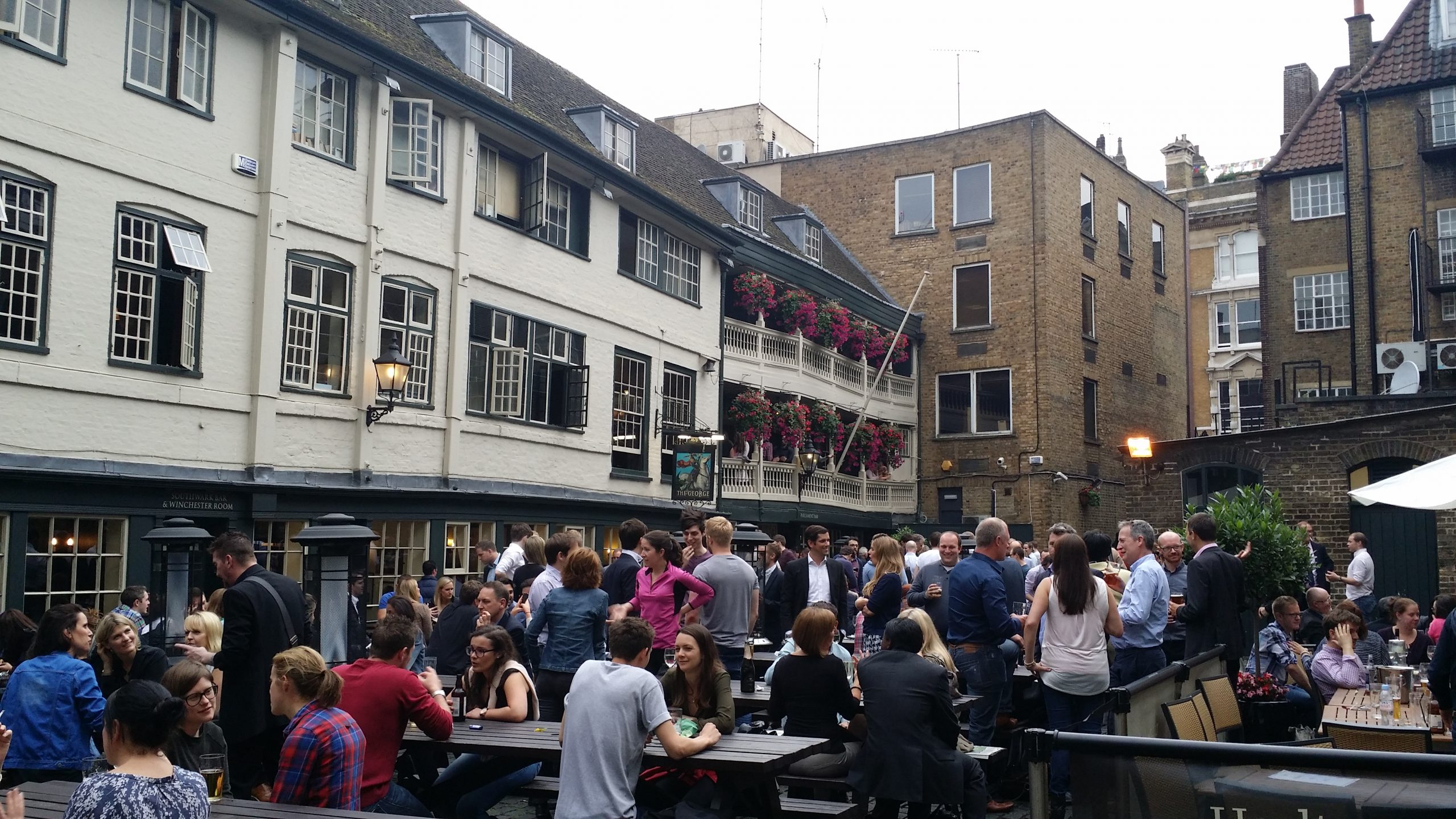
A Walk around Medieval London following in the footsteps of its resident medieval poet – Geoffrey Chaucer
One of the spectators at the Peasants Revolt was Geoffrey Chaucer, born in the Vintry area of London, who rose to be a diplomat, a Courtier and London’s Customs Officer. He lived with his wife in the Chamber above the Gate in the City Wall at Aldgate. His poetry shows a rugged, joyous medieval England including many scenes reflecting life in London. His stories document the ending of the feudal system, growing dissatisfaction with the corruption in the Church, and shows the robust independence with which the English led their lives.
His work helped change the fashion from poetry in French or Latin to acceptance of the English language as suitable literary language. This was helped by the growth of literacy in London as its Merchants and Guildsmen became increasingly successful. In 1422, for example, the Brewers decided to keep their records in English ‘as there are many of our craft who have the knowledge of reading and writing in the English idiom.’
Chaucer and other poets such as Langland give a vivid portrait of Medieval London which was dynamic, successful but also torn by crisis such as the Lollard challenge to Catholic hegemony, and the Peasants who revolted against oppression as the ruling classes struggled to resist the increased independence of the working people following the Black Death.
A walk which explores London in the Middle Ages, We begin at Aldgate, and follow Chaucer from his home to his place of work at the Customs House, and then to St Thomas Chapel on London Bridge, and across the River to where the Canterbury Tales start – at the Tabard Inn.
This is a London Walks event by Kevin Flude
Roman London – Literary & Archaeology Walk 11.30am Sun 27th Apr 25

Tudor London – The City of Wolf Hall 3:00pm Sun 27th Apr 25
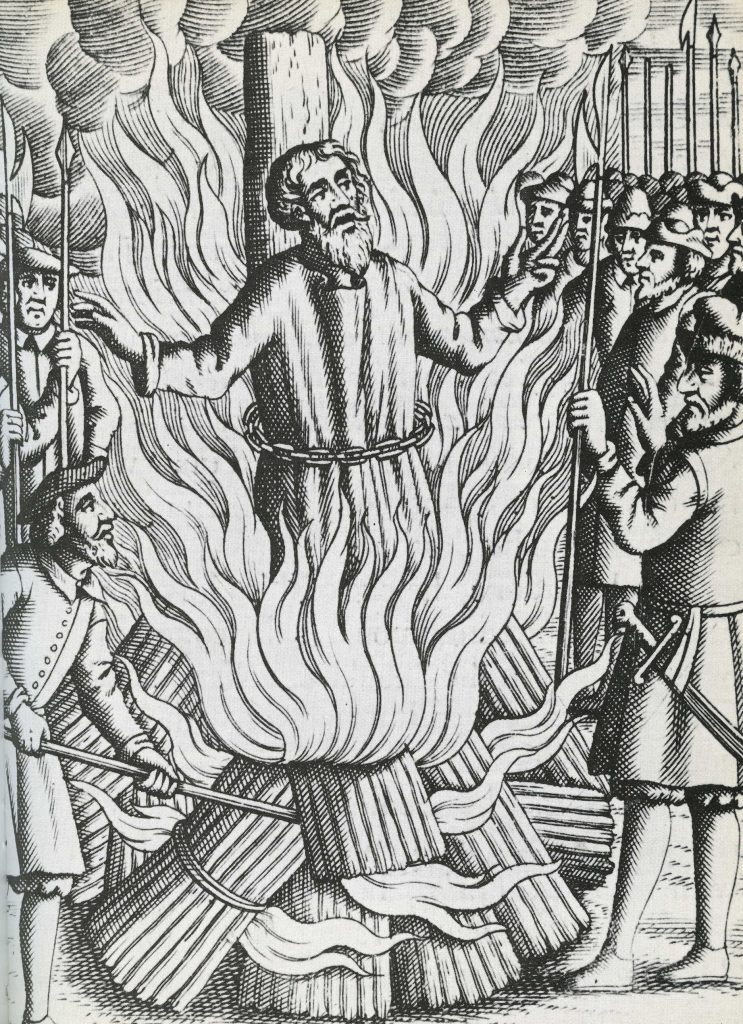
The Walk creates a portrait of London in the early 16th Century, with particular emphasis on the life and times of Thomas Cromwell and Thomas More during the Anne Boleyn years.
More and Cromwell had much in common, both lawyers, commoners, who rose to be Lord Chancellor to Henry VIII, and ended their careers on the block at Tower Hill.
The walk starts with an exploration of Smithfield – site of the stake where heretics were burnt alive and of St Bartholomew’s Monastery – given to Richard Rich after his decisive role in the downfall of Thomas More. We continue to St Paul where Martin Luther’s books were burnt, and later, where Puritans preached against dancing round the Maypole.
We walk along the main markets streets of London, to Thomas More’s birthplace, and to the site of More’s and Cromwell’s townhouses before, if time allows, finishing at the site of the Scaffold where More and Cromwell met their ends, overlooking where Anne Boleyn was incarcerated in the Tower of London
To Book:
https://www.walks.com/our-walks/tudor-london-the-city-of-wolf-hall/
A Boy From Haggerston before the War. 6pm 1st May 2025 Shoreditch Library.
Myths, Legends, Archaeology and the Origins of London 11.30am Sun 25th May 25 To book
The Decline And Fall Of Roman London Walk 3pm Sun May 25 To book
The Peasants Revolt Anniversary Guided Walk
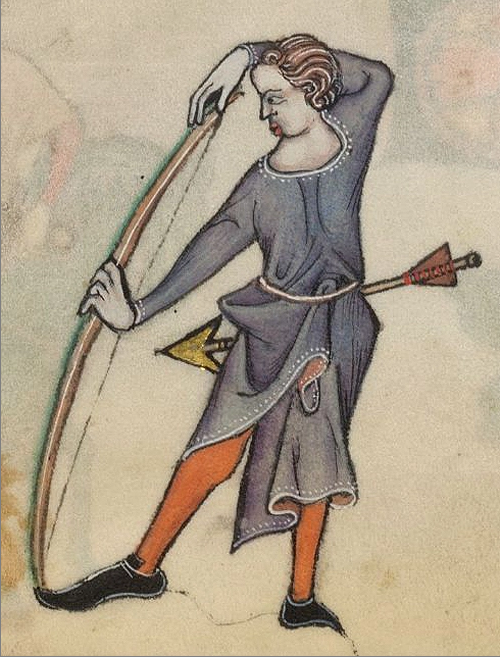
6.30pm Wed 11th June 2025 Aldgate Underground To book
An Anniversary Walk tracking the progress of the Peasants as they take control of London in June of 1381
Short read: The Summer of Blood
Long read: The Peasants’ Revolt. The greatest popular rising in English history. This is the anniversary walk. The London Walk that heads back to 1381, back to the Peasants’ Revolt. You want a metaphor, think stations of the cross. This is the stations of the Peasants’ Revolt walk. We go over the ground, literally and metaphorically. Where it took place. Why it took place. Why it took place at these places. What happened. The walk is guided by the distinguished Museum of London Archaeologist
His expertise means you’ll see the invisible. And understand the inscrutable.
On the anniversary of the Peasants Revolt we reconstruct the events that shook the medieval world. In June 1381, following the introduction of the iniquitous Poll Tax, England’s government nearly fell, shaken to the core by a revolt led by working men. This dramatic tour follows the events of the Revolt as the Peasants move through London in June 1381.
We met up with the Peasants at Aldgate, force our way into the City. We march on the Tower of London as the King makes concessions by ending serfdom, at Mile End. But the leaders take the mighty Tower of London and behead the leaders of Richard’s government. Attacks follow on the lawyers in the Temple, the Prior at St. John’s of Jerusalem, Flemish Londoners, and on Lambeth and Savoy Palaces.
The climax of the Revolt comes at Smithfield where a small Royal party confront the 30,000 peasants.
Tudor London – The City of Wolf Hall 11.30am 13th July 2025 To Book
Jane Austen’s London Anniversary Walk 3pm Sunday 13th July 25 To book
Roman London – Literary & Archaeology Walk 11.30 am Sat 2nd Aug 2025 ToBook
Chaucer’s Medieval London Guided Walk 2:30pm Sat 2nd Aug 2025 To Book
Myths, Legends, Archaeology and the Origins of London 11.00am Sat 16th Aug25 to Book
Roman London – Literary & Archaeology Walk 6:30pm Wed 24th Sept 2025 To book
The Archaeology of London Walk 6.30pm Fri 3rd October 2025 To Book
Chaucer’s Medieval London Guided Walk 11:30pm Sat 4th Oct 25 To book
The Decline And Fall Of Roman London Walk 11.30pm Sat 8th Nov 25 To book
Jane Austen’s London Anniversary Walk 2.00pm Sat 23rd Nov25 To book
Rebirth of Saxon London 23rd Nov 25
Roman London – Literary & Archaeology Walk sat 11am 6th Dec 2025 To book
Cromwell’s and More’s Tudor London Walk 2pm 7th Dec25 To book
Jane Austen’s London Anniversary Walk 2.30pm Sun 14 Dec25 To book
Christmas With Jane Austen Virtual London Tour 7.30pmTues 16 Dec25 To book
The London Equinox and Solstice Walk 11:30pm Sun 21st Dec 25To book
The London Winter Solstice Virtual Tour 7.30pm Sun 21 Dec 25 To book
Previous Years Archives
Here are previous archive of guided walks and events
Archive of Events/Walks 2024
Archive of events/Walks 2023
Archive of Events/Walks 2022
Archive of Recent Walks (2021)
Archive of Resent Walks (2019-2020)
The Lord of Misrule & London, December 30th

On the sixth day of Christmas
My true love sent to me
6 Geese a Laying;
5 Golden Rings.
4 Calling Birds; 3 French Hens; 2 Turtle Doves
and a Partridge in a Pear Tree
The Lord of Misrule, Masters of the Revels, and Boy Bishops
The Roman festival of Saturnalia reversed the rules so that slaves, ruled and masters served. It was held between 7th and 23rd of December. It also included giving gifts. In the medieval period, the disorders of Saturnalia was continued. Monarchs, Lords and Gentlemen, City Institutions elected Lords of Misrule, Masters of the Revels, and Boy Bishops. John Stow was London’s first great historian. In his Survey of London, he wrote of the Lords of Misrule in London. They were chooses at Halloween and continued until Candlemas, in early February. See my post here for more details on Candlemas.
From John Stow’s Survey of London
This is what Stow says:
Now for sports and pastimes yearly used.
First, in the feast of Christmas, there was in the king’s house, wheresoever he was lodged, a lord of misrule, or master of merry disports, and the like had ye in the house of every nobleman of honour or good worship, were he spiritual or temporal. Amongst the which the mayor of London, and either of the sheriffs, had their several lords of misrule, ever contending, without quarrel or offence, who should make the rarest pastimes to delight the beholders.
These lords beginning their rule on Alhollon eve, continued the same till the morrow after the Feast of the Purification, commonly called Candlemas day. In all which space there were fine and subtle disguisings, masks, and mummeries, with playing at cards for counters, nails, and points, in every house, more for pastime than for gain.
Against the feast of Christmas every man’s house, as also the parish churches, were decked with holm, ivy, bays, and whatsoever the season of the year afforded to be green. The conduits and standards in the streets were likewise garnished; (…) , at the Leaden hall in Cornhill, a standard of tree being set up in midst of the pavement, fast in the ground, nailed full of holm and ivy, for disport of Christmas to the people…
John Stow, author of the ‘Survey of London‘ first published in 1598. Available at the wonderful Project Gutenberg: ‘https://www.gutenberg.org/files/42959/42959-h/42959-h.htm’

Bedecking and the Maypole
Holm is an evergreen oak. Its Latin name is Quercus ilex. The Tree in Leadenhall Street was also used as the Maypole. And he tells us it was destroyed in the great wind of 1444. You can read all about that here. You might also like to see my posts. These include information about John Stoww and midsummer celebrations and Boy Bishops, and l Stow’s Memorial.
First Published on December 30th 2023 and revised in 2024,2025
Becket & St. Thomas Day & Wassailing December 29th

On the fifth day of Christmas
my true love sent to me:
5 Golden Rings; 4 Calling Birds; 3 French Hens; 2 Turtle Doves
and a Partridge in a Pear Tree
St Thomas Becket
The fifth day of Christmas is dedicated to Thomas Becket, our most famous Archbishop of Canterbury. He was martyred at Canterbury on this day in 1170. But, he was made a Saint in 1173. This is double-quick time, as the Pope was determined to rub Henry II’s nose in his complicity with the murder.
Becket was a Londoner from a well-known London family, who became a friend of Henry II. Henry was troubled by the freedoms and fees owed to the Catholic Church. So he thought it would be a good idea to make his friend Archbishop. But as soon as Becket became Archbishop he went ‘native’, became a very stubborn and adamant defender of the Pope’s privileges in Britain. After various confrontations, Henry said, in anger, ‘Who will rid me of this troublesome priest?’ And three knights took him at his word, so Becket was murdered in the Cathedral in Canterbury.

Lousy Saints
In November 2023 Katherine Harvey wrote an article, in History Today’ called ‘Lousy Saints’. It began with the discovery that Becket wore a hair shirt. This is how it was described:
‘This goat hair underwear was swarming, inside and out, with minute fleas and lice, masses of them all over in large parches, so voraciously attacking his flesh that it was nothing short of a miracle that he was able to tolerate such punishment.’
Becket was a former sophisticated courtier. The assumption is that Becket sought this discomfort deliberately. He also concealed the horror under magnificent clothes. The monks duly cited the lice as evidence of the piety of the man who was willing to suffer for his religion. They even suggested that the daily agony of the lice was worse than the swift death at the hands of the Knights.
Many other pious clerics were similarly lousy by choice. Society as a whole found uncleanliness of this magnitude disgusting. They had the technology to avoid it too. Becket himself had a manservant to look after his clothes and access to a bath. But he limited his baths to once every 40 days by choice. The fact that it was a choice is why people admired such discipline on the part of people like Becket. Altogether very strange and disturbing to this modern reader.
Bridge and Pilgrimage
Soon, a new, magnificent bridge was built to replace the wooden London Bridge. In the centre of that Bridge was a grand Chapel dedicated to St Thomas Becket. It was refurbished by the renowned architect Henry Yevele (c. 1320 – 1400). It was here that pilgrims began their pilgrimage to Canterbury. That is, they travelled from where he was born, to where he was martyred.

The Legend of the Epic Walk of Mathilda Becket
In London, there was a legend that his mother, Mathilda, was a Muslim who fell in love with Thomas’s dad, Gilbert, during the Crusades. She helped him escape captivity. He abandoned her and return to England. She then found her own way from Acre to London. She made the journey knowing only the name ‘London’ in English and walked most of the way. On St Thomas Day, people walked around St Paul’s multiple times to commemorate her epic walk of love.
The story was told as true from the 13th Century until the 19th Century. Then researchers found that Mathilda had more prosaic Norman origins. The speculation is that the foundation of the Hospital St Thomas of Acre on the site of Becket’s birthplace led to the story of his connection with Acre. I was quite disappointed to find out the tale I told was a myth which is told in full here:

Henry VIII’s hatred of Becket
When Henry VIII began the reform of the Church of England, he was particularly keen to end the cult of Becket. This rebel against one of the great Kings of England.
‘Thomas Becket, sometime archbishop of Canterbury, shall no longer be named a saint, as he was really a rebel who fled the realm to France and to the bishop of Rome to procure the abrogation of wholesome laws, and was slain upon a rescue made with resistance to those who counselled him to leave his stubbornness. His pictures throughout the realm are to be plucked down and his festival shall no longer be kept, and the services in his name shall be razed out of all books.‘
Westminster, 16 Nov. 30 Hen. VIII’
A blog post by the British Museum highlights some fascinating research. Henry’s government ordered the deleting of unacceptable content in church service books. Research into the deletion of content found that it was very varied in extent, except where it concerned Becket. The vast majority of references to him were either completely defaced or mostly defaced, suggesting that Henry had a particular hatred of Becket.
Henry made a lot of money from the gold and jewels that were stripped from Becket’s magnificent shrine at Canterbury Cathedral.
Another of my posts is on Becket and can be read here.
Wassailing

The Twelve Days of Christmas are full of wassailing.
Was hail Drinc hail
The name comes from the Anglo-Saxon version of ‘Cheers’ or good health. Its ceremonial use is described by Geoffrey of Monmouth, writing in 1135.
‘From that day to this, the tradition has endured in Britain that the one who drinks first at a banquet says “was hail” and he who drinks next says “drinc hail.”‘
Geoffrey is explaining how Vortigern, in the 5th Century, betrayed Britain for the love of Rowena. She was the Saxon King Hengist’s daughter, and, only incidentally, speculating on the origins of the tradition of wassail.
Geoffrey of Monmouth tells us that the word means ‘Good Health’ or as we would say ‘Cheers!’
For more on Vortigern, leader of the Britons in the 5th Century read my post here.
Wassail
This has at least two different facets. Firstly, it is a formal drinking tradition at the centre of Christmas hospitality. Secondly, it is part of the tradition of the Waits, the Mummers, and Carol Singers. These are groups who go around the village singing or performing in exchange for a drink or some food, or money.
Wassailing is either a lovely gentle social activity, or it is an anti-social custom in which the drunkards get to stand outside your house caterwauling. In effect they are demanding drink with menaces. Imagine a Trick or Treat with the drunkards from the pub instead of children!
A Wassail bowl would be full of some form of mulled alcohol or hot punch. A couple of pints of ale or cider, a pint of wine/brandy/mead. Add sugar, cinnamon, and nutmeg. You should have an apple or crab-apple floating in the bowl. To find out more, look at ‘British Food, a History’ here.
‘Into the bowl is first placed half a pound of sugar in which is one pint of warm beer; a little nutmeg and ginger are then grated over the mixture, and 4 glasses of sherry and 5 pints of beer added to it. It is then stirred, sweetened to taste and allowed to stand covered for 2 to 3 hours. Roasted apples are then floated on the creaming mixture and the wassail bowl is ready.‘
The Curiosities of Ale and Beer, by John Bickerdike, published about 1860 from a Jesus College, Oxford recipe of 1732. (From Recipes of Old England by Bernard N. Bessunger
Wassail in the Orchard
For this New Year’s Eve custom see my post here:
First Published on 29th December 2022, republished in December 2023, 2024,2025
Greater Cycles & the Ages of Man December 19th
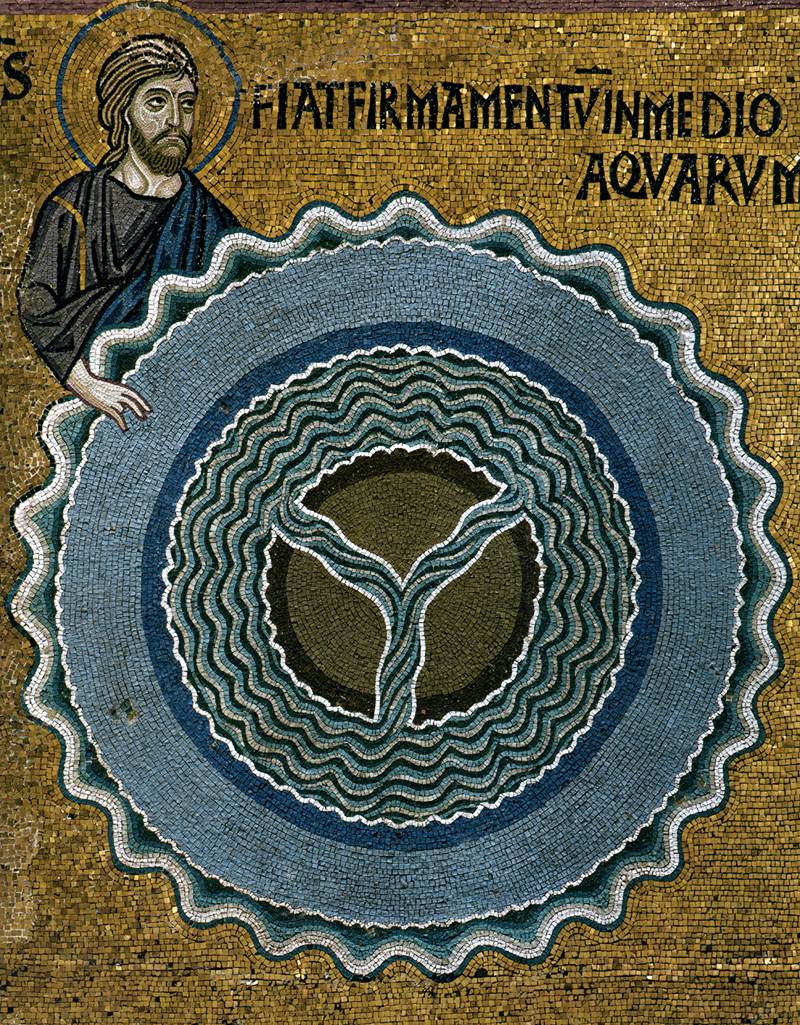
We are coming up to the key days in the year. And so will be looking at calendars and counting days. But what about ages, epochs and aeons?
‘Practical Magic in the Northern Tradition’ reports that there are seven ages of the world:
This is how they calculate it: the life of a yew tree is 729 years, and there are seven ages from the creation of the world until its doom. So the world will last 5103 years.
‘Practical Magic’ divides ages up as follows:
A wattle has a life of 3 years (1*3)
Three wattles are the life of a hound – 9 years (3*3)
Three hounds are the life of a steed – 27 years (9*3)
Three steeds are the life of a man – 81 years (27*3)
Three men are the life of an eagle – 243 years (81*3)
Three Eagles are the life of a yew. – 729 years (243*3)
How Old is a Yew Tree/Eagle
A comment by a reader has prompted me to write the following about the ages given above:
‘Practical magic’ says the poem is ‘Ancient’. So it’s folklore and not science, and the ages are opinion not scientific fact.
As I understand it Yew trees live a long time but not quite as long as many people think. I base this on the Yew Tree at Steventon, Hampshire where Jane Austen was born. The tree has/had a plague on it saying it was 1200 years old. I used to visit it regularly. On one visit, I was told that an expert opinion suggested it was more like 700 years old. (ifmy memory serves). I do not have the details, but my source would have been one of the people associated with the Church.
The Woodland Trust (says Yew Trees get old at 900 years. They cite a few which are ‘said to be’ over 2000 years old. But are they? The scientific sites I have looked at suggest that Yew Trees should be described as ‘ancient’ from 400 not 900 years. There are problems with dendrochronology dating of yew trees, and so most methods depend upon an estimation from the width of the tree trunk. But that, itself, depends upon how much you believe in the claims of the ancient trees. So, I think it’s best to take the extreme cases with a very large pitch of salt. So 729 years is probably not so far off the mark for a Yew tree.
As to Eagles, this website on eagles says they can live to 30ish in the wild and 68 years in captivity. So the claim for 243 years is way off the mark! Wattles what are they? I have searched, but not found any reference. My guess is a short-lived bird.
The End Was Nigh
Archbishop Usher of Armagh (1581 – 1656) calculated that the world was created in 4004 BC. He counted the begettings in the Bible. If we accept his date, and apply the seven yew tree ages rule (5,103), then the world should have ended in AD 1099 (give or take a year). But it didn’t end then, did it? We are in the 9th Age and counting.
It doesn’t make sense to me to have a factor of 3 for the smaller divisions, and then to switch to a factor of seven. Surely, far more logical is to have a factor of 3*3 years. So, if there were nine ages of the world, then it would survive for 6561 years, which will end in approx. 535 years time (cAD2557). This calculation has the massive advantage of not yet being proved wrong! (Please note, cult owners, I have copyright on this date).
It’s notable that when a Cult declares the imminent end of the world, and they trudge up to the top of a high eminence to observe it (normally by Hampstead Pond in London). They seem quite happy to trudge back down again. Soon they are up and running again with the same enthusiasm for the next ‘end of the world’ date.
Of course, the world was created around 4.54 ± 0.05 billion years ago according to Wikipedia. According to the Doomsday Clock the world will end at 12 O’clock and we are 89 seconds away from it. This is based on a catastrophic end for our civilisation. If we avoid this then other scientists have suggested mammals will be wiped out in approximately 250 million years.
Abrahamic Ages
The Jewish tradition was for six or seven ages of 1000 years. The seventh didn’t really count because it was the age of the messiah when there was a 1000-year sort of super sabbath. Or another idea is that it was an age that ran parallel with the other six. So the world was to be 6000 years long.
With the coming of Christianity, dating the Creation, and (therefore the Day of Judgement) became more important. The Romans dated from the foundation of Rome, and the Greeks from the First Olympiad. But beyond that they had a whole mythology and creation myths about an Age of Gold. Followed by a Bronze Age (Troy and all that) followed by their very own base Iron age. You can read about this in my post about Hesiod.
The Anno Munda
An early Christian attempt to tell the age of creation was the Anno Munda‘s arrangement of the Year. This is pretty complicated and is based on a Talmudic tradition. A late Roman version uses ‘the Diocletian Years’, which is when the persecution of Christians began. It held that the world was created 5500 years before the Birth of Christ. So we are 5500BC plus 2025 years since the date of the creation. And it was supposed to have ended in 500AD. 6000 years after the Creation. so we have outlived Creation by 1525 years.
St Augustine of Hippo took the tradition of six ages and brought it into the Christian canon. These are the six ages:
- The First Age “is from the beginning of the human race. That is, from Adam, who was the first man that was made. Down to Noah, who constructed the ark at the time of the flood“, i.e. the Antediluvian period.
- The Second Age “extends from that period on to Abraham, who was called the father indeed of all nations”.
- The Third Age “extends from Abraham on to David the king”.
- The Fourth Age is “from David on to that captivity whereby the people of God passed over into Babylonia”.
- The Fifth Age is “from that transmigration down to the advent of our Lord Jesus Christ“
- The Sixth Age: “With His [Jesus Christ’s] coming, the sixth age has entered on its process.”
As each age is 1000 years, then you can see why so many people were worried as 1000 AD approached.
The Seven Ages of Man
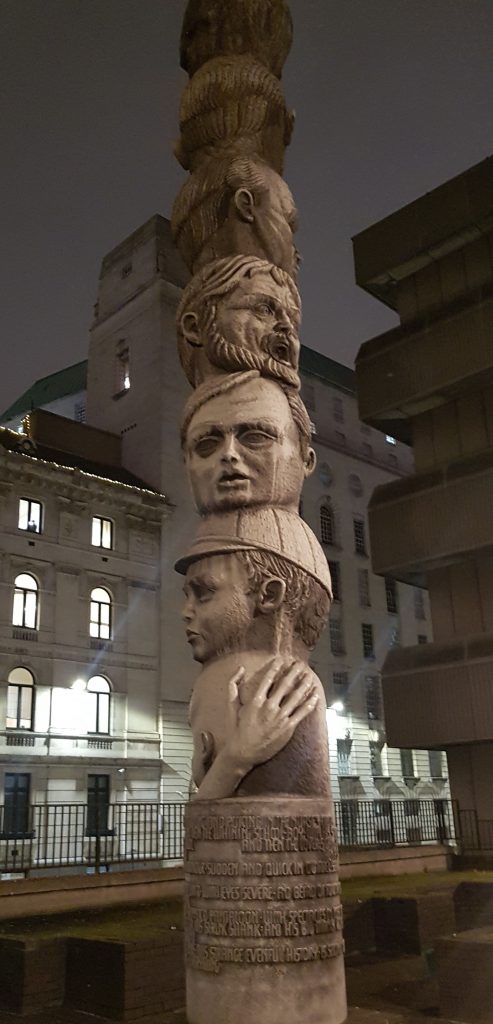
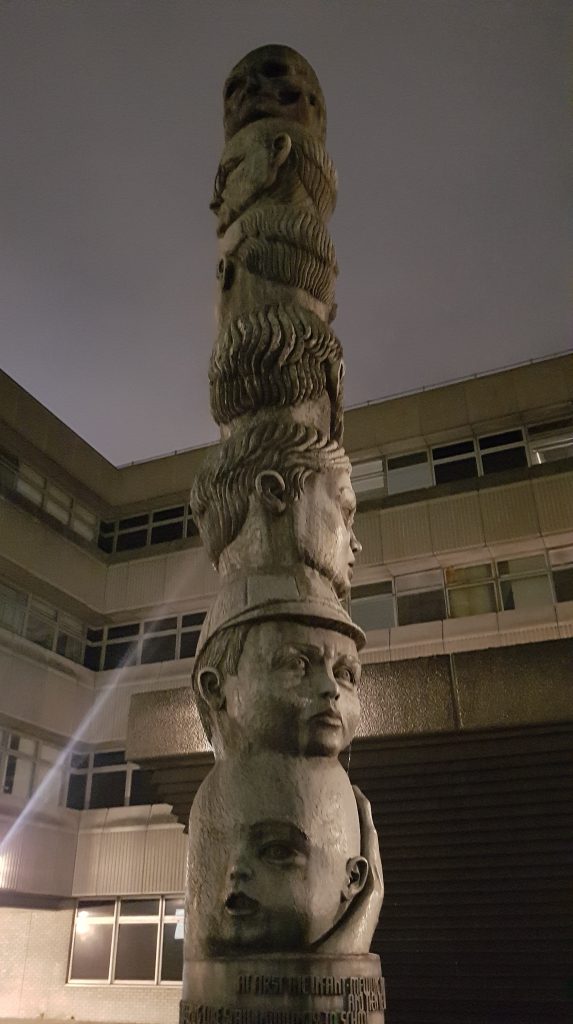
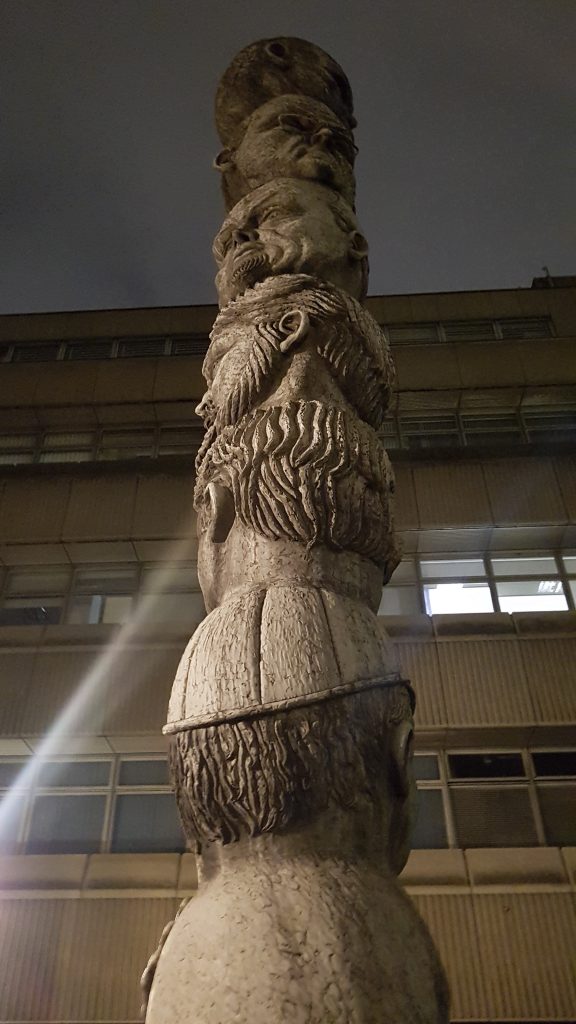
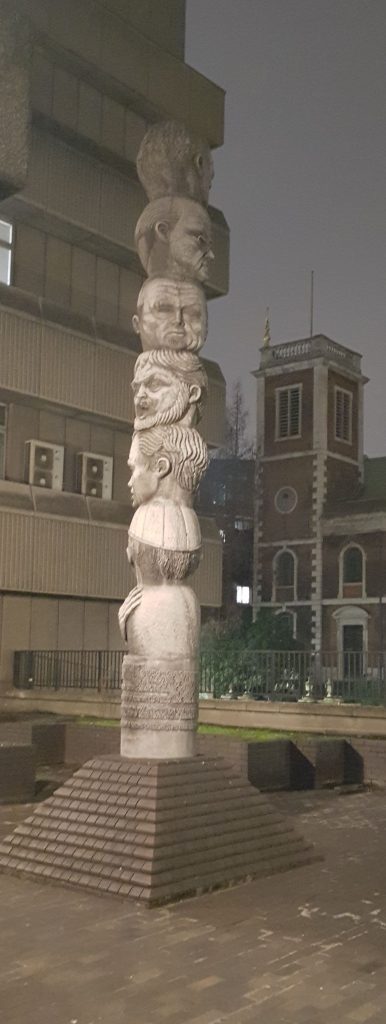
The Age of Man can also relate to the average age of a human lifespan. Of course, six is not such a magical number as seven, and so Shakespeare ran with the idea in the Seven Ages of Man spoken by Jacques in ‘As you like it’. If there are seven ages of human life, and we have a span of six score and ten, then each age is ten years.
All the world’s a stage,
And all the men and women merely players;
They have their exits and their entrances,
And one man in his time plays many parts,
His acts being seven ages. At first, the infant,
Mewling and puking in the nurse’s arms.
Then, the whining school-boy with his satchel
And shining morning face, creeping like snail
Unwillingly to school. And then the lover,
Sighing like furnace, with a woeful ballad
Made to his mistress’ eyebrow. Then, a soldier,
Full of strange oaths, and bearded like the pard,
Jealous in honour, sudden, and quick in quarrel,
Seeking the bubble reputation
Even in the cannon’s mouth.
And then, the justice,
In fair round belly, with a good capon lined,
With eyes severe, and beard of formal cut,
Full of wise saws, and modern instances,
And so he plays his part. The sixth age shifts
Into the lean and slippered pantaloon,
With spectacles on nose and pouch on side,
His youthful hose, well saved, a world too wide
For his shrunk shank, and his big manly voice,
Turning again toward childish treble, pipes
And whistles in his sound. Last scene of all,
That ends this strange eventful history,
Is second childishness and mere oblivion,
Sans teeth, sans eyes, sans taste, sans everything.
(Jacques, Act 2, Scene 7)
The Kalendar of Shepherds
Now, the Kalendar of Shepherds has a similar idea, but it calculates it differently. The Kalendar, based on a 15th Century French original, says there are 12 ages of man, corresponding with the 12 months of the year. Each age is 6 years long, and so our likely lifespan is 72.
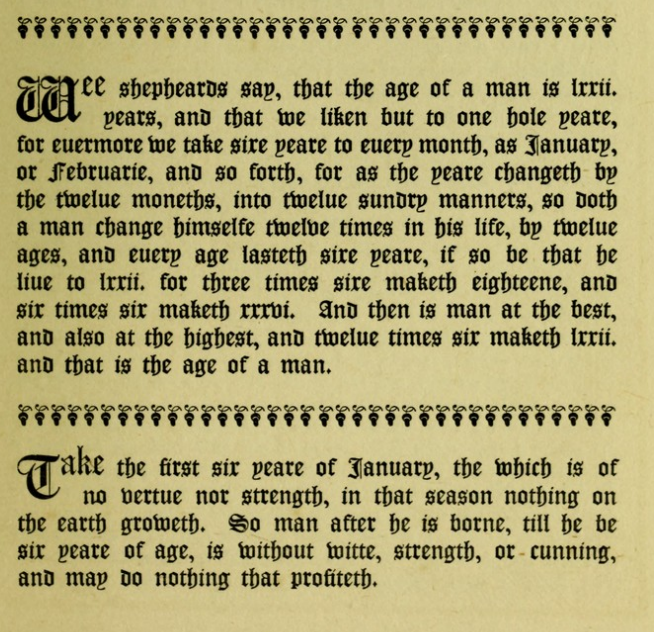
Each month is allocated to one of the ages, and has an insight into human life for that span. In January, the first 6 years of a human life are mapped out. If you read above you will see we have no ‘wit, strength or cunning. Nor ‘may do nothing that profiteth’ in those first years. A little harsh, and as a fond grandfather, it, I refute it. In December, the last 6 years are prefigured.
Our alloted span, says Practical Magic is 81 years, Kalendar of Shepherds say 72, and Shakespeare offers us 70.
The Office of National Statistics says:
‘In 2022 to 2024:
- Life expectancy at birth in the UK was 83.0 years for females and 79.1 years for males. This is an increase of 18 weeks from 82.7 years for females and 21 weeks from 78.7 years for males since 2019 to 2021.‘
Capella Palatina, Sicily
By the way, the Capella Palatina, illustrated at the top of this post, is a marvel of gold mosaics. It is absolutely stunning. It makes a trip to Palermo a must.
On This Day
1843 – Charles Dickens published ‘A Christmas Carol’
First Published on December 18th 2022, revised and republished in December 2023, 2024,2025
St Hildegard of Bingen. Visions of Migraine, December 17th
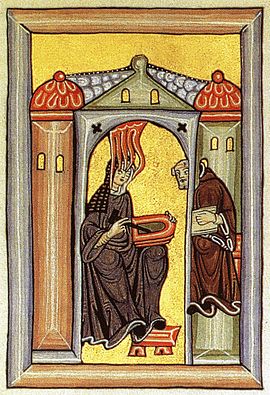
What a relief! Here is a Saint who was not flayed alive, burnt on a griddle, scratched with wool combs, crucified upside down, beheaded, eyes gouged out, etc. etc. (consider identifying the Saints in this list as my Christmas Quiz). She died of illness, aged 81 and was famous not just for her visions but her erudition, her scientific writings, and her musical compositions. She came from the Rhineland area of Germany.
Before you proceed to read this post listen to this YouTube clip of her sublime music.
Hildegard of Bingen: De Spiritu Sancto (Holy Spirit, The Quickener Of Life)
Magistra Bingen, Monophony and Migraine
She was elected as Magistra (Mother Superior) of her Convent in 1136, and went on to found two other nunneries. But, was made famous by her writings on her visions. She was also a renowned composer of sacred monophony,
There has been speculation that her visions were caused by migraine. Read Mary Sharratt’s piece for more details, from which I took the following quotation.
‘When I was forty-two years and seven months old, Heaven was opened and a fiery light of exceeding brilliance came and permeated my whole brain, and inflamed my whole heart and my whole breast, not like a burning but like a warming flame, as the sun warms anything its rays touch.‘
Hildegard von Bingen, Scivias, translated by Mother Columba Hart, O.S.B., and Jane Bishop
Writings on Science and Medicine
Among the many books she wrote were two famous and early books on medicine and science. Her medical writing was highly practical although, of course, based on the humoural theories which had held sway since Hippocrates. However, she did think that the four humours had a hierarchy. She considered blood and phlegm the more superior humours, representing the celestial elements of fire and air. While black bile and yellow bile represented the earthly humours of earth and water.
Just as physicists today look to find a unifying theory of everything, Hildegard also tried to find unities within the body of classical knowledge. According to Wikipedia, she:
‘often focuses on interrelated patterns of four: “the four elements (fire, air, water, and earth), the four seasons, the four humours, the four zones of the earth, and the four major winds.” ‘
Linked also to the celestial bodies and to religion, she gave her world view in Causae et Curae c. 42:
It happens that certain men suffer diverse illnesses. This comes from the phlegm which is superabundant within them. For if man had remained in paradise, he would not have had the flegmata within his body, from which many evils proceed, but his flesh would have been whole and without dark humour [livor]. However, because he consented to evil and relinquished good, he was made into a likeness of the earth, which produces good and useful herbs, as well as bad and useless ones, and which has in itself both good and evil moistures. From tasting evil, the blood of the sons of Adam was turned into the poison of semen, out of which the sons of man are begotten. And therefore their flesh is ulcerated and permeable [to disease]. These sores and openings create a certain storm and smoky moisture in men, from which the flegmata arise and coagulate, which then introduce diverse infirmities to the human body. All this arose from the first evil, which man began at the start, because if Adam had remained in paradise, he would have had the sweetest health, and the best dwelling-place, just as the strongest balsam emits the best odour; but on the contrary, man now has within himself poison and phlegm and diverse illnesses.
Wikipedia
And here I was hoping to find light and joy in a medieval Saint’s story! So we seem to be doomed by Adam’s Fall, and the poor quality of his semen. (Having recently watched Hugo Blick’s Wild West box set ‘The English’, I can quite understand the syphilitic underpinnings of Hildegard’s theory).
It also reminds me of Pandora’s Box. At least we know the Greco-Roman Gods were flawed divinities. While the Abrahamic God is omnipotent. Why then does he allow evil, cruel or unfair outcomes from his own creations?
Feverfew

On the subject of headaches, Hildegard was a keen user of feverfew, which has been, since the 18th Century, a suggested cure for Migraine. I didn’t find it worked for me, being a sufferer since age 12. And it never occurred to me to think that the flashing lights, partial temporary blindness, tingling muscles and devastating headaches might be a gift from God.
Hildegard wrote the following about feverfew:
“If you suffer from a sick intestine, boil the Motherswort with water and butter or oil and add some spelt flour. Prepare a drink, for it helps the intestines.”
Hildegard of Bingen, Physica, Cap. 116 quoted in Hildegard’s Feverfew Use (www.healthyhildegard.com/feverfew-uses)
And so it became popular among women for gynaecological issues and abdominal pain. Feverfew has flowers like a daisy, ‘growing in every hedgerow’ according to Mrs Grieve’s English Herbal. Grieve’s says it is good for nervous and hysterical complaints; low-spirits; as a syrup good for coughs; as a tincture against swellings caused by bites of insects and vermin. However, https://www.drugs.com/npp/feverfew.html says the :
‘leaves possess emmenagogic activity (ejection of the placenta and fetal membranes) and may induce abortion. Use is not recommended during breastfeeding or in children younger than 2 years.‘
And there are also potential issues.
St Hildegard seems to have two special days – one is Dec 17th and the other is the day she died, September 17th 1179 which is her ‘Liturgical Feast’.
On This Day
1538 – The Pope, Paul III, finally passes a Bull of Excommunication against Henry VIII and declares his Kingdom forfeit. By which time it was far too late to have much impact. Pope Clement had first warned Henry of the risk of Excommunication at the end oof 1531. Henry was told to treat his Queen with ‘marital affection’ in all things. Had he taken decisive steps at this early stage would the outcome have been different?
First Published on December 18th, 2022, Revised and republished December 2023, 2024, 2025, On This Day added February 2026
St. Lucy & Eye Care through the Ages December 14th

So, on St Lucy’s Day, you, being someone worried about your eyes, might have sought an altar dedicated to St Lucy, the patron saint of eye health. (see December 13th’s Post on St Lucy). Although you may be disappointed that there has been no miraculous cure for you, you might have been encouraged to do something about it. So that’s what this post is about.
There are only two churches in the UK dedicated to St Lucy or St Lucia. One run by the National Trust in Upton Magna, Shropshire, but there must have been a few chapels in Cathedrals and Abbeys dedicated to her. I have my eyes open for them!
For Redness of the Eye or Pink Eye
There are many household books still, existing. These show that much of medical practice was carried out in the home, by ordinary men and women. More often women, actively not only collected useful recipes and cures, but also tested them out and improved them. Here is an example:
For the redness of eyes, or bloodshot. Take red wine, rosewater, and women’s milk, and mingle all these together: and put a piece of wheaten bread leavened, as much as will cover the eye, and lay it in the mixture. When you go to bed, lay the bread upon your eyes calmer and it will help them.
Fairfax Household book, 17th/ 18th century. (Reported in The Perpetual Calendar of Folklore by Charles Kightly)
‘Pink eye’ is mentioned in a document unearthed at the Roman Fort of Vindolanda. It lists the troops of the Cohort in occupation. We read that of the garrison of 750, 474 are absent with 276 in the fort of which 38 are sick, 10 with ‘pink eye’. This is probably conjunctivitis.
Prevention is better than cure
Things hurtful to the eyes. Garlic, onions, radish, drunkenness, lechery, sweet wines, salt meats, coleworts, dust, smoke, and reading presently after supper.
Good for the eyes. fennel, celandine, eyebright, vervain, roses, cloves and cold water.
Whites Almanack 1627
Cataract operations
Cataract operations have been carried out since 800 BC using a method called ‘couching’.
“The practitioner would sit facing the patient and pass a long needle through the cornea to impale the lens. “He would then forcibly dislodge the lens — rupturing the zonules — and push it into the vitreous cavity, where it would hopefully float to the bottom of the eye and out of the visual axis.”
This was a last resort when the cataract was opaque and the patients nearly blind. It would mean they would need very thick lenses to see well again but, crude as it seems, it worked.
But the operation, without anaesthetics must have been a considerable ordeal. The recovery (still required today for those suffering from a displaced retina) means that the patient has to lie on their back for a week with supports on either side of the head to prevent movement. Of course, there was a serious risk of infection, so prophylactic visits to a chapel of St Lucy might be called for.
The modern treatment for cataracts was established in the 1940s and offers a great solution in 15 minutes surgery. Currently, the NHS has been having trouble dealing with all the cases required, (6% of surgery is for cataract operations). Before COVID-19, there was some talk about cataracts being, in practice, not readily available on the NHS. The waiting time is supposed to be 18 weeks but, for example, at NHS Chesterfield Royal Hospital the waiting time approaches almost 10 months. But waiting times around the country vary from 10 weeks to over a year.
Patrick Brontë’s Eye
On 26th August 1846 Charlotte Brontë took her father to Manchester from Haworth for Cataract surgery. The operation took 15 minutes but without anaesthesia. He was very calm and said the pain was ‘a burning pain.’ It was vital he stay still through the pain. Then, he had to remain in bed for a month in the dark, minimising movement. Leeches were applied to his face, to reduce the inflammation of the wound. He was looked after by a nurse 24 hours a day, supervised by Charlotte. She used the time she spent waiting in writing Jane Eyre. Her Father’s vision was significantly improved and he was able to resume his Parish duties.
Here is a youtube film about Patrick Brontë‘s operation:
Looking through Samuel Pepys’s eyes
You will note, above, that it was considered bad for the eyes to read in low light. It is a myth and not true. Poor Samuel Pepys was continually worried about his reading and writing habits ruining his eyesight. This is an extract from the poignant last entry in his famous diary:
And thus ends all that I doubt I should ever be able to do with my own eyes in the keeping of my journal, I being not able to do it any longer, having done now so long as to undo my eyes almost every time that I take a pen in my hand; and therefore, whatever comes of it, I must forbear: and therefore resolve from this time forward to have it kept by my people in long-hand. I must be consented to sit down no more than is fit for them and all the world to know; or, if they be anything, which cannot be much now my amores are past and my eyes hindering me almost all other pleasures. I must endeavour to keep a margin in my book open, to add, here and there, a note in shorthand with my own hand.
Samuel Pepys Diary, May 31st
The sad thing is that Pepys had another 38 years before he went blind, and what glorious diary entries have we missed because of his false fears of the effect of eye strain?
First published in 2022, updates 2023, 2024 and 2025
St Lucy: Festival of Light December 13th

I reposted my two posts on St Lucy, and the follow-up email on eye-care, on the appropriate days. But the email to subscribers was not sent. So here it is again. The name Lucy is from the same Latin origin (Lucidus) as lucent, lux, and lucid. It means to be bright, to shine or be clear. It is similar to the Ancient Greek λευκός (leukós, “white, blank, light, bright, clear”. Luke has the same origins (bright one, bringer of light and light of the sacred flame) and is very appropriate for the most literate of the evangelists.
St Lucy of Syracuse
St Lucy is from Syracuse in Sicily. She was a victim of the Diocletian Persecution of Christians in the early 4th Century. She is an authentic early martyr. But details of her story cannot be relied upon as true. She was a virgin, denounced as a Christian by her rejected suitor. Then, miraculously saved from serving in a brothel.; destruction by fire, but did not escape having her eyes gouged out. Finally, her throat was cut with a sword.
Her connection to light (and the eye gouging) makes her the protectress against eye disease. So she is depicted holding two eyes as you can see in the picture at the top of the page. Other symbols include a palm branch which represents martyrdom and victory over evil. Other symbols are lamp, dagger, sword or two oxen.
She appears in Dante’s Divine Comedy, as the messenger to Beatrice whose job is to get Virgil to help Dante explore Heaven, Hell and Heaven.
St. Aldhelm (died in 709) puts St Lucy in the list of the main venerated saints of the early English Church, confirmed by the Venerable Bede (died in 735). Her festival was an important celebration one in England. It was views ‘as a holy day of the second rank in which no work but tillage or the like was allowed’.
Dimming of the Light
This year is a glorious sunny St Lucy’s Day. But, the afternoons soon dim. So, at this time of the year, we are in need of a festival with bright lights to cheer us up! And St Lucy’s Day is the beginning of the winter festival that culminates with the Solstice, where the old sun dies, and the new one is born. December the 13th was the Solstice until Pope Gregory reformed the Calendar in the 16th Century, as nine days were lopped off the year of transition.
Sankta Lucia in Sweden
The festival of Sankta Lucia is particularly popular in Sweden, where December 13th is thought to be the darkest night. In recent years, the Swedish community in the UK has had a service to Lucia in St Pauls. But the last couple of years has been in Westminster Cathedral. This year on the 5th December. And a Santa Lucia Carol Concert on 12 December at St Paul’s. But every year it has either been and gone or sold out by the time I get around to thinking of going!
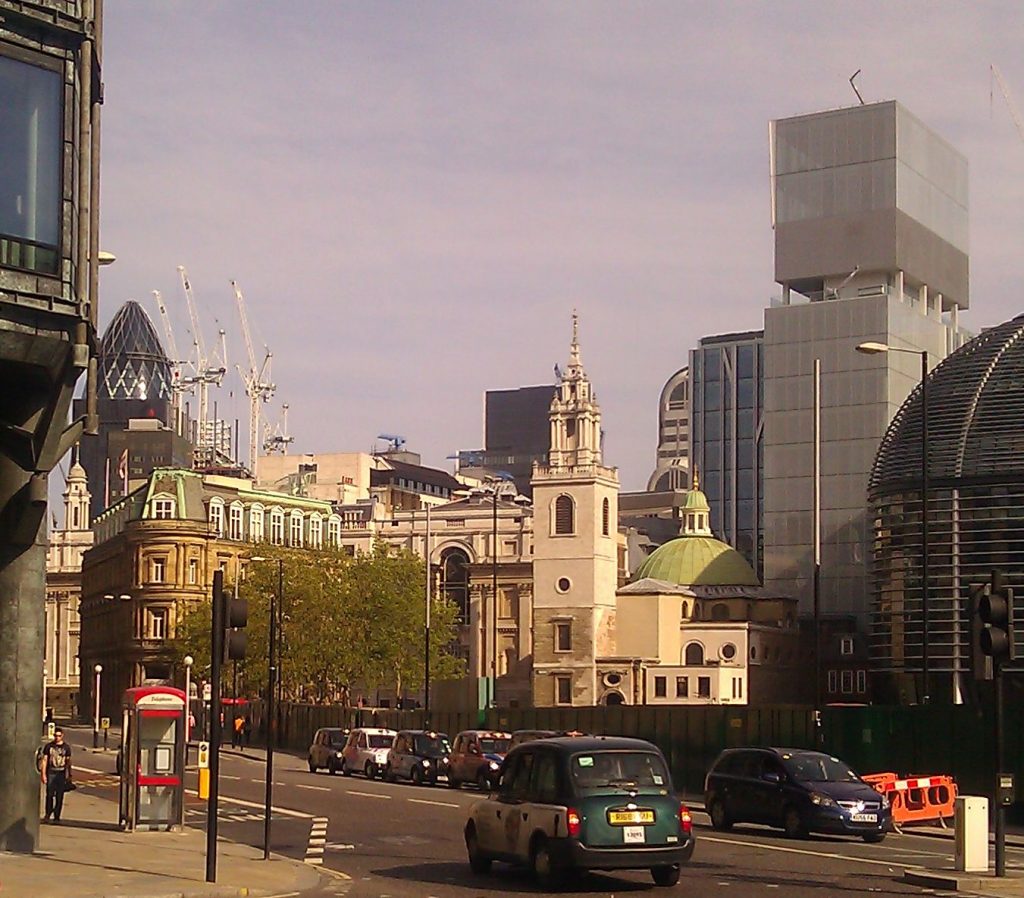
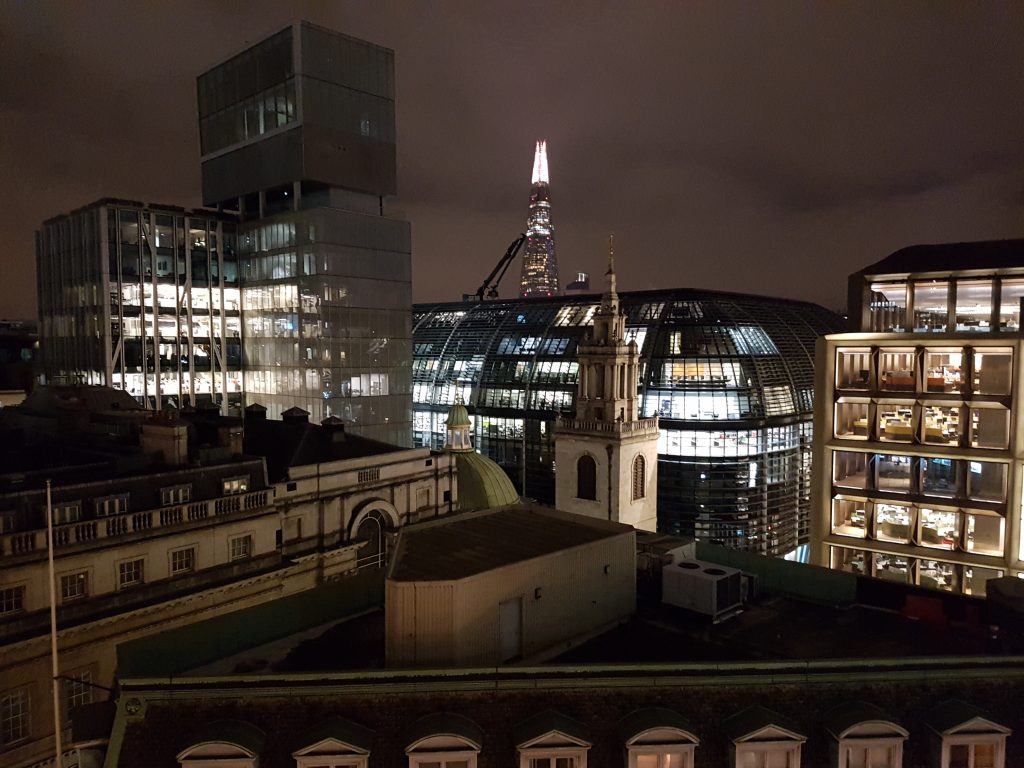
I found out about Sankta Lucia from a Swedish choir who hired me to do a tour of the City of London some years ago. We went into Christopher Wren’s marvellous St Stephen’s Church. Under the magnificent Dome, the choir fancied the acoustics and spontaneously sang. I recorded a snatch of it, which you can hear below
You can watch the Sankta Lucia service in Westminster Cathedral below:
The Importance of Light
Recent medical research has shown the importance of light, not only to our mental health but to our sleep health. Work places need to have a decent light level with ‘blue light’ as a component of the lighting. It is also an excellent idea to help your circadian rhymes by going for a morning walk, or morning sun bathing, even on cloudy days. This will help you sleep better. And so St Lucy remains relevant as an inspiration
To see my post on Roman and Medieval eye care and St Lucy click this link.
First Posted on December 13th, 2022, updated on December 13th 2023, 2024 and 2025.
Robin Redbreast – the Oak King of the New Sun December 9th

Robins brought water to relieve tormented souls in Hell and, so, got their breasts scorched; their breasts were stained with Jesus’ blood; they fanned, with their wings, the flames of a fire to keep baby Jesus warm and got scorched. All these associations with Jesus make their association with Christmas and Christmas cards perfect sense.
They are the Celtic Oak King of the New Sun. The Wren is the bird of the Old Sun. The Robin is the son of the Wren. The Robin kills his father. So the New Sun takes over from the Old Sun at the Winter Solstice. And the Robin takes over from the Wren.
The blood of the father Wren stains the Robin’s breast. In Celtic Folklore, Robins are said to shelter in Holly trees. Robins appear when loved ones are near. If a Robin comes into your house, a death will follow.
Perhaps this gives a context for Shakespeare’s mention of a robin (a ruddock he called it) which he grants the power of censure. In the play Cymberline, Innogen has been found dead, and amidst the floral tributes mentioned is the following (cors is corpse):
the ruddock would with charitable bill (Oh bill sore shaming those rich-left-heirs, that let their Father’s lie without a Monument) – bring thee all this; Yea, and furr’d Mosse besides. When Flowres are none To winter-ground thy cors
(Cymbeline, Act 4 scene 2)
Robin’s Habits
They are one of the few birds to be seen all year round, and they sing all year too. But they have different songs for autumn and spring. Robins sing from concealed spaces in trees or bushes. They are the first to sing in the morning, the last to stop at night, and can be triggered by street lights turning on. A Robin can sing all the notes on the scale and can sing for half an hour without repeating a melody.
They eat worms, seeds, fruits, insects and other invertebrates. Robins are aggressively territorial, and are our favourite birds. (RSPB)
On this Day
1554 – ‘the same day at after-noon was a bear bitten on the Bank side, and broke loose and in running away he caught a serving man by the calf of the leg, and bit a great piece away and after by the ‘hokyl-bone’ within 3 days after he died.’
Henry Machyn’s Diary quoted in ‘A London Year’ complied by Travis Elborough & Nick Rennison.
Hokyl-bone might be the holbourne stream inn what we now call holborn. Or it might be another name for the tarsus bone, the heel bone. But it doesn’t really make sense if it’s a bone. But the bear dying 3 days later by the steam makes some sort of sense.
Written December 9th 2024, revised and the Bank side incident with the Bear added 2025
‘There’s Rosemary, that’s for Remembrance’ December 7th

According to the Perpetual Almanac by Charles Kightly, this is the time when Robins are much to be seen singing their winter song, and when it is time to protect plants, particularly Rosemary, against winter frosts.
In December, rosemary flowers with a delicate blue flower. Rosemary was one of the most important plants, metaphorically and medically. Mrs Grieve, in her ‘Modern Herbal’ says it is used in medicine for illnesses of the brain and was thought to strengthen the memory. And as rosemary helps the memory, they are symbolically/metaphorically associated with friendship, love, worship and mourning. A branch of Rosemary was given as a gift to wedding guests, so they would remember the love shown at the ceremony. It was also entwined in the Bride’s wreath.
Shakespeare uses Rosemary in his plant lore in Hamlet.
OPHELIA: There’s rosemary, that’s for remembrance.
Pray you, love, remember. And there is pansies, that’s
for thoughts.LAERTES: A document in madness:
thoughts and remembrance fitted.OPHELIA: There’s fennel for you, and columbines.
There’s rue for you, and here’s some for me.
We may call it herb of grace o’ Sundays.
O, you must wear your rue with a difference.There’s a daisy. I would give you some violets,
but they withered all when my father died. They
say ‘a made a good end.(sings) For bonny sweet Robin is all my joy.
Ham IV.v.176
Rue is the herb of grace and has the sense of ‘regret’. Pansies are also for remembrance, and their heart shaped flowers are for love and affection. Fennel represents infidelity and Columbines insincerity or flattery. Daisies are for innocence. Violets are associated with death, particularly of the young. As to how Orphelia means them all to be understood is not entirely clear, particularly Fennel and Columbine. Some think they are directed towards Claudius and/or Gertrude.
https://study.com/learn/lesson/flower-symbolism-hamlet-william-shakespeare-overview-examples.html
Being evergreen, Rosemary was associated with religion and everlasting life. It was called the rose of the Virgin Mary. Lying on a bed of rosemary, the Virgin’s cloak was said to have been dyed blue. Indeed, Mary is mostly depicted in a blue cloak in Renaissance paintings.
And so Rosemary is especially important for Christmas. At Christmas, it was used to bedeck the house and used at funerals to remember the dead.

Its strong aroma means it was used as an incense and also used in magic spells
Thomas More let rosemary ‘runne all over my garden walls’ because bees love it and as sacred to remembrance, therefore to friendship.

I mostly use Rosemary for the very rare occasions when I cook lamb, but it is much more versatile than that, or so the SpruceEats website tells me:
‘Rosemary is used as a seasoning in various dishes, such as soups, casseroles, salads, and stews. Use rosemary with chicken and other poultry, game, lamb, pork, steaks, and fish, especially oily fish. It also goes well with grains, mushrooms, onions, peas, potatoes, and spinach. ‘
https://www.thespruceeats.com/all-about-rosemary-3050513
On this Day
1917- End of the Battle of Cambrai in which Tanks were first used. The tanks had initial success when over 400 hundred of them were used by the British on the first day of the battle. Because the British Army did not precede the attack with the usual artillery barrage, the attack was a complete surprise and the British penetrated deep into the German Lines. But the army had too few troops to exploit the breakthrough and by early December the Germans had mostly recaptured the territory the tanks had won. So the battle was indecisive, but successfully showed the role of the tank in future battles. Casualties amounted to about 45,000 on each side.
1941 – Pearl Harbour bombed. The Japanese attack killed more than 2,300 U.S. military personnel were killed. Another 1,100 at least were wounded, and eight battleships were damaged or destroyed.
On December 8th, Congress approved Roosevelt’s request for a declaration of war on Japan. In the Senate, the vote was 82 – 0 and 388–1 in the House.
On 11 December 1941. Germany declared war on the US, in line with the Tripartite Pact between the two countries and Italy. Later that same day, the US declared war on Germany, with no dissenters from the vote.
First published Dec 7th 2023, revised 2024, 2025