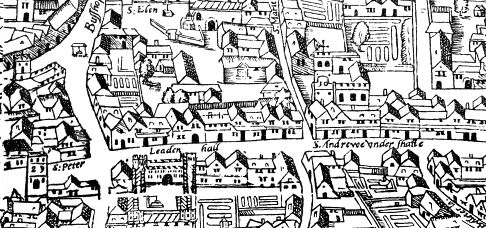
Civitas Londinum is a bird’s-eye view of London first printed from woodblocks in about 1561
John Stow tells us that there were bonfires and street parties in London throughout June and July. These were held on the Vigils of Saints’ Feast Days. The Vigil is the evening before a festival. A custom that might owe a little to the Celtic choice of dusk as the beginning of the new day.
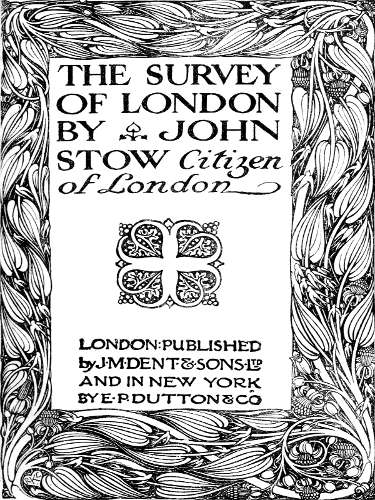
Front cover of the Survey of London by John Stow
Stow was the author of the ‘Survey of London‘ first published in 1598. Unfortunately, he does not give a list of the vigils thus celebrated. He only mentions those of St John the Baptist and of St Paul and St Peter. For these he gives a very vivid description, which I included in my post on June 24th here.
The other festivals would be for prominent Saints, particularly those with London Churches or Chapels named after them. These might include: St Botolph, St Alban, St James, St Thomas, St Margaret, St Wilgerfortis, St. Mary Magdalen, St Bridget, St James, as well as Saints John, Peter, and Paul. I’m guessing that City wide street parties would be reserved for the most important Saints. But with local celebrations for the Saint on the local Church. I am assuming these celebrations were ended or much reduced after the Reformation.
This is what Stow says of the Vigil celebrations.
‘In the months of June and July, on the vigils of festival days, and on the same festival days in the evenings after the sun setting, there were usually made bonfires in the streets, every man bestowing wood or labour towards them; the wealthier sort also, before their doors near to the said bonfires, would set out tables on the vigils, furnished with sweet bread and good drink, and on the festival days with meats and drinks plentifully, whereunto they would invite their neighbours and passengers also to sit and be merry with them in great familiarity, praising God for his benefits bestowed on them. These were called bonfires as well of good amity amongst neighbours that being before at controversy, were there, by the labour of others, reconciled, and made of bitter enemies loving friends; and also for the virtue that a great fire hath to purge the infection of the air. ‘
John Stow is one of the most important sources for Tudor and Medieval London. He was a Londoner, buried in St Andrews Undershaft (see map above), who wrote up all he could glean about London. I use him all the time – for example, on my Wolf Hall Tudor London Walk. Stow’s Survey of London can be accessed online, in full, here: or via the wonderful online Agas Map, from which the map above came from.
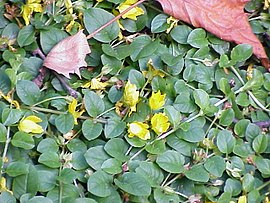
Moneywort flowers in June/July. It is, also known as Creeping Jenny, Wandering Jenny, Creeping Joan, or Wandering Sailor. All names alluding to its rapid trailing over the ground.
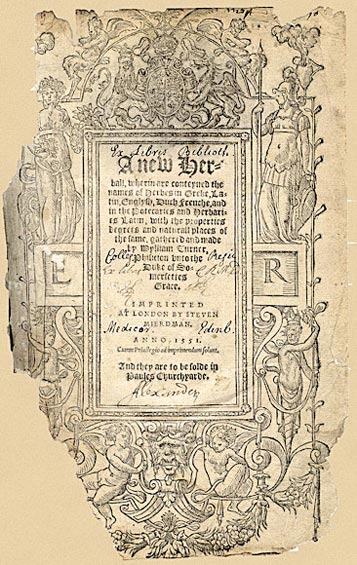
It’s also called Herb Tuppence or String of Sovereigns and variations. ‘Herbe 2 pence’ was the name given by William Turner in the earliest English scientific Herbal, 1551. Turner was very controversial because the apothecaries and physicians did not want ordinary people to know the virtues of plants. Or why else would anyone employ them? So restrictive practices was the name of the game for trained medical men. So Turner, by publishing these volumes, was doing something good for the public, and bad for his fellow professionals.
William Turner’s ‘A newe herball’ containing descriptions of 238 English plants,
Its Latin name is Lysimachia nummularis (from the Latin for money nummulus). Mrs Grieve suggests that the two pence idea comes from the leaves which ‘look like rows of pennies, and the golden flowers which give the name String of Sovereigns.’
There was said to be ‘not a better wound-herb’, and that wounded serpents would wrap themselves around it. Hence, yet another name is Serpentaria. Also, it was thought to be good for stomachs, and against whooping cough.
It can be used both fresh or dried, but if to be dried, collect in June. It prospers in damp conditions and self-spreads.
William Turner & Ferrara
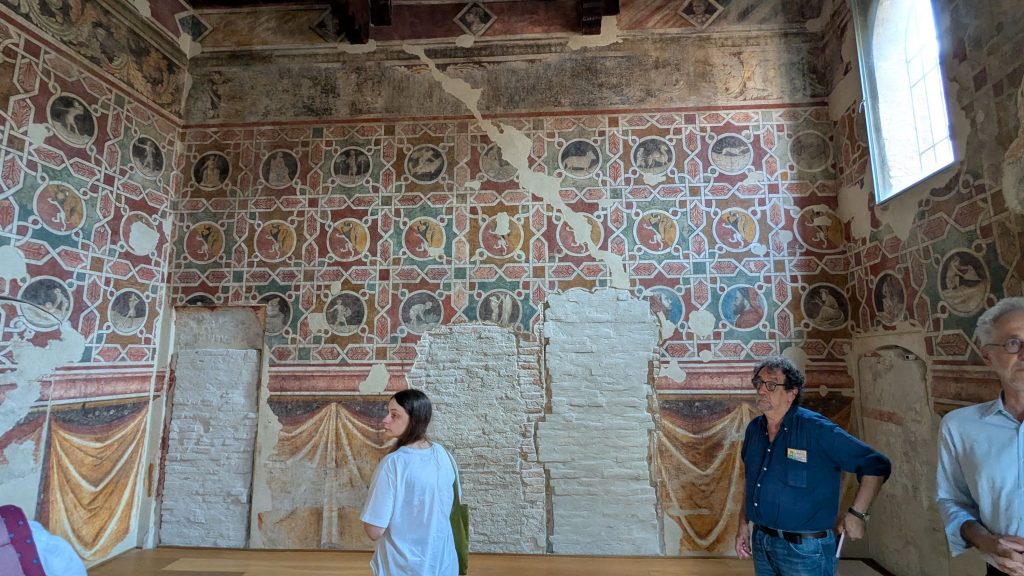
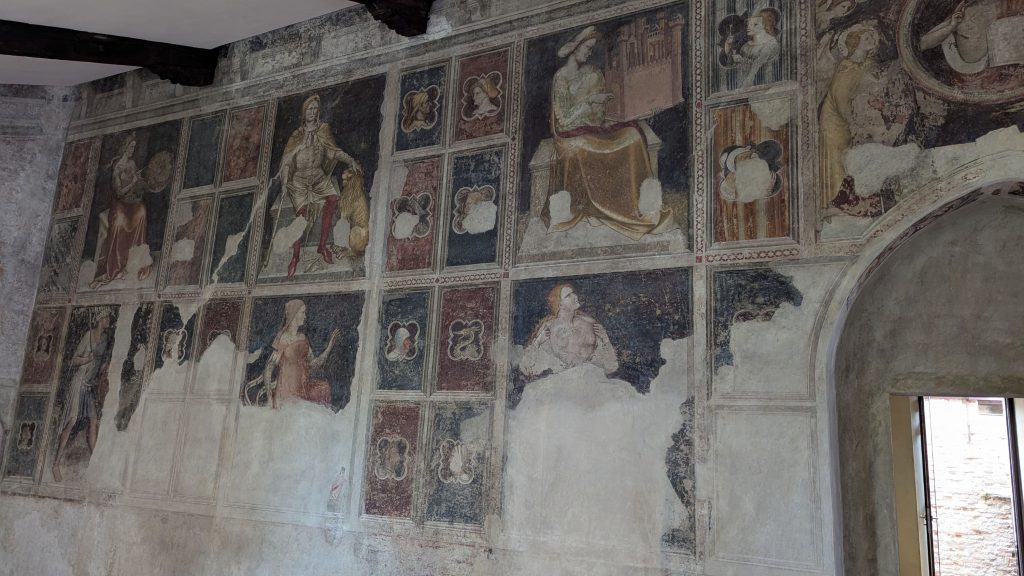
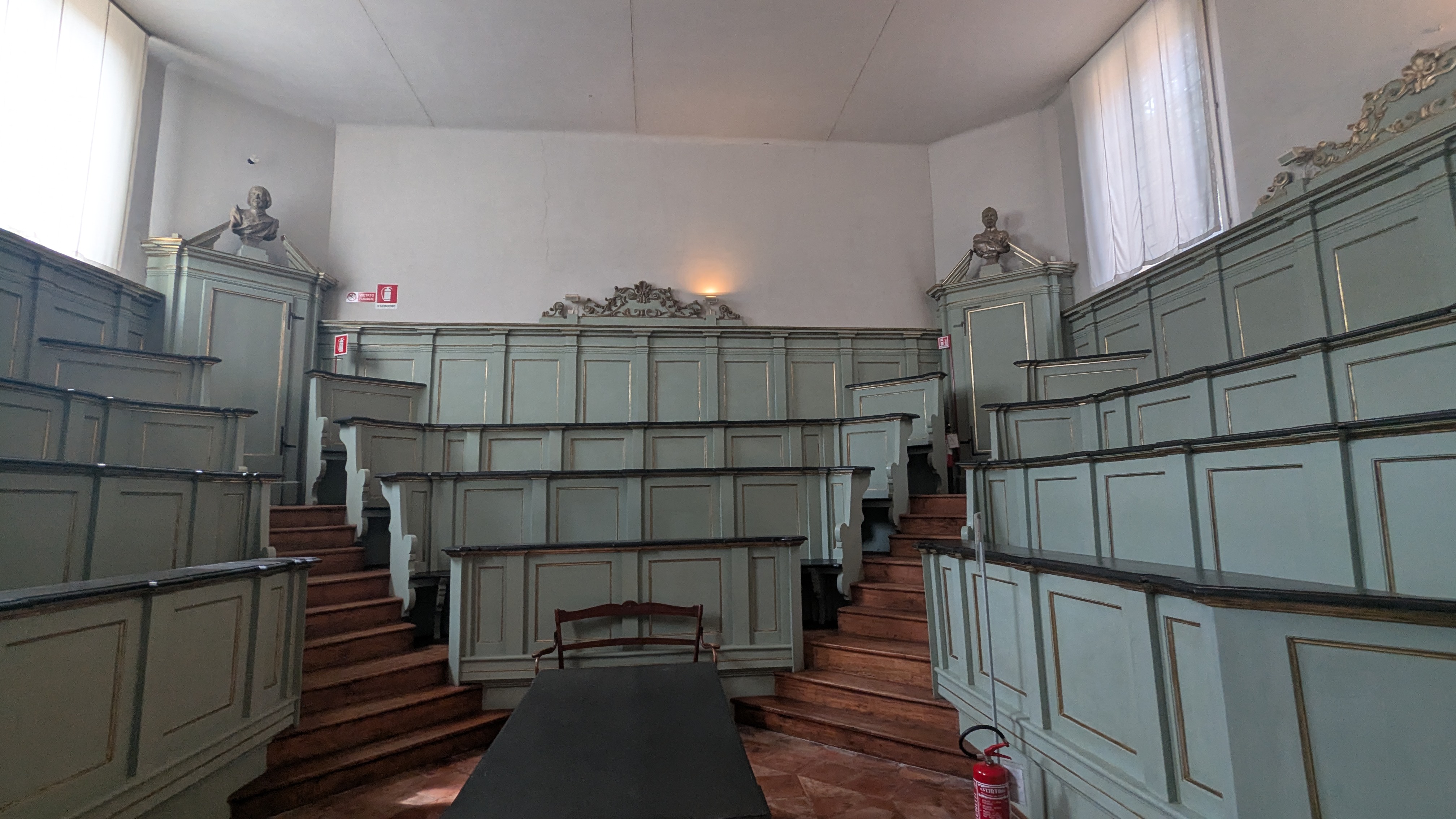
I have just come back from Ferrara. While there, we were given a tour of the Palazzo Paradiso and nearby buildings. These are town houses originally built for the Estes, the Dukes of Ferrara, in the 14th Century. In 1567, the Palazzo Paradiso was rented out to the University of Ferrara. Turner learnt his medicine in Italy in Ferrara and Bologna between 1540 and 1542. He was awarded his M.D. while in Italy. But, I’m not sure where the medical facility was in 1540. But I am not going to miss this opportunity to show some lovely medieval architecture, that Turner might well have seen. And an early modern Anatomy Theatre.
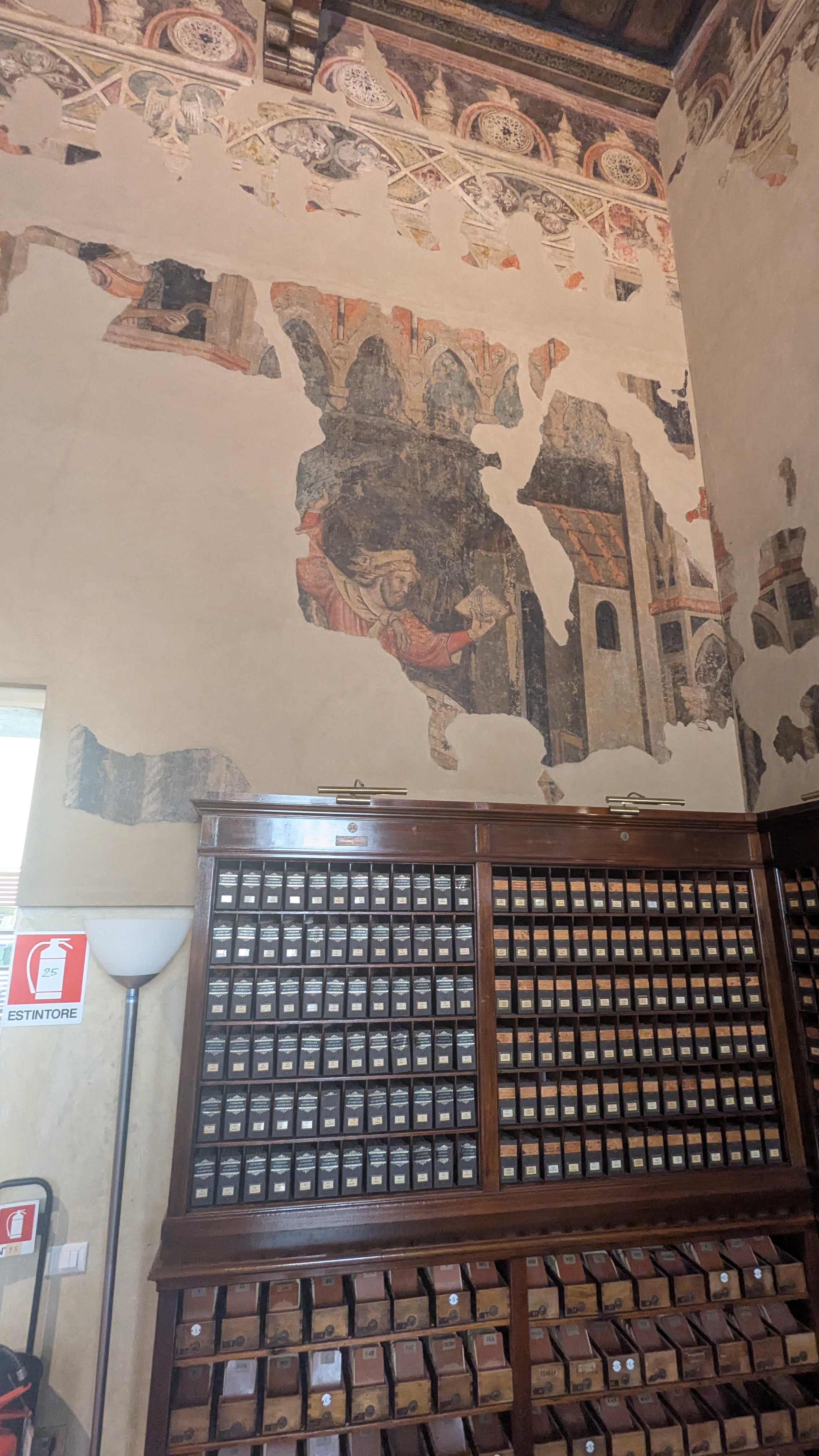
Casa Minerbi, Photo K FludeCasa Minerbi, Photo K Flude Showing from left to right. Top: Prudence, Fortitude and Temperance, Bottom: Folly, Inconstancy and Anger.Anatomy Theatre, Palazzo Paradiso, one of several rooms of the Medical Facility of the University of Ferrara. 1731Library in the Palazzo Paradiso, with mural of Hercules holding an astrolab and with Lion’s head as a hat.(15th Century)
In the Tower of the building are kept the remains of Ludovico Ariosto, the great medieval Italian poet (1474 – 1533). He wrote the epicOrlando Furioso (1516).
Weather in June
Calm weather in June Sets corn in tune.
When it is hottest in June, it will be coldest in the corresponding days in February.
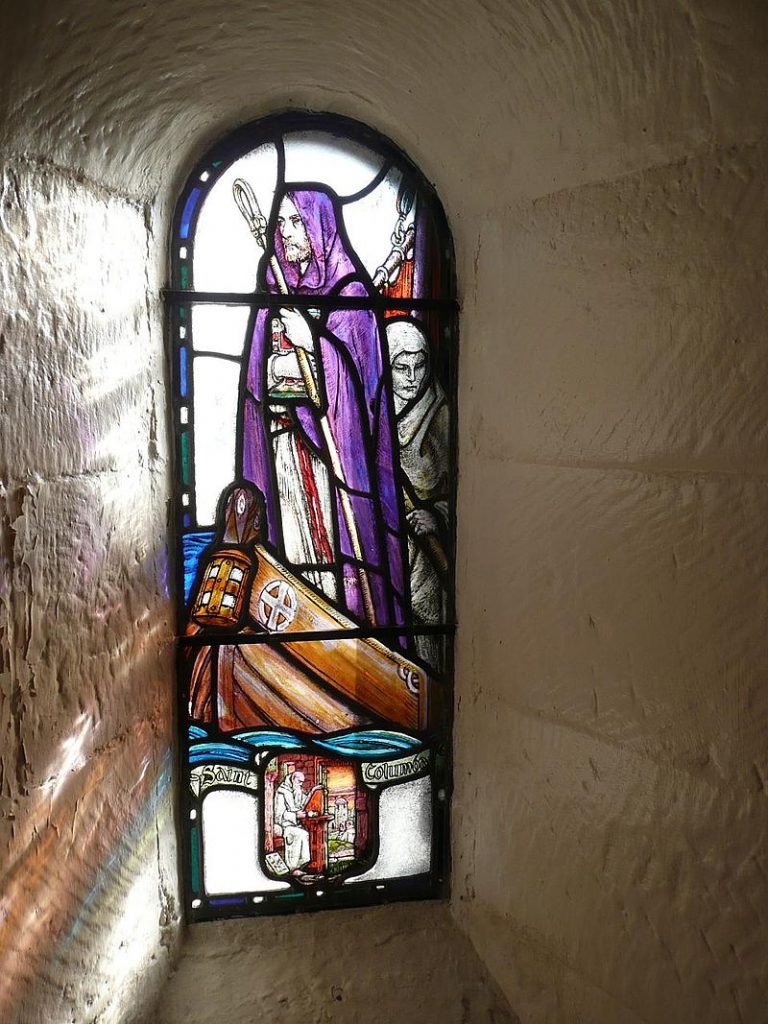
St Columba Stained Glass window in St Margaret’s Chapel Edinburgh Castle Photo by Graham van der Wielen Wikipedia CC BY 2.0
St Columba, or Colmcille is one of the most important saints for the early transmission of Christianity. He was born in 521 and said to be a descendant of the possibly legendary Irish King Niall of the Nine Hostages. (The Hostages were a token of Niall’s power over Ireland as they came from the five provinces of Ireland. These are Ulster, Connacht, Leinster, Munster, andMeath. The other four hostages represented Scotland, the Saxons, the Britons, and the Franks.)
St. Columba was sent at an early age to be brought up as a Monk, and went on to set up Monasteries in Ireland at Derry and Durrow. In 563, he left Ireland, possibly because he got involved in a dispute that had a deadly outcome. He went into exile to Scotland and set up the famous Monastery on the island of Iona, Inner Hebrides. This is off the coast of what would one day be called Scotland. At the time, it was under the control of the Kingdom of Dál Riata, which was, Gaelic, nominally Christian, and controlled parts of Ulster and Western Scotland.
From Iona, Columba led the conversion of the Picts to Christianity. The Picts were Britons, speaking a different dialect of Celtic than the Gaels of Ireland and Dál Riata. Their name is said to have been given by the Romans and meant Painted Men. A shared religion, which St Columba brought from Ireland, helped towards the eventual union of the Gaels, the Picts and other British groups into the Kingdom of Alba. Alba is the Gaelic name for Scotland – meaning white, and from which we also get Albion. Alba became Scotland, which is derived from the Roman word for the area which in Latin was “Scotia”. Iona became the traditional burial place of early Scottish Kings such as Macbeth (Mac Bethad mac Findlaích). These Kings were crowned at Scone and buried in Iona. Alba was also able to take territory from the Anglian Kingdom of Northumbria, namely, the Scots-speaking areas South of the Firth of Forth. (Scots being a dialect of English). There were also Norse settlers in the Ireland so Scotland was made of a coalition of Gaelic, Brittonic, Norse and English speakers.
St Columba and the Loch Ness Monster
Much of the events of this part of Columba’s life are recorded by St. Adamnan in The Life of Saint Columba. This was written in the 7th Century, much of which is apocryphal. One notable story tells how he came across a group of pagan Picts who were mourning a child killed by a monster in the River Ness. St Columba revived the child. He then sent one of the Brothers to swim across the Loch to fetch a boat. The “water beast” pursued the Monk and was about to attack him when St Columba told the monster to stop. So it did, retreating to the depths of Loch Ness. Thus began the legend of the Loch Ness monster.
St Columba died in 597AD. Iona continued to prosper and in, 634 sent St Aidan from Iona to found the Monastery at Lindisfarne. The island is on the Eastern coast of Britain in the Anglo-Saxon Kingdom of Northumbria. This Kingdom of the North Angles, was one of the most powerful at the time and Lindisfarne was instrumental in its conversion. The tradition of evangelism took hold in the British Isles, and it was from here that much of the German-speaking world was converted to Christianity.
This is St Columba’s legacy.
Northumbria’s Contribution to the development of Christianity
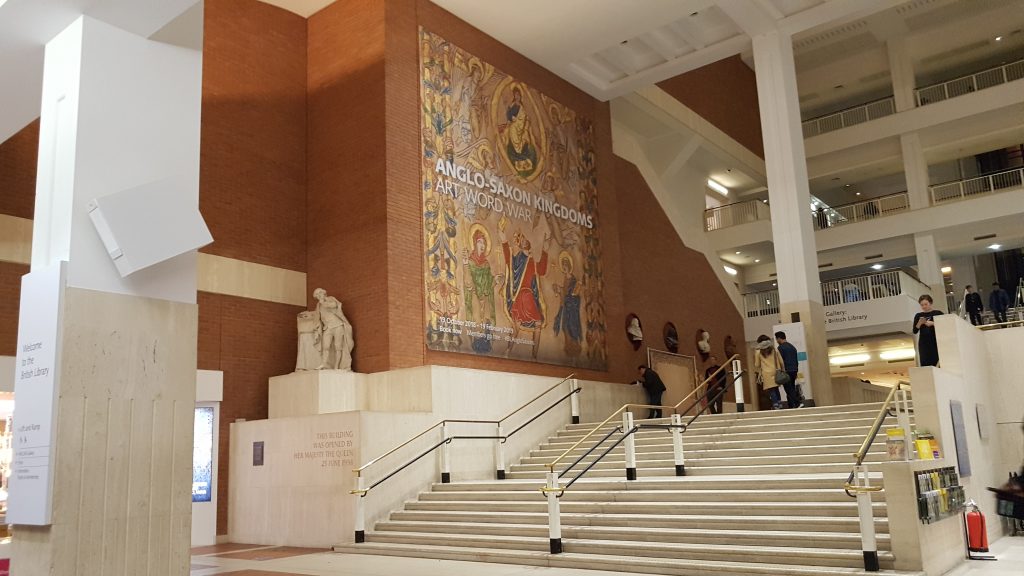
There is a developing understanding among scholars that this Irish inspired form of Christianity, fused with the Anglo-Saxon Northumbria took a leading role in ritual, art, scholarship in the Roman Catholic world. Just stop and think about that sentence for a moment. The northern parts of an out of the way set of islands off the edge of Europe took a leading role in the development of Western Christianity. This was highlighted in a recent exhibition of Anglo-Saxon art at the British Library.
British Library with Poster for Anglo-Saxons Kingdoms Exhibition, Photo K Flude
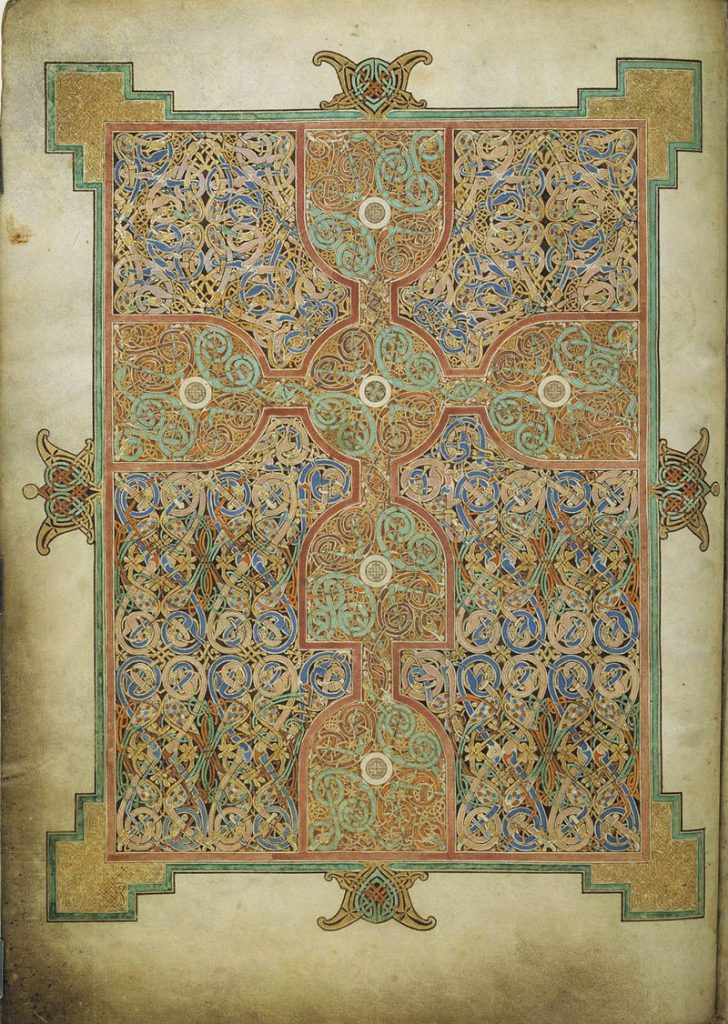
A look at the Lindisfarne Gospel and the Book of Kells showcases the amazing art of this period. For a real treat, look through this scrollable virtual copy of the Lindisfarne Gospel. (Currently this is unavailable, I suspect since the BL was hacked. So instead, here is a slightly breathless online introductory video of the Gospel.)
The Book itself has been missing from the displays of the British Library for a couple of years, but was on display in Northumberland in 2022. I’m not sure whether it is yet back on display at the British Library. I think not. You can see the Book of Kells at Trinity College, Dublin or look at their online offering here: Not quite as joyous an experience as the online Lindisfarne but beautiful enough.
Carpet Page from the Lindisfarne Gospel Photo Wikiepedia Eadfrith – Lindisfarne evangeliarium, tapijtbladzijde op f26v, Matteüsevangelie
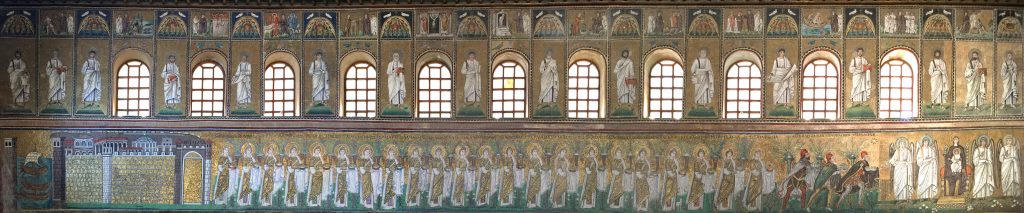
Procession of female saints leaving Classis (bottom left) behind the Three Kings heading to the Virgin Mary (bottom right between four angels). Basilica of Sant’Apollinare Nuovo (pic. Wikipedia)
Today, I am in Ravenna. One of those places where the history brings gasps of amazement. To honour my visit, I thought I should roll out last year’s post. This is what I said:
When I revised my Saint Agatha post (link see below), I felt I needed an early image of Agatha. After all, her cult spread early on, and therefore, was likely to be genuine.
As I started to track down her image I was led, with some joy, to one of the most amazing Churches in the wonderful town of Ravenna. I visited the Basilica of Sant’Apollinare Nuovo with some wonderment when working as an archaeologist at Ferrara, in Emilia-Romagna. Forty Years ago.
I found out that Agatha was one of 22 female Saints on one of the walls of the Church. I discovered a pretty comprehensive description of the Church. As I looked at it, I noticed the record was made by, or involved, Professor Bryan Ward-Perkins. He was the Director of the site my friends and I worked on in Ferrara! (And I met him again last night, 2025 for the first time in years! We had dinner with fellow archaeologists, and Bryan was talking about the work he did on the Saints of St Apollinaire.)
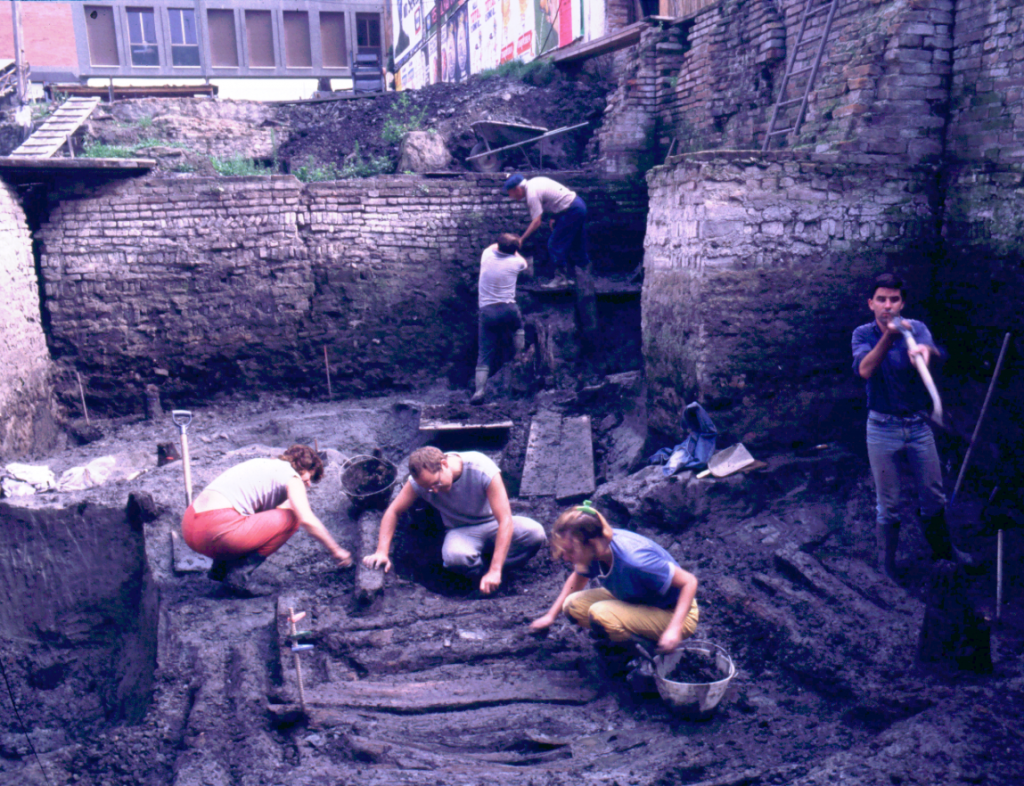
Medieval Excavation in Ferrara. The author is in the centre of the photo,
Ravenna
I’m guessing Bryan suggested we visit Ravenna on one of our trips to the beach at nearby Rimini. Ravenna was so awesome because the City became the capital of the Roman Empire in the West. It took over when Rome fell, then it was part of the Ostrogothic Kingdom, then of the Byzantine Empire. It spanned the period of the Arian Heresy.
And so, it was provided with some of the great glories of 5th and 6th Century Architecture. These include the Mausoleum of Galla Placidia, the Neronian Baptistery, the Basilica of Sant’Apollinare Nuovo, the Arian Baptistery, the Archiepiscopal Chapel, the Mausoleum of Theodoric, the Church of San Vitale and the Basilica of Sant’Apollinare in Classe. It’s hard to overestimate the impact on a young British archaeologist of seeing 5th Century buildings with roofs and astonishingly detailed mosaics still intact. Please visit!
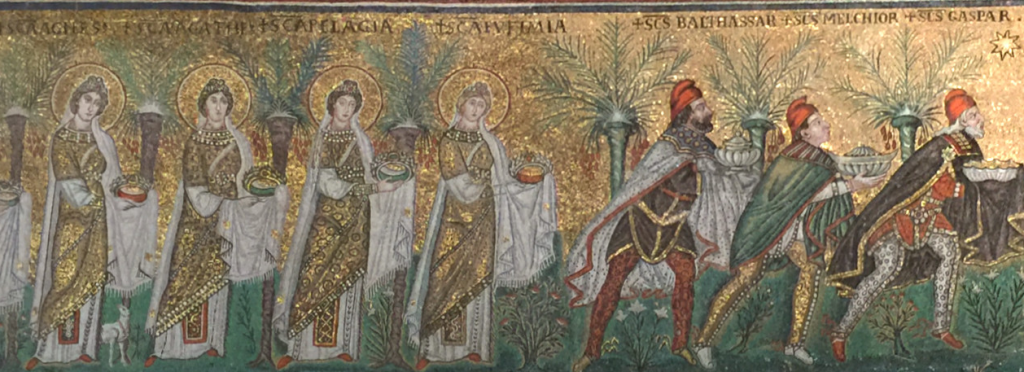
Detail showing the first four female saints behind the Three Kings. Basilica of Sant’Apollinare Nuovo wikipedia
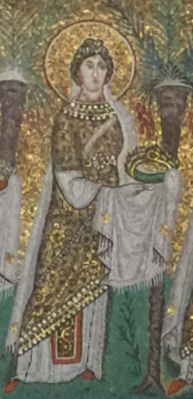
Bryan Ward-Perkins description says ‘All the saints are haloed, bear crowns and are dressed in elaborate court dress. Unlike the men …., all have essentially the same youthful features. The only saint with a distinguishing attribute is Agnes, who is accompanied by a lamb.’ The men are given some personality, some have white beards others are youthful. While all the female martyrs are, essentially young virgins, and cannot be distinguished from each other. St Agatha, the list says, is the Saint next to Agnes with her lamb; the third in precedent. You can see her above and in detail below.
St Agatha Basilica of Sant’Apollinare Nuovo wikipedia
Motorcycling from Ravenna to Inferno
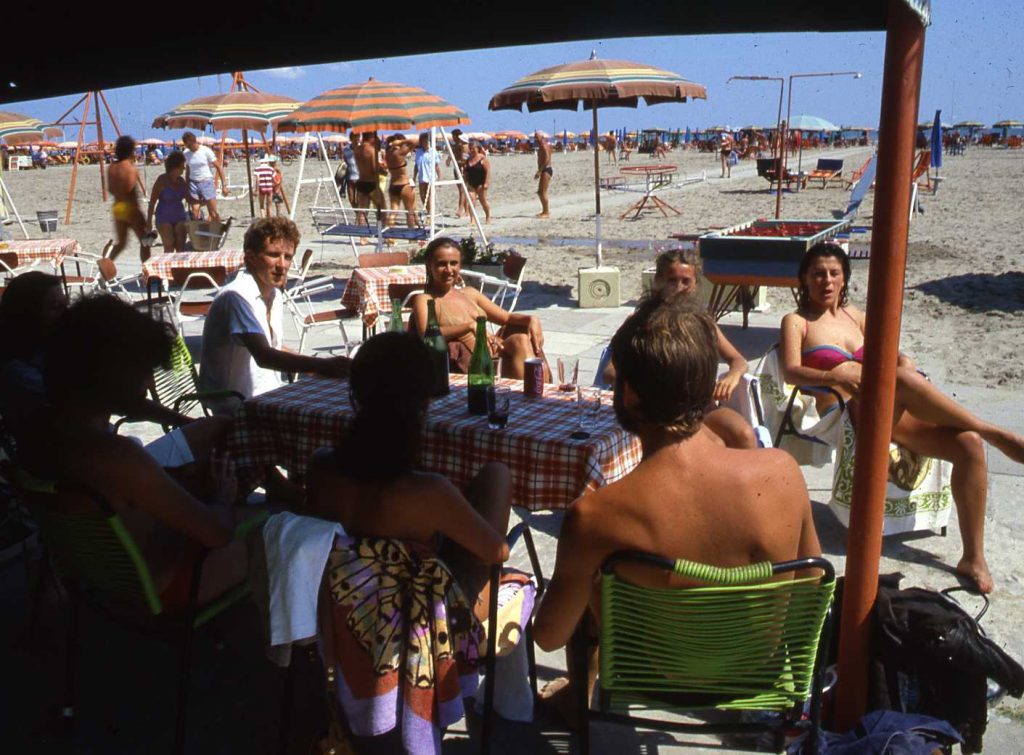
Enough of the sublime! Now for the ridiculous. Whether on this visit or another, we decided to have a day at the beach at Rimini. After the day on the beach, a collective decision to stay over was made. The reason was to go to one of the big clubs (did we still call them discos?) probably to dance to ‘Frankie Goes to Hollywood’.
Archaeologists, Italian and English, on the beach at Lido di Spina
However, the hotels were all full. So I decided, late at night, to go back to Ferrara, on my own on my 175 cc Yamaha motorbike.
My Yamaha 175cc bike looked something like this but was red. A thing of underpowered beauty.
Thing was, I had started the day in Ferrara in the blazing Italian summer heat. So, I had hopped onto my bike dressed in shorts and t-shirt. Ferrara was 77 miles away (says google). One hour into the trip back, I was getting pretty cold, and really not enjoying driving through the lonely countryside. Therefore, I decided to pull off the main road to find a rural hostelry for what remained of the night.
Now, I remember this very vividly – the only likely road I could find was signposted to ‘Inferno’. I shrugged my shoulders, wondering what that was about, and drove towards it on a very deserted road. Eventually, I came to a sign which told me I was about to enter ‘Inferno’.
There was something very surreal about the situation. My courage failed me! I was not going to stay in a ‘motel’ in a place called ‘inferno’! I had seen too many horror films set in Motels and one in Inferno seemed madness. So, I turned round and continued my cold journey to Ferrara.
Inferno
Whenever I tell this story, I have some doubt about it. Did I really drive into a place called ‘Inferno’? But I have, for the first time, checked Google. It tells me that the road off the Rimini to Ferrara road goes through somewhere called: Vicolo Inferno, 40026 Imola BO, Italy.
Thank you very much to my subscriber for alerting me to St Kevin’s Day which is my Saint’s Day. I was aware of St Kev and that the name meant ‘of noble birth’ but that’s was the extent of my knowledge.
But a little research on Wikipedia while on the train to visit my Dad, revealed that Kev lived to the grand old age of 120, born in 498 and died in 628. As my Dad is 97 and still going strong, maybe he and St Kevin will inspire my longevity?
Briefly, St Kevin met the great St. Columba; had a poem written about him by the marvelous Seamus Heaney (https://poetryarchive.org/poem/st-kevin-and-blackbird/); a song by the Dubliners; several mentions by James Joyce and a long distance path, the St Kevin’s Way, part of the Camino de Santiago network, named after him. And St Kev can help us understand the weather for the rest of June :
‘The weather on St Kevin’s Day will last all month‘.
So that means uninterrupted sun. At least in Ravenna where I currently am.
Live recording of Dubliners’ Song about St Kevin
Coemgen, as he is known in Irish, was a hermit, living in a cave-like ledge above a lake. His piety attracted followers and a monastic settlement. He was known for his ascetic life and love for nature. So, a role model for all us Kevins?
His hagiography was written very late, so little of it can be confirmed. But, like other saintly hermits, he is associated with being tempted by women or the devil disguised as a woman. (St. Anthony the Great, St. Benedict of Nursia, Saint Chrysanthus, St. Vitus, St. Bernard of Clairvaux, St. Hilary etc.) Unfortunately, rather than just resisting his temptress, Coemgen is said to have drowned her. Not so good!
On the other hand, my sister sent me this photo of a souvenir from a shop in Northumberland.
That’s more like it! And oh so true! Clearly we, handsome, clever, positive, analytical Kevins have a lot going for us, despite the name.
For more on the Temptations of Hermits read this article:
Nechita, Andrea.“Offering Body, Pleasure, and Wealth: The Visual Representation of Women Tempting Saints (Fifteenth and Sixteenth Century).” Annual of Medieval Studies at CEU, 20 (2014): 96-112. For a summary, and some tempting illustrations, look here.
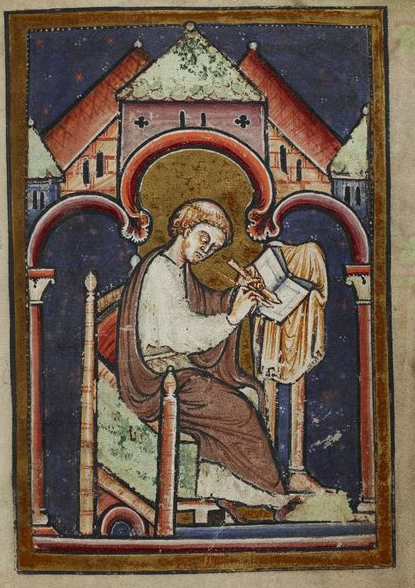
A Scribe – possibly the Venerable Bede. Late 12th Century from Lives of St Cuthbert.
He died on the evening of what we would call the 25th, but in ancient times, the Day changed at dusk. So for his contemporaries, he died on 26th May. But, as he shares his day with St Augustine, some celebrate the Venerable Bede on May 27th!
Called the Father of English History, the Venerable Bede was an excellent historian, who set the tone and standard for many centuries of English Historiography. He is mostly remembered for the ‘Ecclesiastical History of the English People’ which provides the most trusted account of the events of the Post Roman, Migration, and Anglo-Saxon periods.
So well regarded is he that he is the only Englishman mentioned in Dante’s Paradiso. This is the third part of the Divine Comedy. The other parts are about the bad people in Hell and Purgatory. Bede is with the Angels in Heaven.
He is Venerable not only in the general sense of being wise, old and respected, but also in the technical sense:
‘(in the Roman Catholic Church) a title given to a deceased person who has attained a certain degree of sanctity but has not been fully beatified or canonized.‘ (Oxford Languages)
In 1899, the Catholic Church honoured him with the title of Doctor of the Church – someone holy who had contributed to the theology of the Church.
He is considered by some to be the best historian in olden times, only equalled by Herodotus (said Thomas Carlyle). Thucydides surely says I! (Note: Herodotus is known as the ‘Father of History’ for his storytelling and breadth of the scope of his attention. While Thucydides didn’t tell tales, he concentrated on empirical evidence and so is known as the Father of Scientific History)
Bede is so good because he checked his sources and had access to a wide range of books. He even had a line to the Vatican so he could check his facts with Vatican records. This in the 8th Century! The Venerable Bede is the polar opposite of Geoffrey of Monmouth, (writing in the 12th Century). If Bede mentions a person or an event then they are accepted as part of the story of the English. By contrast, if Geoffrey of Monmouth mentions a person or event, without further corroboration, then historians tend to consider it a story, myth or simply made up by Geoffrey.
But, the truth is not so straightforward. Bede is not without his biases and his sources were not themselves always reliable, nor above accepting myth, legends and miracles as fact. Geoffrey also has access to some, probably, oral traditions so that some (but which?) of his many tales of the Kings of Britain may hold considerable historical information.
Bede’s Influence on English History
Bede followed Gildas (A British Monk writing in the 6th Century) in wondering why God allowed the native Christian Britons to be defeated by the foreign Pagan English. Gildas assumed God was punishing the Britons because of the evil deeds of their so-called Christian Kings. Bede extends this to argue that God is punishing the Britons for not trying to convert the English to Christianity AND by being generally not a great bunch of Christians. God knows that the English, when converted, will be much better Christians than the Britons.
This starts a histographical trend for the English to think of themselves as the chosen people. By contrast, the Britons (Welsh, Scots and Irish) are feckless Barbarians (they thought). Bede concentrates on the English and countless generations of Historians have either left out the Britons, or demeaned them in their histories of England and indeed of Britain.
For example, most histories of Kings, deal only with England and start either with William the Conqueror or Alfred the Great and omit any British, Welsh, Scots or Irish Kings. Except for my book on the Kings and Queens of Britain, which starts with the largely legendary Kings of Britain, and includes some Welsh and Scottish Kings. To buy it, you will find details of it here.
So Bede is a great historian without whom we would have an even less clear idea about what happened in the centuries following the Roman Period. But also, contributed to an Anglo centric view of history. He was writing in Northumberland at the Monastery of Jarrow, and is more sympathetic to Northumbria than to Wessex, Mercia, and the British Kingdoms.
Bede’s Books
He wrote over 60 books. One was about the theological science of computus. In particular, the dating of Easter. The British Church had one method, the Catholic Church another. This contributed to a series of confrontations between the 2 Churches. And was only finally resolved at the Synod of Whitby in the favour of the Catholic Church.
Bede was instrumental in making Dionysius Exiguus idea of dating from the birth of Christ as the standard AD /BC system. He also thought the Catholic calculation that Jesus was born 5000 years ago was wrong and used the Bible to calculate the more ‘correct’ date was 3952 BC. Archbishop Ussher in the 17th Century took Bede’s calculation and improved it and suggested the proper date was 4004 BC.
For more about Dionysius Exiguus and the division of time, see my post here.
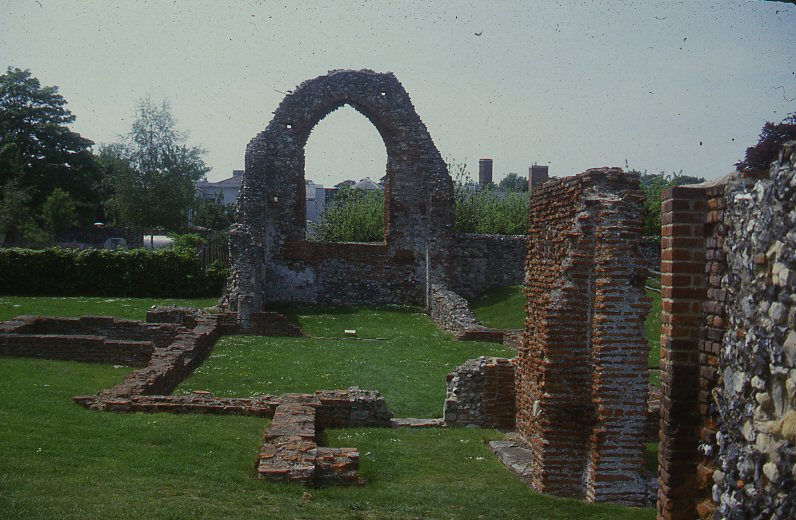
Ruins of St Pancras, Canterbury Photo: K Flude (note the reused Roman Bricks.)
Pancras means ‘all-powerful’ in Greek. St Pancras was a 14 year old who refused to give up his Christian Faith during the persecution of Christians by the Emperor Diocletian. He was beheaded on the Via Aurelia, traditionally, on 12 May 303 AD. His youth makes him the Patron Saint of children, but he is also the patron saint ofjobs and health. He is ‘invoked’ against cramps, false witnesses, headaches, and perjury. His body was buried in the Catacombs, but his head is kept in a reliquary in the Church of Saint Pancras in Rome, where he was buried.
Ice Saints
He is also one of the Ice Saints. These are saints with feast days from May 11th to May 14th. They are: St. Mamertus, St. Pancras, and St. Servatius (and in some countries, Saint Boniface of Tarsus – Wikipedia). They represent a belief that there was often a cold snap in early May. Although modern statistics disprove this, it is however true that a late frost can cause havoc with crops. So the Ice Saints help persuade farmers to delay sowing.
In England, we have a saving ‘never cast a clout while may is out’. Which suggest you keep a coat at hand while the May flowers (Hawthorn) are still out, as it can be cold even in May. For more on the Folklore of Hawthorn -see my post here.
St Pancras in England
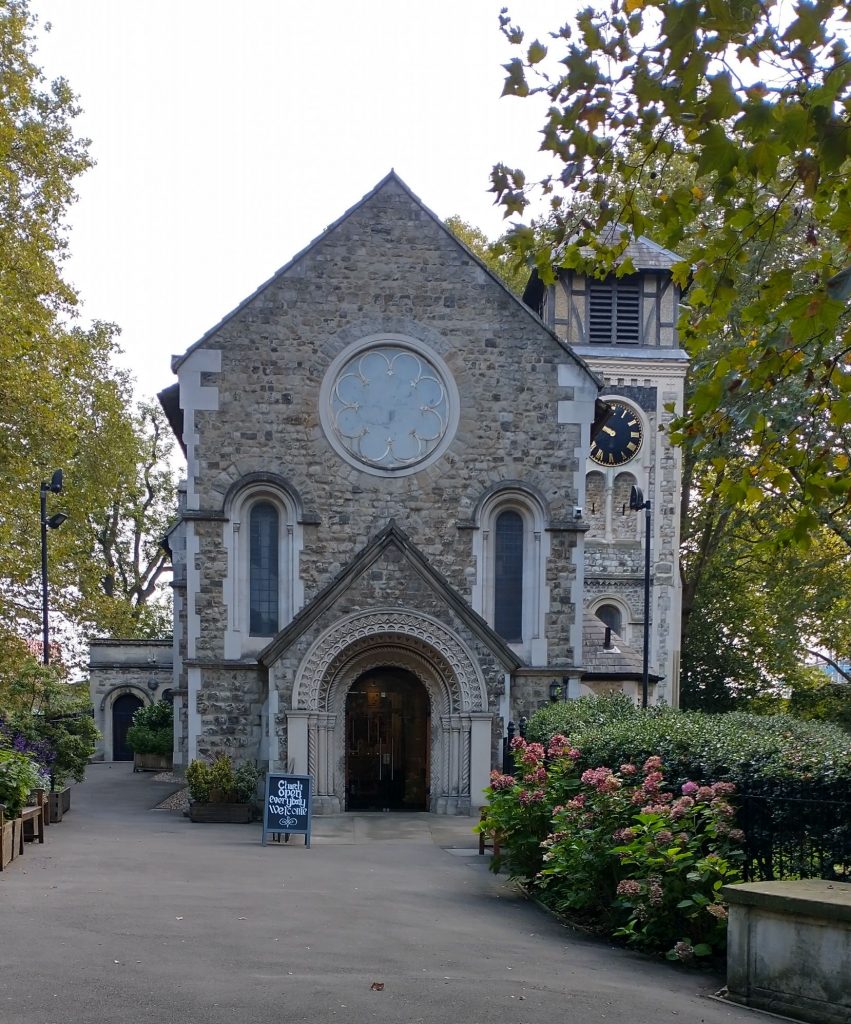
St Pancras, Old Church, London (Photo: Kevin Flude)
Pope Gregory is said to have given St Augustine relics from St Pancras when his mission came to Kent in 597AD. They built a church dedicated to St Pancras. The ruins still survive in the grounds of what is now St Augustine’s, Canterbury (see picture at tope of post).
This story is partly responsible for the claims that St Pancras Old Church, in Camden (pictured above) is a very old foundation. The idea being that there was a late Roman place of worship here. But there is very little solid evidence for this. It is also argued that, if it isn’t late Roman, then it dates to just after 604AD. This is when St Mellitus, sent by St Augustine, established St Pauls Cathedral. It is suggested that he also founded St Pancras Church. St Pancras’ Church was a Prebend of St Pauls Cathedral (a Prebend provides the stipend (pay) to support a Canon of a Cathedral). But this is not evidence it was established as early as the Cathedral was, and there really isn’t any other credible evidence for a 604 date.
When the Church was restored, the architects said it was mostly Tudor work with traces of Norman architecture. However, the suggested finding of a Roman tile or two, reused in the fabric, is used as evidence to keep the legend going.
If you read the Wikipedia page, you will see evidence of two strands to the contributions. One is playing down the legends of its early foundation. The other trying to keep hold of its place as among the ‘earliest sites of Christian worship’. Read the wikipedia page here: https://en.wikipedia.org/wiki/St_Pancras_Old_Church to make up your own mind.
It is a lovely Church, on an impressive site, with links to Thomas Hardy, and Sir John Soane whose tomb is the design inspiration for the iconic Red Telephone Box.
As Patron Saint of Headaches, St Pancras Day is a good day to make worms come out of your head. Or so say the Fairfax Household Book of the 17th/18th Century as quoted in Charles Kightly’s ‘The Perpetual Almanac’:
‘To make a worm come out of the head. Take, in May, the marrow of a bull or cow, and put it warm into the ear, and the worm will come forth for sweetness of the marrow.’
Generally, willowbark was used for headaches. We know this would have worked as the bark contains salicin, which is converted by the body into salicylic acid. This is a precursor to aspirin (acetylsalicylic acid). But it is not as effective.
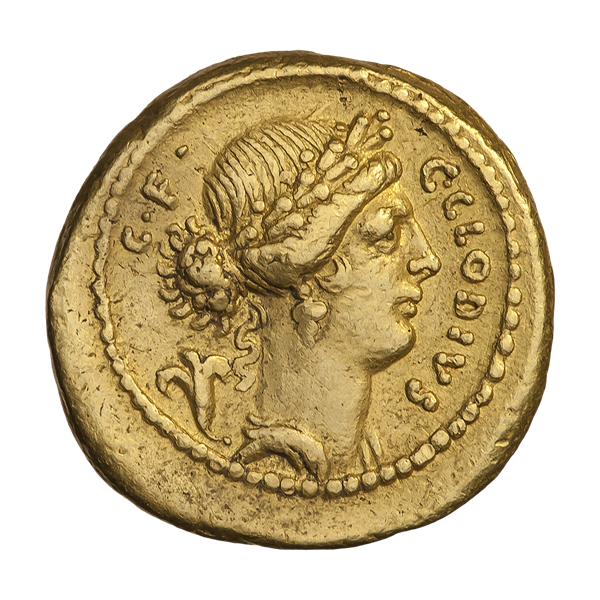
Flora (Floralia festival named after her) on a gold aureus of 43–39 BC Wikipedia photot by АНО Международный нумизматический клуб
This post got forgotten because April 28th was unexpectedly St George’s Day. But it’s still relevant as the Roman festival of Floralia continued to May 15th.
On the 28th of April began the Floralia. It continued to the Kalends (15th) of May. According to Ovid in the ‘Fasti’ Book IV, the Romans celebrated Flora, the Goddess of Spring. The Floralia celebrated flowering, blossoming, budding, planting and fertility.
Flora was one of the 15 Roman Deities offered a state-financed Priest. Her home in Rome, was on the lower slopes of the Aventine Hill near the Circus Maximus.
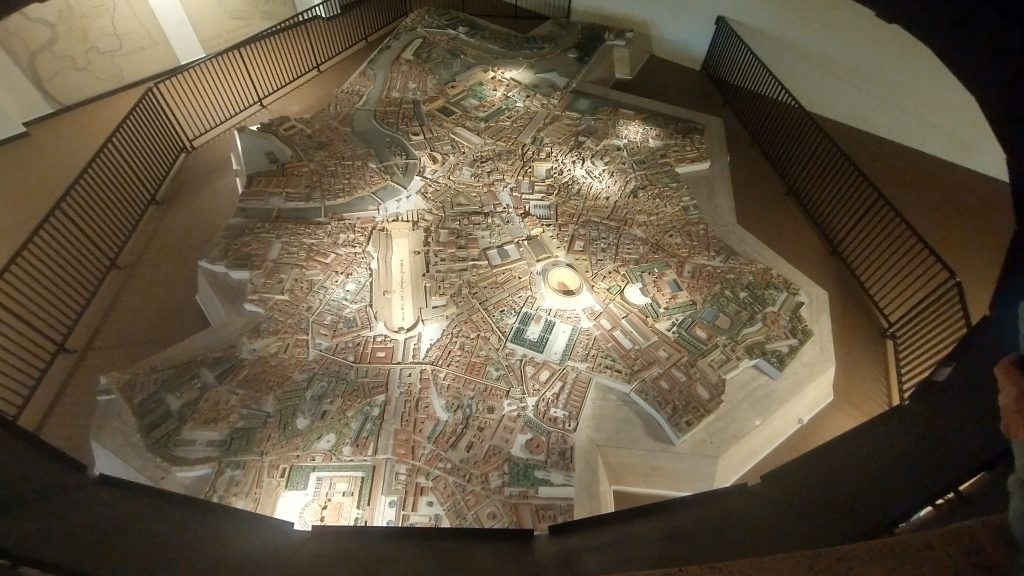
The Circus Maximus is the large long arena in the middle of Rome. Model Musee Arte et Histoire, Brussels, photo Kevin Flude
Celebrations began with theatrical performances, at the end of which the audience were pelted with beans and lupins. Then there were competitive games, and spectacles. The latter, in the reign of Galba, including a tight-rope walking animal. A monkey you might guess but no, it was a tight-rope walking elephant!
The Year of the Four Emperors
Incidentally, Galba only survived for 7 months as Emperor. A little longer than our Liz Truss’s 44 days. But then she was not murdered by a rampaging mob at the end of her reign. It was the year known to history as the year of the 4 Emperors. (great description by Tacitus here:)
Spectacles and Battles
Juvenal records that prostitutes were included in the celebration of Floralia by dancing naked, and fighting in mock gladiatorial battles. There is a raging debate about the existence of female gladiators. A burial in Southwark has been said to be one such. To hear what Natalie Haynes has to say on the subject look here🙂
Fauns, Satyrs, Goats and Hares
Hares and goats were released as part of the ceremonies. These animals were both considered to be very fertile and have a ‘salacious’ reputation! (Satyrs or Fawns were, famously, obsessed with sex and were half man half goat. A man can still be referred to, normally behind his back, as an ‘old goat’). Fauns were Roman, Satyrs Greek. The one half man half goat, the other half man half horse. It all got a little mixed up and fauns became very similar to satyrs.
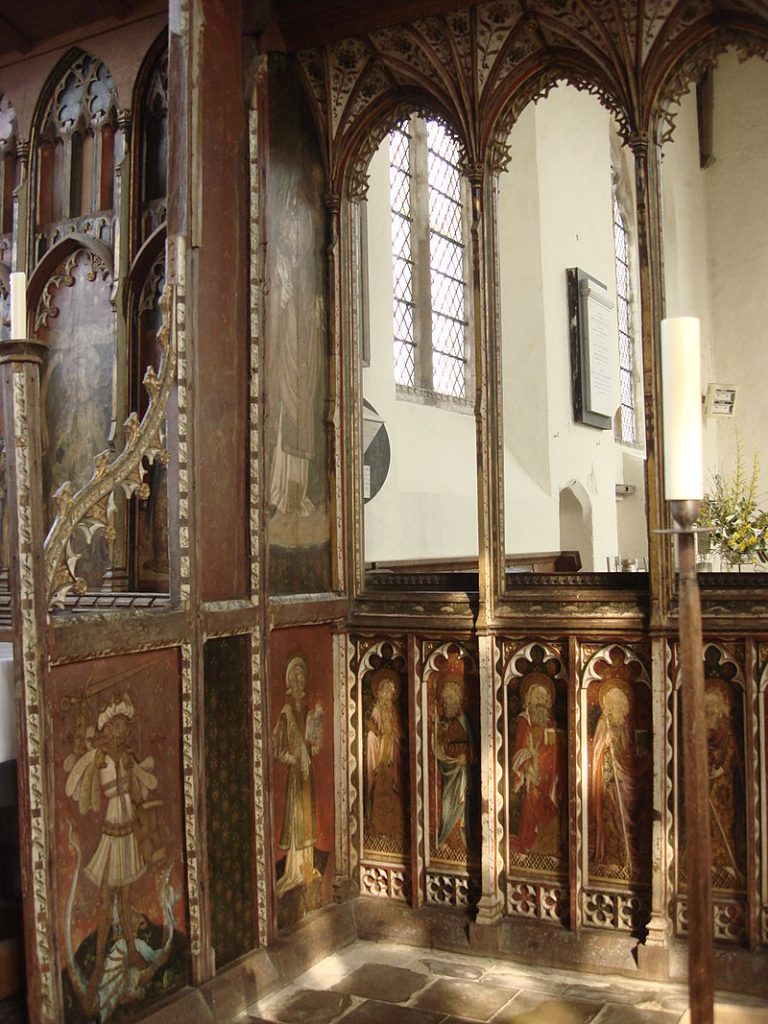
Rodmas – Rood screen in St. Helen’s church, Ranworth, Norfolk by Maria CC BY-SA 3.0
Rood is another word for the Cross. Parish Churches used to have a Rood Screen separating the holy Choir from the more secular Nave. This screen was topped with a statue of the Crucified Jesus nailed to a Rood. So, Roodmas, is the festival of the Holy Cross. Roodmas is celebrated on May 3rd and September 14th, although the Church of England aligned has itself with the Catholic Church’s main celebration on September 14th.
See my post on September 14th here for more on the True Cross.
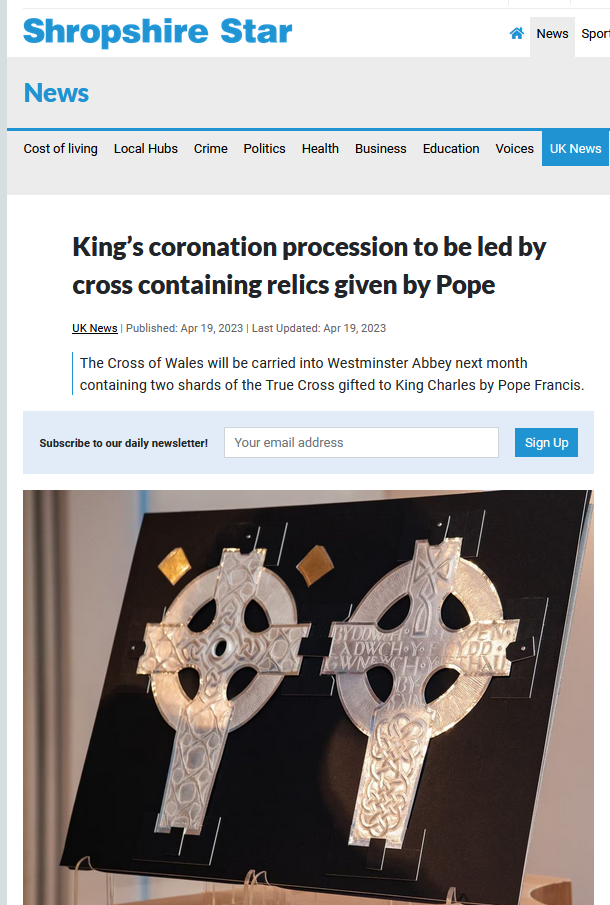
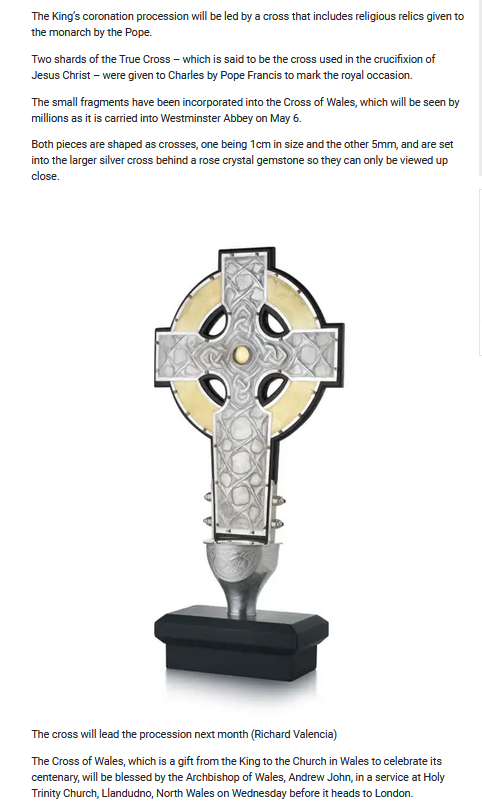
The Shropshire News reported that two pieces of the True Cross were given to Charles III by the Pope! They have been put into a cross called the Welsh Cross. This was part of the Coronation Procession. The King gave the Cross (I assume with the pieces of the Holy Cross) to the Church in Wales. Let the Shropshire News tell the story:
It is a clear reminder that we are subjects not citizens and news, as a nation, we still set store by superstitions.
The Duke of Buckingham and the True Cross
The Duke of Buckingham had a piece in his collection, which he kept at York House in the early 17th Century. How he got it, I don’t know. But I think he must have acquired it from the aftermath of the destruction of the Reformation. John Tradescant, who looked after the Duke’s collection until Buckingham was murdered, had a piece of the True Cross. Tradecant created Britain’s first Museum, Tradescant’s Ark. Again, I suspect (without any evidence) that he got the fragments from Buckingham. Did he acquire it after the murder? Or shiver off a timber fragment hoping no one would notice?
First Written on May 3rd 2023, revised May 3rd 2024, and 2025
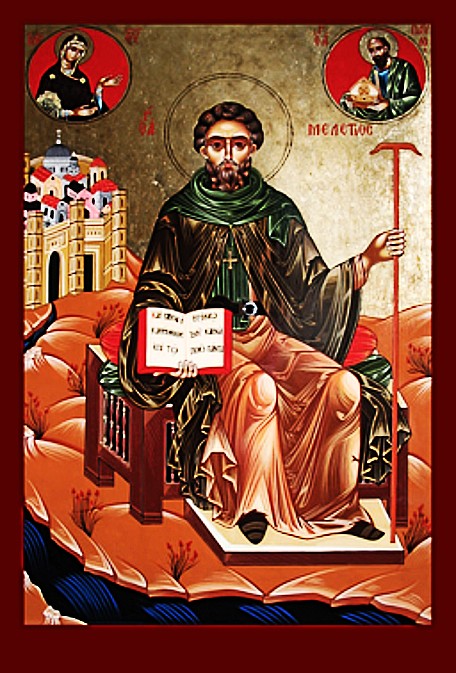
St Mellitus (Source: from saint-mellitus-of-canterbury-died-624
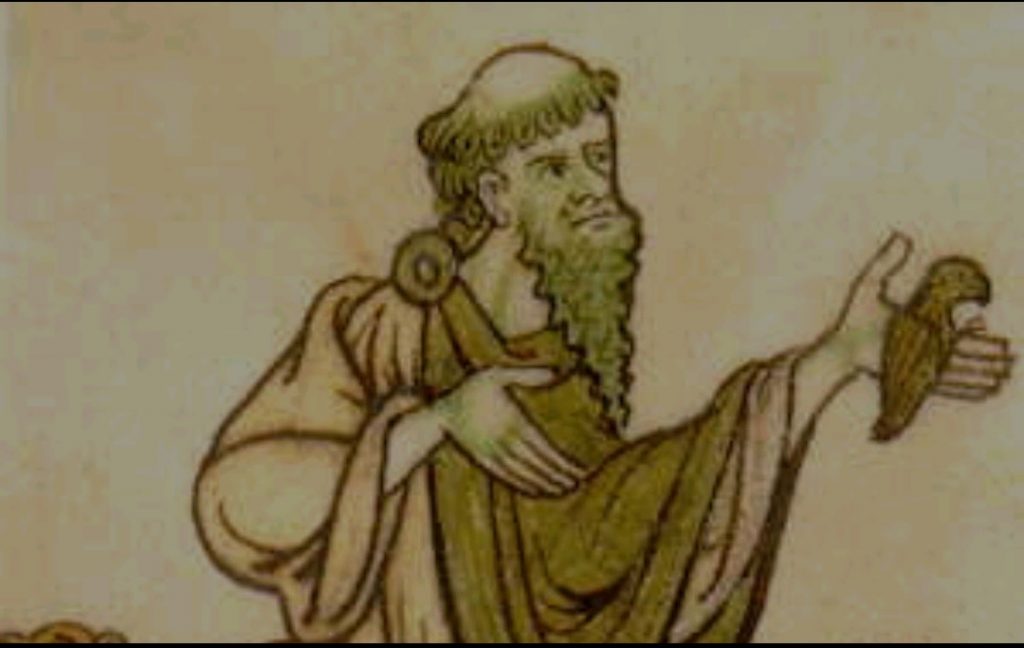
St Mellitus was the first Bishop of London (AD604) and the third Archbishop of Canterbury. But was he really? No, he was the first Bishop of London of the English Church. There were many before him. We know there were bishops of London from Britannia during the Roman period. And, according to John Stow, London’s first history. there were also post-Roman bishops. That line of Bishops ended, in 584 AD, when the 14th Bishop, Theanus, fled London. He headed for Wales to escape the Anglo-Saxon threat. However, even Stow was uncertain whether the list was genuine.
In 314 a Church Council or Synod was called at Arles, in France. Amongst those attending were three bishops from Britain, (and a Deacon and a presbyter) :
Adelfius “de civitate Colonia Londenensium” – that is, from the “colonia of the people of London”.
(Wikipedia)
The fact that two came from London suggests to some a mistake. Adelfus, perhaps, was either from Lincoln or Colchester which were Colonies. The Synod was called by the Emperor Constantine. Amongst its acts were to order that Easter should be held at the same time throughout the Empire. (See also my post on the Synod of Whitby which fixed the date of Easter in Britain as late as 684). They also banned Races, and Games. and excommunicated all actors and charioteers. (Synod_of_Arles). But it gives us our first certain facts about the origins of Christianity in Britain.
The Augustinian Mission and Mellitus
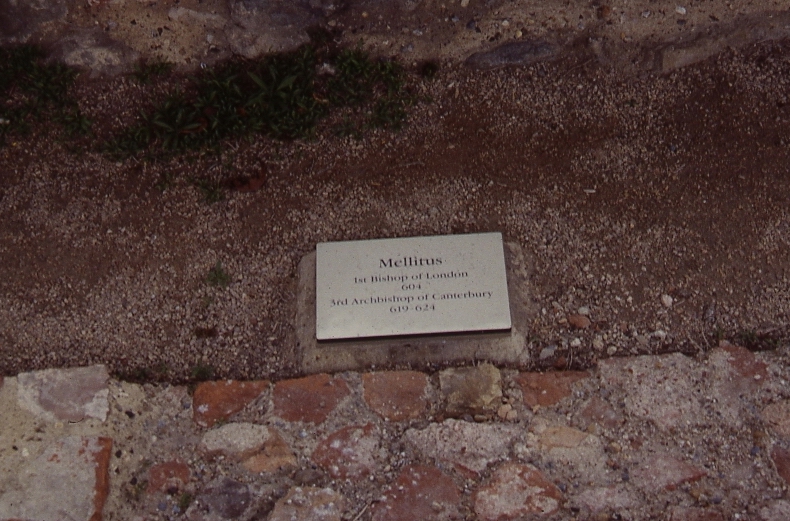
St Mellitus Burial Place, St Augustine’s Abbey, Canterbury. Photo K. Flude
In 597, the Augustinian Mission came to Kent. Mellitus was sent by Pope Gregory to join St Augustine’s mission in 601AD,. He was then sent to London to set up St Pauls and become its bishop (604). But he was kicked out in 618AD when King Sæberht of Essex died and was replaced by a pagan son. Mellitus went into exile in Gaul but came back to become the third Archbishop of Canterbury. He was buried in St Augustine’s Abbey in Canterbury. He is known as St Mellitus of Canterbury. London reverted to paganism until 654AD when St Cedd became its next Bishop.
St Mellitus had gout so is the go-to Saint for sufferers of gout.
Also on this day
1925 – McVitie’s Chocolate Digestive was created. There were made in Stockport and in Harlesden, London. I have moored my narrowboat outside the factory and been kept awake by the churning of chocolate in vast vats. Or so I imagine. News stories suggest that the Digestive was meant to be eaten with the chocolate on the bottom side. This is one of the most ridiculous things I have heard! But you can read this page for the facts. And this one for more on the history of the Chocolate Digestive.