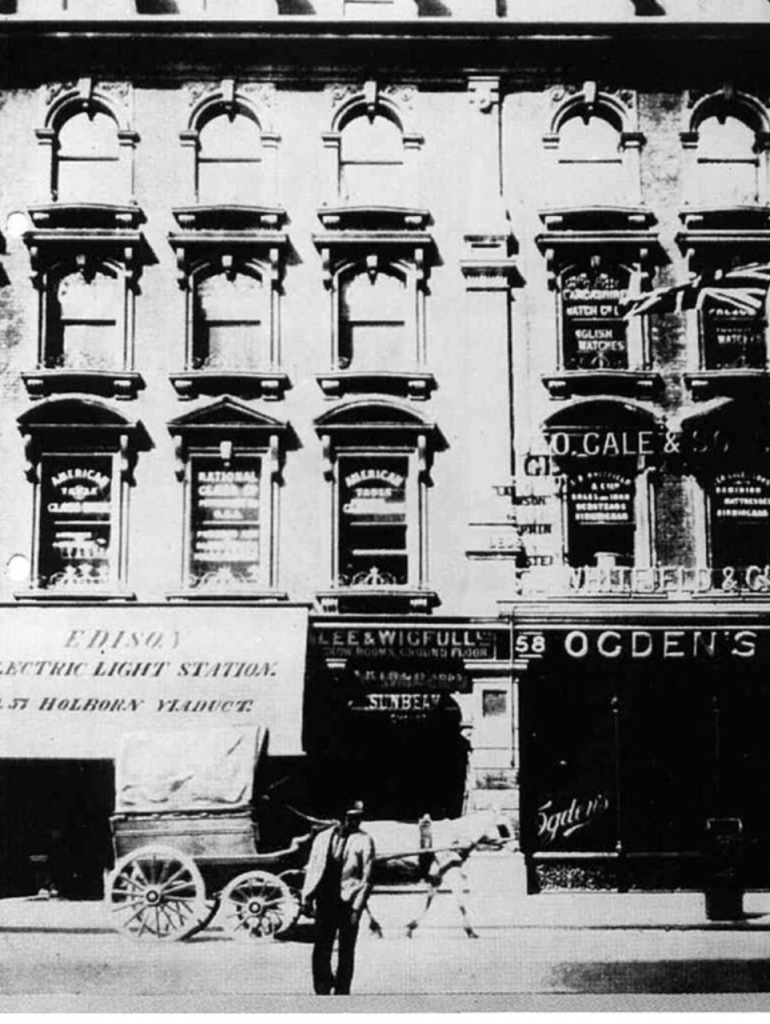
‘Crack Me This Nut’ Play performed at the Rose in Southwark September 25th 1595

List of plays performed in February 1596 by the Admiral’s Men

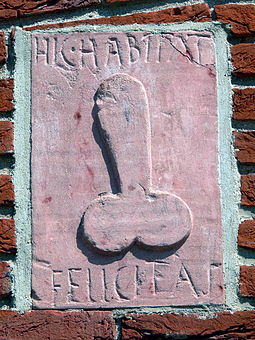
‘Crack me this Nut’ was performed by the Admiral’s Men at the Rose Theatre in Southwark, London. One of the dates it was performed was on September 25th 1595. As you can see, above, it was also performed on February 7th 1596. You can find the other dates it was performed, and the income generated in this blog from Henslowe’s papers. In fact, the play was performed 16 times in all, then sold by Edward Alleyn. Sadly, no one knows what it was about. It might relate to the sense of our phrase ‘a tough nut to crack.’

The list of February dates for the Admiral’s Men is from my dossier for my Shakespeare’s London walks. I’m not entirely sure of the book I photocopied it from, but it derives from the wonderful archive of Philip Henslowe and his leading actor, Edward Alleyn. Henslowe’s records were stored in a locked trunk for 260 years.

2023 marked the completion of the project to bring this archive to the public. And here is the Henslowe-Alleyn Digitisation project. As well as digitising the Archive, elements that had been separated from the original archive have been brought back, so the greatest archive of information on the Shakespearean theatre is now unified and available. It is an immense benefit for the Shakespeare industry.

I searched the archive for ‘Crack me this nut’ but their search engine searches for anything that mentions ANY of the words, and as the word ‘this’ is in virtually everything in the archive, the search is effectively useless. Putting ‘Crack me this nut’ in quotes does not help. I have emailed them!

A subscriber sent me another link which has various speculations, and the following entry. 

Master Ponsonby. Entred for his copie vnder the hands of the Wardens A booke
Intitled The Paragon of pleasaunt histories . . . vjd
Or this Nutt was neuer Cracked Contayninge a Discourse of a
nobl[e] kinge and his Three sonnes
(S.R.1, 3.57 / Fol. 7)

For more read https://lostplays.folger.edu/Crack_Me_This_Nut. The above raises a possibility that it was not a comedy but a history or tragedy.

I often use this list of plays performed in February 1596 in the walks and lectures I give on Shakespeare. It shows you how hard-working Shakespeare’s contemporaries were. The actors’ companies were essentially small repertory companies. This list shows that the Admiral’s Men performed 14 different plays, on 23 days, if I count correctly, in the short month of February. This is in a winter month. Now, the guides at the rebuilt Globe tell you the Shakespearian Playhouses were used in the Summer. No! This was deep winter and 23 performances in an outdoor theatre in February! Imagine what a modern actor would think of that work load.

A badly photocopied page of the archive.

First published on February 7th 2023, and revised and republished on September 25th 2024, and 2025

Battle of Stamford Bridge September 25th 1066

Battle of Stamford Bridge by Matthew Paris

Following the Viking victory at the Battle of Fulford Bridge, York, on September 20th the Viking army camped at Stamford Bridge.This was on the River Derwent. Here they intended to rest and celebrate the defeat of the English Earls of Mercia and Northumbria. They were unaware that King Harold I of England had left London for the north on September 18th. (See my post on the Battle of Fulford Bridge here.)

Five days later, on September 25th, Harold’s army surprised the Vikings by marching towards the bridge over the Derwent.  It is said that Harold’s army marched 185 miles from London in 4 days which is a scarcely believable 46 miles a day. But if they left on 18th and battle was 25th that’s as much as 7 days. This still means 26 miles a day which is still very quick for an army carrying weapons and armour. So no wonder the Vikings were surprised!

According to tradition, a large Viking held the English army as he blocked the narrow wooden bridge across the river.  No one could defeat him. But an enterprising English soldier found a boat, floated under the bridge and killed the Viking by pushing his spear through the bridge timbers, killing the Viking.

According to the 13th Century Icelandic historian, Snorri Sturlson, the fight began only after a rider approached the Viking Army. He offered Harold’s Brother, Tostig back his Earldom if he would withdraw from the fight.  Tostig asked what would be in it for his ally, the King of Norway? The reply was ‘Seven feet of English ground, as he is taller than other men’.  The offer was refused. It was said that the rider was King Harold himself.

Once over the Bridge, the English found the Vikings had formed a defensive formation.  However, they had left their armour behind at their boats.   The battle lasted all day but ended with the slaughter of most of the Vikings. King Harold Hardrada, one of the greatest warriors of his age and Tostig were both killed.  The extent of the slaughter is shown by the fact that of the 300 boats of the Viking army, only 24 returned to Norway.

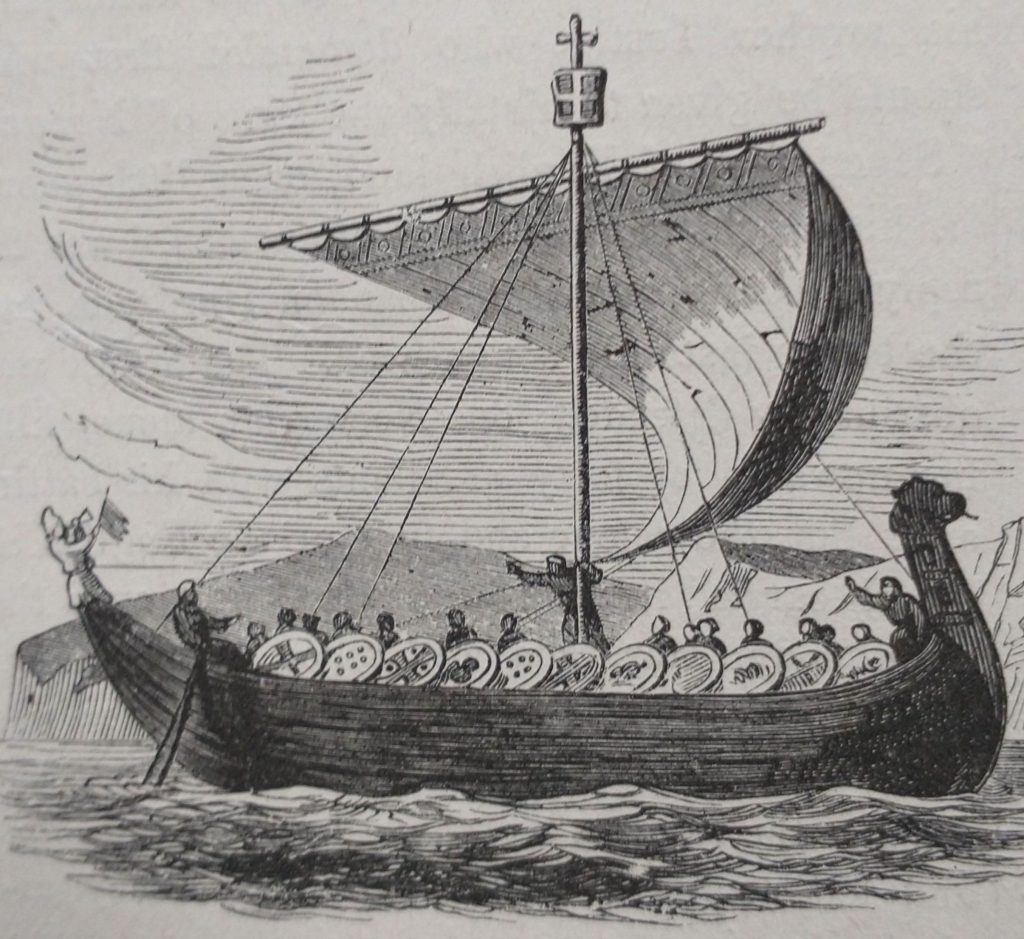
A boat of the period, derived from the Bayeaux Tapestry

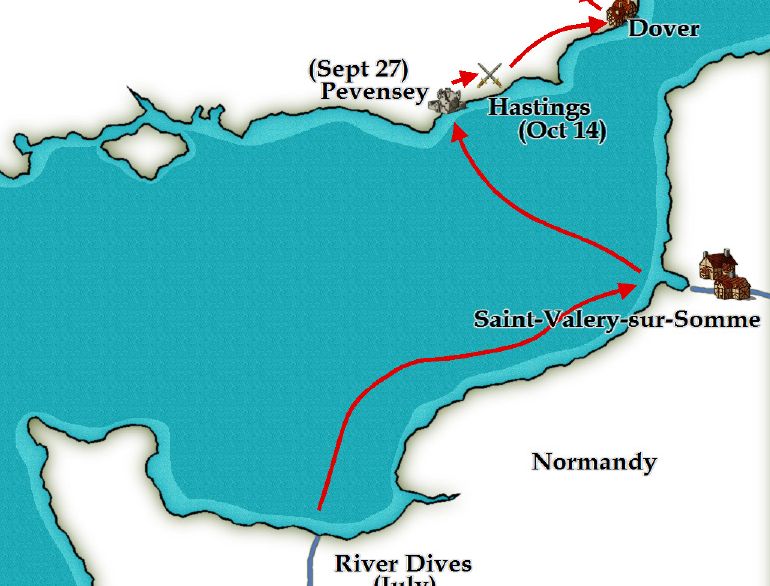
A stunning victory for Harold I. But, the English had suffered terrible losses at the battle of Fulford. Harold had also left the South Coast unguarded  And three days later, on September 28th, William, Duke of Normandy landed with his army at Pevensey. 256 miles south.

First published in 2024 revised 2025

Beware the Surfeits of Autumn September 23rd

Apples. Unsplash photo by Sydney Rae
A Surfeit of Apples. Unsplash photo by Sydney Rae

So, it may be a surprise that the Autumn is the time of plenty. I think, townies like me, would assume spring or summer. But in Autumn, not only is the Harvest in, but nuts and fruits are ripening and ready to pick. As we go deeper into Autumn, the livestock is culled to a level that can be sustained through the harsh winter. And so a lot of meat is also available. Truly a time of ‘mellow fruitfulness’.

A Surfeit of Autumn Peaches or Lamphreys

Anything with the word ‘surfeit’ in it must begin with the wonderful comic history of Britain called:1066 and All That: A Memorable History of England, Comprising All the Parts You Can Remember, Including 103 Good Things, 5 Bad Kings and 2 Genuine Dates

Here we find that King Henry I died of a ‘surfeit’ of lamphreys’, which he indulged in against his Doctors’ advice. This was in November,. While his Great Grandson, King John:

finally demonstrated his utter incompetence by losing the Crown and all his clothes in the wash and then dying of a surfeit of peaches and no cider; thus his awful reign came to an end.’

He is a fine example of a ‘Bad King’. He died on the night of October 18th — 19th. So another King to leave this mortal coil by the means of an autumnal surfeit. Other accounts say his ale was poisoned or the surfeit was of plums. But he did have dysentery shortly before he died.

If you haven’t already it got it you probably, at this point, need to buy my book ‘Divorced, Beheaded, Died’. This is the best selling book about the Kings and Queens of England, told in bite sized chunks. It is always on sale at the British Museum.

‘No surfeit so evil as the surfeit of eating naughty bread’

Andrew Boorde in ‘Dietary of Health’ 1547 says that Wheat Bread makes you fat, particularly when made from new wheat. He says’Evil Bakers’ will add half of Barley. This is no good, nor is bread made from beans or peas. He continues:

hot bread is unwholesome to any man, for it doth lie in the stomach like a sponge: yet the smell of new bread is comfortable to the head and the heart. Old or stale bread doth dry up the blood or natural moisture in man, and doth engender ill humours; and is evil and tardy of digestion: wherefore is no surfeit so evil as a surfeit of eating naughty bread.

Lavendar Caps

Now is the time to protect your head with Lavendar as winter approaches, or so says William Turner’s Herbal of 1568:

I judge that the flowers of lavender, quilted into a cap and daily worn, are good for all diseases of the head, that come of a cold cause, and that they comfort the brain very well, namely if it have any distemperature that cometh of moistness.

If you remember, I wrote about Turner’s medical education in Ferrara in Italy in June. You can read it here.

Apples and Pears & No Cider

The fate of King John (above) shows the danger of running out of cider. But the apple trees are now groaning with Apples and Pears. So production can begin. I have been at my Father’s House picking up all the pears that drop every night. We have been cutting them up and putting them in the freezer, making purée and crumbles. Also, giving them to anyone who enters the house. But still not able to keep up with the Pears! Lots of Apples too, infact a bumper crop, many more than in any previous year. Earlier there was a host of plums from which I made my very first plum jam. I am looking forward to making a batch of Quince Jam, for the third year running.

Storing a Surfeit of Apples

Picking up windfall is problematic, as it was thought they would soften and bruise much easier than those picked from the trees. They would also contaminate other apples if laid with them. So it is best to pick apples before they are completely ripe. Then you can use Gervase Markham’s apple storage advice, which I wrote about in January and you can see here:

But:

A Surfeit of unripe fruit is a danger:

Green fruits make sickness to abound
Use good advice to keep thee sound
Give not thy lusts what they do crave
Lest thou unawares step in to thy grave.

Ranger’s Almanack 1627

If you do succumb, you need a medicine of nettle-seeds and honey.

A Surfeit of Filberts

As a caution to persons at this season, when nuts are so very abundant, we state that the sudden death of Mr Nunn of Cley, Norfolk is generally attributed to eating a great quantity of filberts and drinking pork wine therewith.’

York Current, September 1794

I do hope you have found this post fruitful and not too nutty. Please consult a doctor if you are having head or brain issues. The Lavender in your Peaky Blinders Cap may not do the trick

Acknowledgement

Again, I am very dependent on fruity tales from Charles Kightly’s A Perpetual Almanac of Folklore. It is worth buying as it also has many pretty pictures.

Autumn Equinox and the Jewish New Year September 22nd

Autumn Equinox in Haggerston Park.Photo by K Flude.

Autumn Equinox.

This is the second day of the year when the sun rises due east and sets due west. When the day and night are of equal length.  It is the beginning of the astronomical autumn.  It is determined by the 23.5-degree tilt of the Earth’s rotation in relation to the orbit around the Sun.

In the Jewish Calendar, and the French Revolutionary Calendars it marks the new year. Many cultures preferred spring. But autumn is the end of harvest, when seeds are sown and the food stores are full of food. Similarly, the Celts started their new year at Halloween, half way between the equinox and the solstice.

For more about autumn, look at my post here. For my post on the Spring Equinox, see here. For the Celtic New Year see this post here and for the French Revolutionary Calendar, my post is here.

Rosh Hashanah, September 22nd to 25th.

Rosh Hashanah is the New Year in Judaism. There are other new years in the Jewish calendar.  But this is for the Civil Year and to celebrate the anniversary of the birth of Adam.

The biblical name for this holiday is Yom Teruah. One of the High Holy Days, as specified by Leviticus 23:23–25. Like most New Years it is a time to reflect on life and put in place changes. It is after all a celebration of the beginning of the world.

Here is an excellent BBC web site which will tell you more.

First Published on September 22nd 2025

St Matthews Day & Christ’s Hosptial September 21st

Christ’s Hospital from Wikipedia

In the City of London, St Matthew’s Day was the day that they elected Governors to Christ’s Hospital, it was followed by a service at Christchurch attended by Aldermen, Sheriffs, the Lord Mayor and a procession of the children attending the school. 

Dissolution of the Monasteries

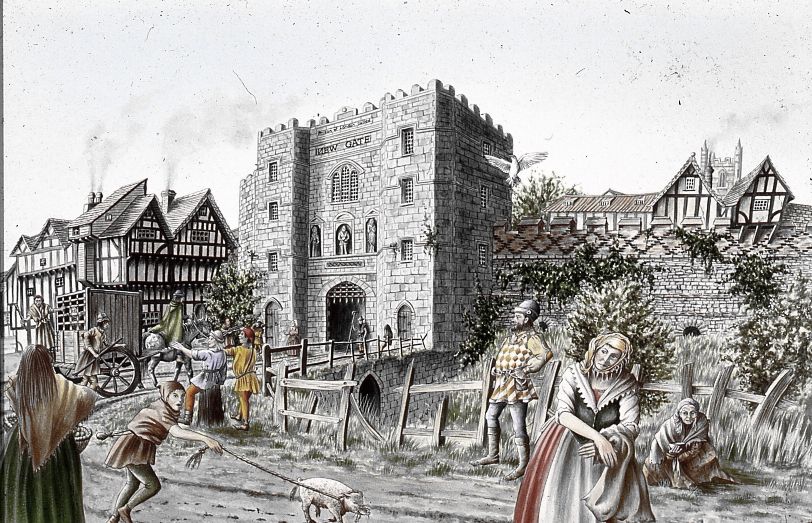
Christ’s Hospital was founded in 1552 by a settlement arranged by Edward VI after the Reformation.  The abolition of the Monasteries by Henry VIII caused a huge problem for the City of London, with the destruction of education and social services managed by monks and nuns.  Henry VIII had already re-established St Bartholomew’s to look after the Poor Sick in the City.  To complete the post dissolution, Edward IV established three Royal Hospitals to sort out additional problems.  Bridewell Hospital became an orphanage and place of correction for wayward women.  St Thomas Hospital for the homeless and poor sick of South London. Christ’s Hospital was to provide schooling.  The school was originally near Newgate and Christchurch Church, which was originally the Choir of the Greyfriars Church.

The school was set up in 1552 and was for boys and girls.   The Mathematical School was added in the late 17th Century to provide navigation skills for sailors.

Flogging the boys

In 1815, a shocking event took place. An MP named Sir Eyre Coote entered the Mathematical school.  He shooed  the younger boys away but paid the older ones to participate in mutual flogging. He was discovered by the school nurse doing up his breeches.  George Cruikshank, a vaunted caricaturist, created a cartoon of the occasion, and it is extraordinary how it was treated far from seriously. 

Cruikshank Cartoon

The blue-coated boys of Christ’s Hospital, eventually moved to Hertford but are now in Horsham.  They maintain their City affiliation and still come to the City on or around St Matthews Day and take part in the Lord Mayor’s Show.  The school is a public school, but has a large percentage of its students funded by bursaries.  In 2016 former pupils opened up about historic sexual abuse leading to the prosecution of 6 teachers of Christchurch.

For more information look here: https://blogs.bl.uk/untoldlives/2015/09/st-matthews-day.html

Also on St Matthews Day, the historic Bush Hotel in Farnham distributed bread to the poor.  This began in 1660 a local benefactor bequeathed one pound annually to pay for the bread.

First Published in 2024, and revised 2025

Battle of Fulford September 20th 1066

Sketch from a photo of a Saxon Shield Wall of the type that might have been used at the Battle of Fulford

In 1066 England’s destiny was at stake, would the new King, Harold Godwinson, maintain the rule of an English King over England?  Or would William of Normandy impose an alien French dynasty?  But there was a third possible future Harold Hardrada of Norway re-establishing King Cnut’s Scandinavian control of England? 

The fighting began, on September 20th, after the Norwegian King, accompanied by Harold Godwinson’s own brother, Tostig Godwinson, sailed up the Humber with 300 ships, disembarked and matched towards York.

In response, the Army of the North, led by the Earls of Mercia and Northumbria, left York to confront the invaders. They marched the mile and a half to Fulford, which is on the banks of the Ouse.  They, apparently, did not know that on the 18th of September, King Harold of England had left London with the Army of the South to take on Hardrada. If the Earls had waited, the combined English Army had a good chance of destroying the Norwegian threat.

The Norwegians and Tostig had, perhaps 7,500 troops, and the English Earls Edwin and Morcar who were brothers had an ‘immense’ army.

The Norwegians were lined up at Fulford, with their left flank protected by the Ouse, their front protected by a ditch and having the benefit of the higher ground.  The English drove the Norwegians back but Hardrada responded by pushing forward his left flank where he had his best warriors and enfolded the English who eventually broke.  As the English retreated, they suffered terrible casualties, so many that the Norwegians could walk dry-shod over the marshy ground.

Google Satelite view of the Battle of Fulford battle field. The stream/ditch the Viking lined up behind can be seen running East West just to the South of the road above the label Fulford Village Hall.

The jubilant Norwegians arranged the surrender of York without sacking it. It probably escaped because Tostig had come to England to reclaim the Earldom of Northumbria. It would be a bad start to slaughter the citizens of his capital city! Possibly they also wanted to get back to protect their boats. They matched to Stamford Bridge, to celebrate, rest and recover.

Things looked grim for the continuation of English rule over England,with Hardrada victorious in the North; a defeated Northern Army and the Normans with a huge invasion fleet ready to invade the South.

Click here To read my post on the Battle of Stamford Bridge or wait till September 25th.

John Goodricke and the Variable Star. September 17th 1764

John Goodricke and the Variable Star

Newton

What I really admire are people who, through their sheer brain power, can change our views of the world.  The first example that comes to mind is Newton’s insight that if the universe were infinite, the night sky would not be dark as everywhere there would be tiny pinpricks of starlight.  So, we don’t live in a infinite universe. Another one is Einstein’s thought experiment that proves that time is relative. But see below for a description of that.  But, now to John Goodricke and the Variable Star. (for Newton and the Maypole see my post here).

Goodricke

Last year in York, near the Minster, I saw the blue sign above. I thought, what on earth are ‘variable stars’?  Behind me, I heard two women say something like. ‘Here it is,”variable stars”‘.  I turned around and asked them what was a variable star?

‘Donno’ they said, ‘we’ve ‘just doing this escape room walk around York.’  They showed me a booklet they had received on the internet,. This is what I would call a treasure trail. Sadly, they showed no interest in finding out what a variable star is!

Aristotle and ancient philosophers held that the universe was unchanging and eternal. The first breach in that theory was the identification in 1638 of star Omicron Ceti. Johannes Holwarda discovered that the star pulsed on an 11-month cycle.  This and the discovery, of supernovae (first observed in 1572), proved that the ‘The starry sky was not eternally invariable’. But there was, as yet, no explanation for the phenomena.

John Goodricke was educated at Thomas Braidwood‘s Academy, school for deaf pupils in Edinburgh, and Warrington Academy. He returned to live with his parents, who rented an apartment at the Treasurer’s Hall. This is near the Minister in York. He used a friend’s personal observatory to look for variable stars. He found two of the first 10, and was the first to propose a solution. This was that two stars orbited each other causing eclipses between them and the observer. Thus creating a variation in the light emitted. To be able to extrapolate from a simple observation, and provide an explanation which necessitates a complete rethink about the nature of the universe seems, to me, to be awesome.

Einstein’s Thought Experiment

Back to Einstein, his thought experiment was something like this:

A train is travelling through a station. There is an observer on the train towards the front, another on the platform as the train goes through. There are two simultaneous lighting strikes at either end of the train. The observer on the platform sees the strikes as simultaneous. Why? Because she is in the middle between the two lighting strikes and light travels at the same speed. The observer on the train who is near the front of the train will see the lighting strike at the front of the train before the light from the strike at the back of the train can reach him. It has further to go.

This means that time is not a constant, it is relative to the observer. And yet, we think of time as a constant, something that remorselessly ticks forward and which we cannot alter. But it isn’t.

For a better explanation, see https://en.m.wikipedia.org/wiki/Relativity_of_simultaneity

First written 2024, revised 2025

The Ultimate RAF London Blitz Story September 15th 1940

Black and white photo from a german plane above another german bomber over docklands in the Blitz

On September 15th 1940 Ray Holmes, World War 2 RAF Pilot, flying a Hurricane, took on three Luftwaffe Bombers over Central London.  He shot one down, chased another off and engaged the third which seemed to be heading for Buckingham Palace.

Between the 8th and 13th of September 1940, the Palace had been hit 5 times. The London Blitz had only ‘begun’ on September 7th though the first raid on the City of London was on the 25th August on Fore Street.

Holmes, by now had ran out of bullets, but deliberately targeted the fin of the Dornier Bomber, and crashed into it causing the bomber to crash down into Victoria Station. Holmes’ Hurricane, spiralled down out of control, but he was able to bail out and landed in a dustbin, much to the bemusement of the locals. Holmes died aged 90 in 2005.

This post is heavily based on the story below, where it is told in full detail.

https://www.mylondon.news/news/nostalgia/battle-britain-fighter-pilot-who-19963243

Published in 2024 and revised in 2025

James Lovelock & Gaia September 12

James Lovelock is one of my heroes.  He came up with the idea that the Planet Earth is, or can be considered to be, a living being.  He named her Gaia, after the Greek Mother Goddess and the mother of all life. 

He suggested that the Earth was a self-regulating entity that kept the essentials for life on our planet in balance.  Further, he speculated that human activity was putting a strain on the feedback systems that kept the environment sweet for life.  Gaia, he suggested, might spit out the cause of the disruption, if we didn’t mend our ways.

On September 12, 2024 a new book on Lovelock was published. The Guardian ran this lovely article on the contribution of love and Dian Hitchcock to the formation of the theory. Dian and James worked together on the idea when they both worked for Nasa’s Jet Propulsion Laboratory (JPL) in California in the 1960’s.

 The Many Lives of James Lovelock: Science, Secrets and Gaia Theory, published by Canongate on 12 September and available at guardianbookshop.com

My own take on his theory, is that Gaia keeps the atmosphere and climate within a safe range by a series of feedback loops. Lovelock pointed out that as strains in the system develop, the feedback loops might fracture, readjust and the Earth find a new stable feedback system. This new equilibrium may or may not be compatible with a comfortable environment for humans.

Chris Stringer’s book on the Palaeolithic in Britain (‘Homo Britannicus’), shows that during the 900,000 years of genus Homo’s life in Britain, five or so times the climate has changed in these mild islands so it has become inhospitable for humans. He also suggests that there is evidence that the last Ice Age ended fairly swiftly, and that Britain changed from being tundra to a temperate climate perhaps in as little as twenty years. It is only for around 12,000 years that Home Sapiens have lived continuously on these islands.

So, we know climate change is inevitable, and that when it happens it may not be a gradual change. We also cannot be sure it will make the UK warmer because Britain’s temperate climate depends on the warm air of the Gulf Stream and if this is affected Britain may revert to the colder climate of other countries at our latitude like Scandinavia.

For more on Earth Goddesses see my post here

First written in 2024, revised in 2025
Rowans and Old Skeletons September 9th

Rowans Photo by Tomasz Zygmunt unsplash

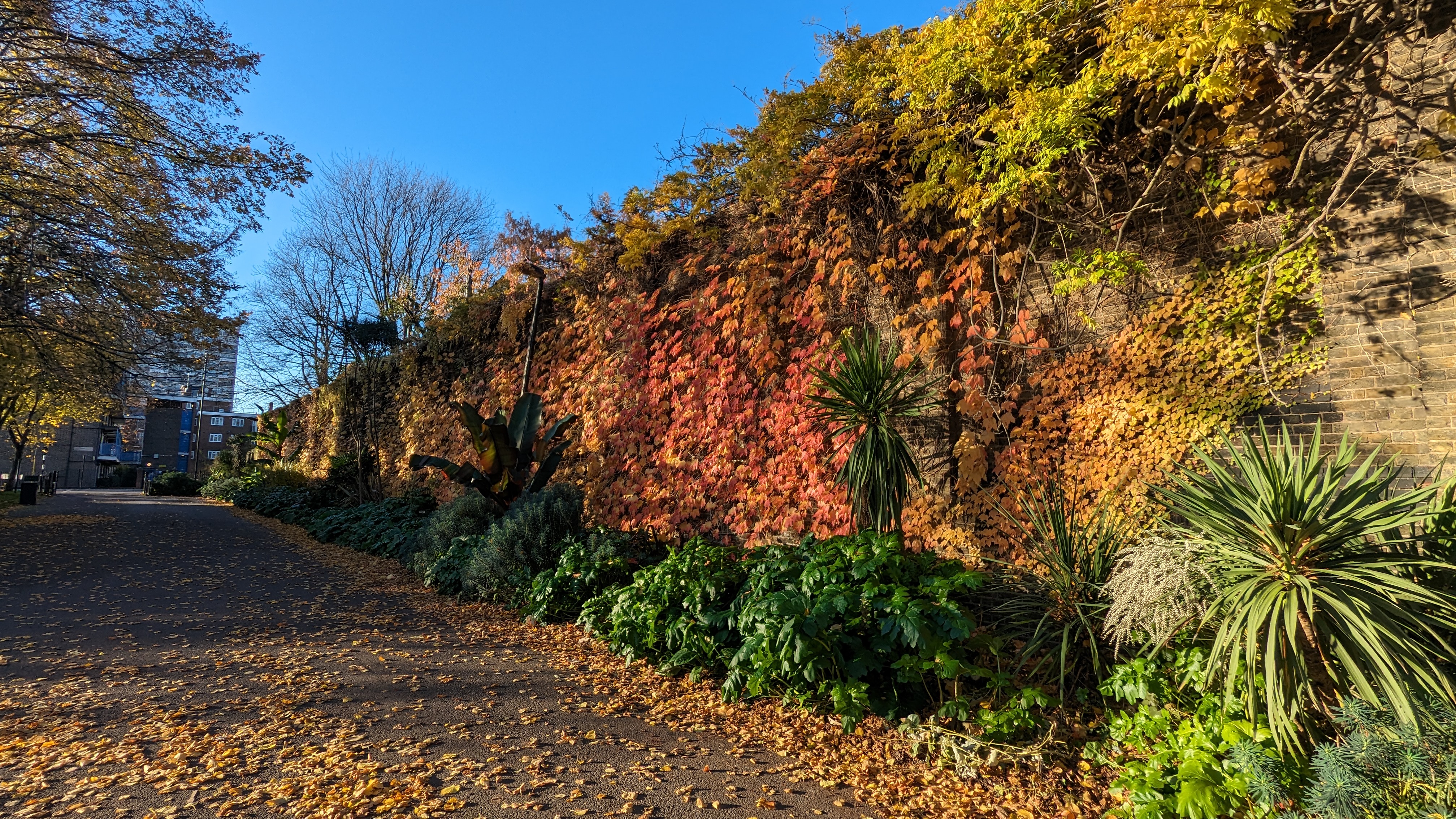
Rowan Berries, hips and haws should be ripening in Hedgerows around the country.  Hips are from Rose bushes, and haws from the Hawthorn. So lots of fleshy red fruits, which will ripen from August to October.

A heavy crop is said to promise a hard winter: ‘Many haws, many snows.’

Rowans were the most powerful plant against witches.

Rowan tree and red thread

Hold the witches all in dread’

So, Charles Kightly, tells us in his ‘Perpetual Almanac of Folklore’.  It was hung above doors, planted in gardens and made into walking sticks and other household and farming utensils.  It was made into wine, and jam and a jelly delicious while eating hare.

(see my post on the March Hares and Witches)

Skeletons in my closet

Recently, I read that one of the burials a friend of mine excavated  has been reexamined and reanalysed. The dig was at Bull wharf near the Vintry in the City of London.  The burials dated to the 9th Century (approximately).

Bull wharf is by the River Thames, south of St Paul’s.  The discovery of two burials, dating to just before the Alfredian restoration of the City of London, was in itself sensational.   Archaeology had shown that the City was abandoned after the Romans left.  It is revived only in the late 9th Century when King Alfred restored it. 

Did these burials suggest that the restoration of the City began before Alfred came to the throne?  Perhaps London was restored by the Mercians and not by Alfred and Wessex?

Perhaps this is too much to place on a couple of burials and a dating that was not precise. 

However, the recent reevaluation makes the burials even more interesting. One of the two burials was in a shallow grave with a brushwood cover. Originally it was thought to a ‘proper’ burial rather than a casual interment. 

But recent examination shows the woman was badly beaten a short time before she was killed.  Her many wounds had begun to heal.  Maybe two weeks later she was killed again with astonishing violence. She had  multiple blunt force injuries.

The burial position was on the Mercian shore of the Thames at London. But was looking towards the Wessex shore across the River. This has led to speculation that the place of burial might have been a highly significant and visible site.  Other Saxon execution sites have similar attributes i.e. at significant sites or at liminal locations.   (I’m thinking of the Saxon execution at Stonehenge as a fr’instance.)

The recent piece I read ignores the second burial.  Originally it was said to be buried with less ceremony than the other.  But now, it must suggest both are executions. Unless they are both murders….

Skeletons at York

Decades ago a potential gladiatorial burial ground was found near Mickelgate.  The attribution was made because a large proportion of the burials were young men, many with healed injuries to heads, arms, fingers.  Over 40 of them were decapitated, much higher than the normal 5% of Roman burials. 

One has recently been reexamined.  The inspection showed teeth marks on the pelvis.  These have now been identified as the teeth marks of a lion.

On my tours of various amphitheatres I have talked about the exotic animals that literary sources suggested  Romans used for entertainment.  But I would point out that the evidence comes mostly from literature and mosaics from prestigious places. I always suggested that London, Cirencester, Chester, Verulamium and York probably used bears, bulls, boars maybe dogs but, perhaps, nothing more exotic.  But here is evidence that the Romans used Lions in the distance province of Britannia.

First Published September 2025