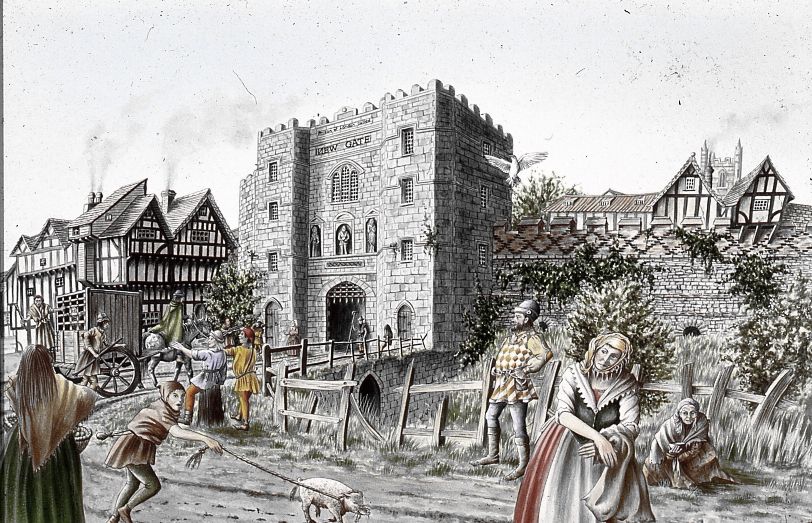
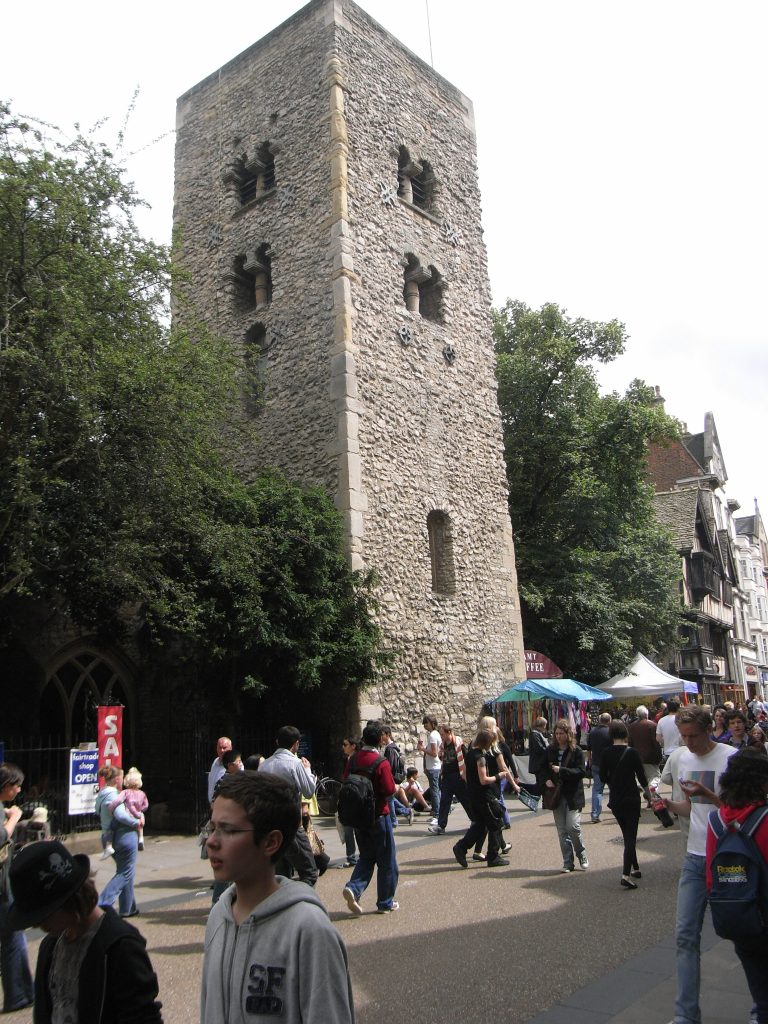
I lived and worked in Oxford for three years, working at Keble College as a Research Assistant in an archaeological science Laboratory. I lived first in a farmhouse in the Oxfordshire countryside (in Garford) and then right in the centre of Oxford in a room formerly lived in by Benazir Bhutto. The flat was in St Michael’s Street just by the Anglo-Saxon Church of St Michael’s Church. This where the North Gate used to be and where Archbishop Thomas Cranmer was imprisoned before being burnt at the stake. My room overlooked the Oxford Union where so many politicians have cut their teeth in debate.
St Michael’s Church, Cornmarket, Oxford
Now, from time to time, I moor my narrow boat in Oxford either on the Thames or on the Oxford Canal. I also take occasional groups of Road Scholars around the City of Dreaming Spires. Sometimes, people ask me for a booklist. So, this is my shortlist of books.
And it must begin with Evelyn Waugh’s ‘Brideshead Revisited: The Sacred & Profane Memories Of Captain Charles Ryder ‘ published in 1945, it is a beautifully written book, and, so, a pleasure to read. But it also gives a vivid insight into the English ruling classes attending Oxford University. The narrator, Charles Ryder, is at Trinity College while the beautiful Sebastian Flyte is at Christ Church. It has, of course, been filmed in several versions but perhaps most notably is the 11-part mini-series by Granada Television in1981.
Once you understand a little about the Oxford experience and the English class system you might begin to have an insight into Boris Johnson. So it is time to dive straight into Simon Kuper’s ‘Chums: How A Tiny Caste Of Oxford Tories Took Over The UK’‘ 2022. As you consider the power of the English public schools, and Oxbridge to propel a talentless privileged elite to run(down) this once great country (if you will forgive a personal opinion), you might like to remember Prime Minister Asquith’s belief that his Oxford education gave him the:
‘consciousness of effortless superiority‘.
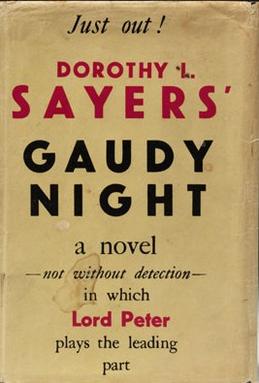
For a more balanced view of this great University you might enjoy reading Lawrence Brockliss’ ‘University Of Oxford: A Brief History, ‘ 2018. But it is time to get off my high horse and wallow in the joys of a good read. So if you truly enjoy the murder mystery, my suggestion is that you spend your time in Oxford with Dorothy L. Sayers and ‘Gaudy Night’ 1935 which is set in one of the early Colleges for female students. Harriet Vane has invited Lord Peter Wimsey to investigate strange goings on in Harriet’s alma mater, the all-female Shrewsbury College, Oxford (based on Sayers’ own Somerville College). The events centre around the annual Gaudy celebrations which is the Oxford name for a College festivity.
Oh Dear, Morse?
This brings us to Inspector Morse. My best advice is to stick to the ground-breaking TV series staring the sublime John Thaw, or one of the post-Thaw TV series. Because, frankly, I have been reading Colin Dexter for the first time for this reading list, and am surprised how one-dimensional and dated the novels are. However, Dexter does have the skill to put together a murder mystery which is enjoyable to escape. The writer’s art is not about all about beautiful writing but is grounded in the ability to keep the reader’s nose in a book while lost in an engaging story.
So, you can safely ignore my disdain and enjoy a guilty read of: ‘The Daughters Of Cain‘ 1994, where Morse investigates the death of a College academic. It’s a good one to choose as it gives an introduction to 1990s life in an Oxford College with most of the action in the centre of Oxford. Although, surely, even Dexter must think its not a good idea for the investigating Detective to have a (reciprocated) crush on one of the suspects?
As a lover of the Canal system, my second choice is ‘The Wench Is Dead‘ 1990 where Morse is in hospital (where all the nurses, the Sister, and a young female visitor inexplicably fall for the unhealthy, sick and close to retirement Detective). Morse amuses himself by solving an historic case. A woman was found murdered on the Victorian Oxford Canal. The climax comes on a trip where he can both solve the crime and enjoy a one-night stand with the Sister. She is one of those characters who shakes her hair loose, takes off her metaphorical glasses and is transformed from a harridan into a beautiful woman.
My third Morse is Service of All the Dead’. If only because the many murders happen in St Frideswide which is based on St Mary Magdalene which is in the centre of Oxford, on the way to the Ashmolean.
Zuleika and La Belle Sauvage
Better written are my next choices: Max Beerbohm’s ‘Zuleika Dobson: Or, An Oxford Love Story’ 1911. Here the devastatingly attractive Zuleika leads an Edwardian satire of Oxford University life in the early 20th Century. Beerbohm said of his experience in Oxford:
“I was a modest, good-humoured boy. It is Oxford that has made me insufferable“
A good example of an Oxford mystery is Iain Pears delightful ‘An Instance Of The Fingerpost‘ 1998 based in post Civil War Oxford.
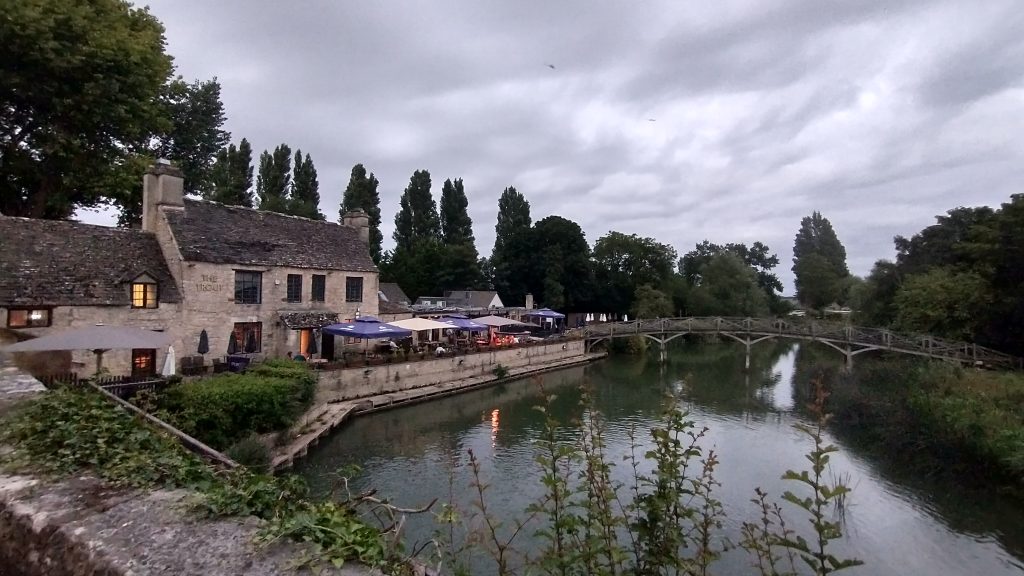
A real treat is to read Philip Pullman’s trilogies ‘His Dark Materials’ and ‘The Book of Dust’ trilogy. At the centre of the alternative universes is a curious steam punk Oxford, where a dictatorial Church oppresses the people. Perhaps the best to read for Oxford content are ‘Northern Lights‘ 1995 (retitled The Golden Compass in the US) where we are first introduced to Lara from Jordan College (based on Exeter College which Pullman attended) and ‘La Belle Sauvage’ (2017) where the baby Lara is rescued by Malcolm who lives at the Trout (a real pub on the river Thames, mentioned in Brideshead, frequented by Morse and Lewis and outside which I love to moor by boat).
The Trout, River Thames. Oxford
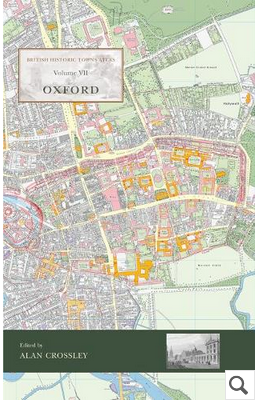
Finally, for a birthday treat buy or to borrow from your library Alan Crossley’s sumptuous volume of maps illustrating the history of Oxford., ‘British Historic Towns Atlas Volume VII: Oxford [hardback] ‘ Historic Towns Trust : 2021
Front Cover, British Historic Towns Atlas Volume VII
We look at how Jane Austen spent Christmas and at Georgian Christmas traditions and amusements.
“It is a truth universally acknowledged, that a Jane Austen devotee in possession of the good fortune of a couple of free hours must be in want of this virtual walk.”
This is a special walk, which looks at the traditions of Christmas during the Regency period and how Jane Austen might have celebrated it. It will give some background to Jane Austen’s life and her knowledge of London. We used her novels and her letters to find out what she might have done at Christmas, but also at how Christmas was kept in this period, and the range of ‘Curiosities, Amusements, Exhibitions, Public Establishments, and Remarkable Objects in and near London available to enjoy.
This is a London Walks Guided Walk by Kevin Flude, Museum Curator and Lecturer.
Review: ‘Thanks, again, Kevin. These talks are magnificent!’
The History & Archaeology of London Bridge Guided Walk
Claude de Jongh View of London Bridge
Wednesday 28th December 2022 11.30 Monument Underground
The walk explores the history of London Bridge and the area around the Bridge
London Bridge is not only an iconic part of London’s history but it is also the key to much of the History of London. On this walk we explore the area around the Bridge.
On the north side we explore evidence for the origins of the Bridge, and the early Roman Port of London. We then cross the Bridge discovering the many rebuilds and the wonder of the famous London Bridge with all its houses along it. On the south side we explore the Historic Borough of Southwark which, archaeology has revealed, is very much more than just the first suburb of London.
We range from the prehistoric finds in the River, through the pulling down of the Bridge by Olaf to the sale of the Bridge to America.
This is a London Walks Guided Walk. Look at their web site for a list of other of their amazing walks
The History & Archaeology of London Bridge Virtual Walk
Claude de Jongh View of London Bridge
Wednesday 28 December 2022 7pm
The walk explores the area around the Bridge and London Bridge’s history
London Bridge is not only an iconic part of London’s history but it is also the key to much of the History of London. On this walk we explore the history of the Bridge and the immediate area around the Bridge.
On the north side we explore evidence for the origins of the Bridge, and the early Roman Port of London. We then cross the Bridge discovering the many rebuilds and the wonder of the famous London Bridge with all its houses along it. On the south side we explore the Southwark Bridgehead.
We range from the prehistoric finds in the River, to the selling of the Bridge to America.
This is a London Walks Virtual Walk. Look at their web site for a list of other of their amazing walks
The London Winter Solstice Virtual Tour Wed 21 Dec 2022 19:30
We explore London’s History through its celebrations, festivals, calendars and almanacs of the Winter Solstice
Winter Solstice festivals have been a time of review, renewal and anticipation of the future from time immemorial. The Ancient Britons saw the Solstice as a symbol of a promise of renewal as the world entered bleak mid winter. The Roman season was presided over by Janus, a two headed God who looked both backwards and forwards, and Dickens based his second great Christmas Book on the renewal that the New Year encouraged.
We look at London’s past to see where and how the Solstice might be celebrated. We also explore the different Calendars – the Pagan year, the Christian year, the Roman year, the Jewish year, the Financial year, the Academic year and we reveal how these began. We look at folk traditions, Medieval Christmas Festivals, Boy Bishops, Distaff Sunday and Plough Monday, and other London winter traditions and folklore.
At the end we use ancient methods to divine what is in store for us in 2022.
Saturday 30 October 20/22 11.30 am Monument Underground Station
This is a walking tour features the amazing archaeological discoveries of Roman London, and looks at life in the provincial Roman capital of Londinium.
Our Guides will be Publius Ovidius Naso and Marcus Valerius Martialis who will be helped by Kevin Flude, former Museum of London Archaeologist, Museum Curator and Lecturer.
We disembark at the Roman Waterfront by the Roman Bridge, and then explore the lives of the citizens as we walk up to the site of the Roman Town Hall, and discuss Roman politics. We proceed through the streets of Roman London, with its vivid and cosmopolitan street life via the Temple of Mithras to finish with Bread and Circus at the Roman Amphitheatre.
This is a London Walks Guided Walk. Look at their web site for a list of other of their amazing walks.
REVIEWS (from London Walks website) “Kevin, I just wanted to drop you a quick email to thank you ever so much for your archaeological tours of London! I am so thrilled to have stumbled upon your tours! I look forward to them more than you can imagine! They’re the best 2 hours of my week! 🙂 Best, Sue
MYTHS, LEGENDS, & HALLOWEEN VIRTUAL WALK
Sunday 30th October 2022 2.30pm Tower Hill Underground
The walk tells the story of London’s myths and legends and the celtic origins of Halloween
The guided walk is led by Kevin Flude, a former archaeologist at the Museum of London, who has an interest both in the archaeological evidence as well as the myths and legends of London’s origin.
The walk will tell the story of a selection of London’s Myths and Legends, beginning with the tale of London’s legendary origins in the Bronze Age by an exiled Trojan called Brutus. Stories of Bladud, Bellinus, Bran and Arthur will be interspersed with how they fit in with archaeological discoveries.
As we explore the City we also look at the origins of Halloween celebrations and how they may have been celebrated in early London.
The route starts at Tower Hill, then down to the River Thames at Billingsgate, to London Bridge and Southwark Cathedral, to the Roman Forum at the top of Cornhill, into the valley of the River Walbrook, passed the Temple of Mithras, along Cheapside to the Roman Amphitheatre, and finishing up in the shadow of St Pauls.
This is a London Walks Guided Walk. Look at their web site for a list of other of their amazing walks.
MYTHS, LEGENDS, & HALLOWEEN VIRTUAL WALK
MONDAY 31st October 2022 7.30pm
The virtual version of this walk starts at Tower Hill, then down to the River Thames at Billingsgate, to London Bridge and Southwark Cathedral, to the Roman Forum at the top of Cornhill, into the valley of the River Walbrook, passed the Temple of Mithras, along Cheapside to the Roman Amphitheatre, and finishing up in the shadow of St Pauls.
This is a London Walks Virtual Walk. Look at their web site for a list of other of their amazing walks.
The London Equinox and Solstice Walk
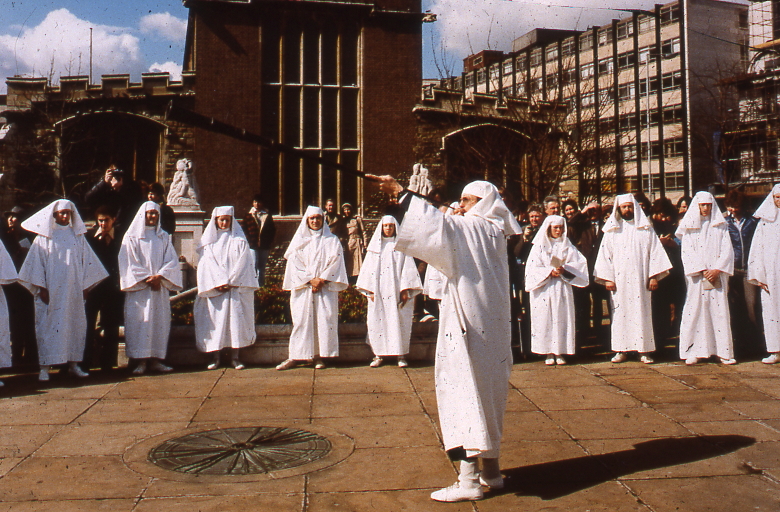
Druids at All Hallows, by the Tower
Tuesday June 21st 2022 7.30 pm Tower Hill Underground Station (meet by the Tower Hill Tram coffee stand)
We explore London’s History through its celebrations, festivals, calendars, almanacs and its myths and legends.
As the Sun and Moon move around our skies we look at how Londoners organised and celebrated their year throughout history.
The tour is led by Kevin Flude, a former archaeologist at the Museum of London, Curator and Lecturer
One of the most popular forms of publication in London was the Almanac. It was full of seasonal advice, of prophecy, traditional wisdom, and important events past and future. Different cultures, religions and institutions had their own methods of organisation and celebrations. We explore the varied calendars that ruled people’s lives from the prehistoric period to the present.
On the way we look at customs, and folklore of the Celts, Romans, Saxons, and into the Medieval and Modern period. We look at different calendars such as the Pagan year, the Egyptian year, the Roman, Christian, Jewish, Church and Financial years. On the route we discover the people who lived in London and walk through fascinating areas with their deep histories.
This is a London Walks Guided Walk. Look at their web site for a list of other of their amazing walks
A Virtual Tour Through The Whole Island Of Great Britain. No.5 Edinburgh
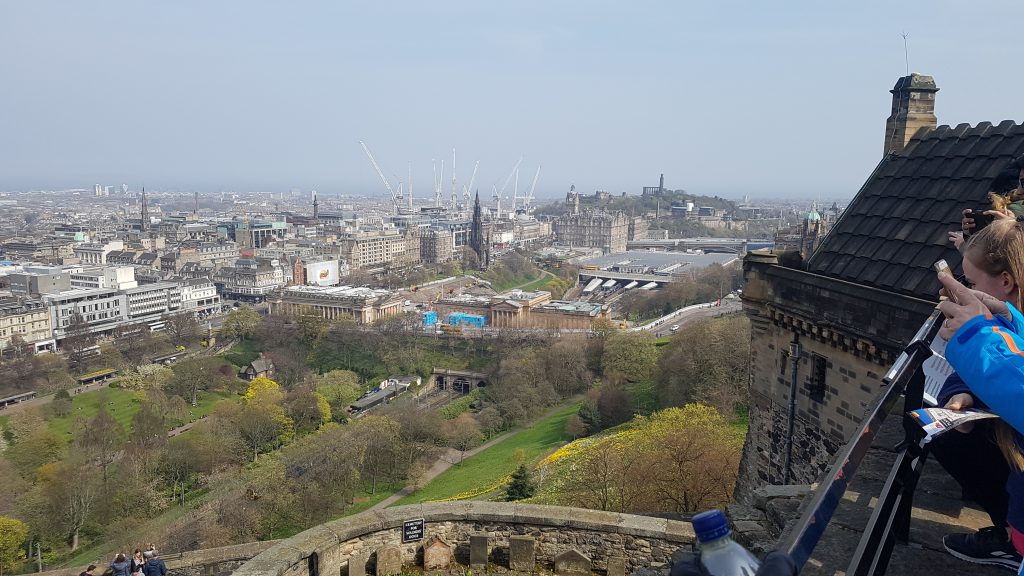
View From Edinburgh Castle
Monday 2 May 2022 7 pm
A Virtual Walk Through the Athens of the North
Borrowing my title from Daniel Defoe’s early chorography, my first Circuit is from Chester to Edinburgh. Now on the last stop on this first circuit we are taking a virtual tour of the most extraordinary City – Edinburgh.
Edinburgh is a very unusual City as it was built on the saddle of a hill so its main street runs down the ridge of a hill and the City falls away on either side. This lack of flat land and restricted space led to the City growing upwards. This gave the City an extraordinary density and an unique atmosphere that we will be exploring.
In the Georgian period the City was extended with the addition of a new town quarter which was rationally planned and made a marked contrast on the old Town. Together it gives the Capital of Scotland, a combination of atmospheric and claustrophobic town planning with the elegance of a City that was one of the great Cities of the Enlightenment.
We will begin the virtual walk in the shadow of Arthur’s Seat at the shiny new Scottish Parliament and walk up the Royal Mile from Holyrood to Tollboth, to the Netherbow and onto the Castle at the pinnacle of the City
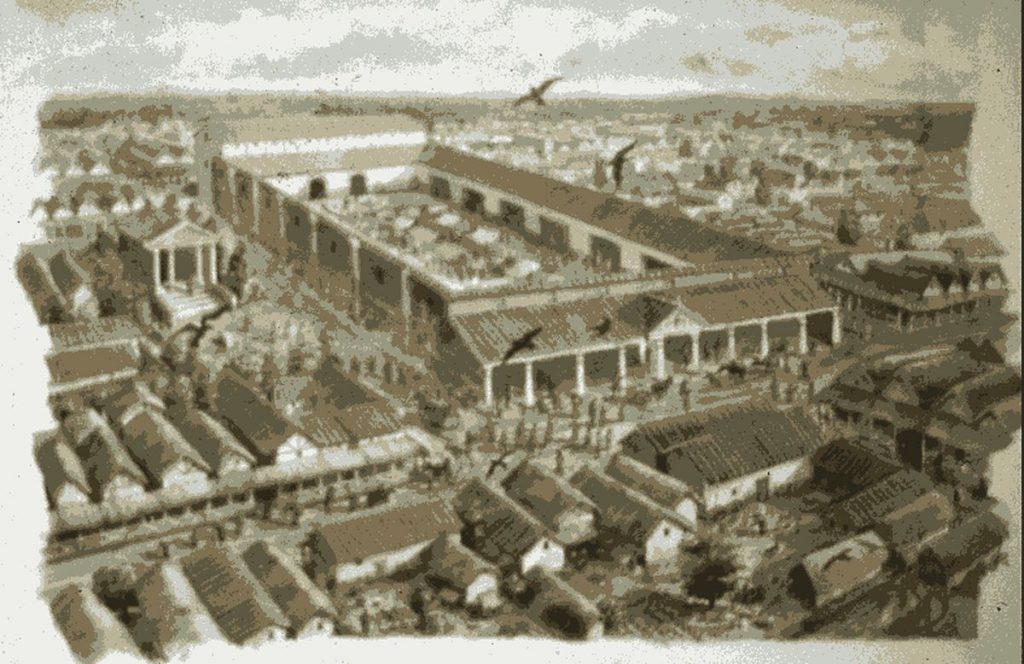
Painting of the Roman Forum of London from the air
ROMAN LONDON – A LITERARY & ARCHAEOLOGICAL WALK
Saturday 30 April 20/22 11.30 am Monument Underground Station
This is a walking tour features the amazing archaeological discoveries of Roman London, and looks at life in the provincial Roman capital of Londinium.
Our Guides will be Publius Ovidius Naso and Marcus Valerius Martialis who will be helped by Kevin Flude, former Museum of London Archaeologist, Museum Curator and Lecturer.
We disembark at the Roman Waterfront by the Roman Bridge, and then explore the lives of the citizens as we walk up to the site of the Roman Town Hall, and discuss Roman politics. We proceed through the streets of Roman London, with its vivid and cosmopolitan street life via the Temple of Mithras to finish with Bread and Circus at the Roman Amphitheatre.
This is a London Walks Guided Walk. Look at their web site for a list of other of their amazing walks.
REVIEWS (from London Walks website) “Kevin, I just wanted to drop you a quick email to thank you ever so much for your archaeological tours of London! I am so thrilled to have stumbled upon your tours! I look forward to them more than you can imagine! They’re the best 2 hours of my week! 🙂 Best, Sue
MYTHS, LEGENDS, MAY EVE LONDON GUIDED WALK
Saturday 30th April 2022 2.30pm Tower Hill Underground
The walk tells the story of London’s myths and legends and the Celtic Festival of Beltane
The walk is led by Kevin Flude, a former archaeologist at the Museum of London, who has an interest both in the archaeological evidence as well as the myths and legends of London’s origin.
The guided walk is one of a series about London’s Myths and Legends which take place on or around one of the significant festivals of the Celtic calendar. On this tour we celebrate May Day, or Beltane – the celebration of the coming of Summer.
The walk begins with the tale of London’s legendary origins in the Bronze Age by an exiled Trojan called Brutus. Stories of Bladud, Bellinus, Bran and Arthur will be interspersed with how they fit in with archaeological discoveries. As we explore the City we also look at evidence for ‘Celtic’ origins of London and how Imbolc may have been celebrated in early London.
The virtual route starts at Tower Hill, then down to the River Thames at Billingsgate, to London Bridge and Southwark Cathedral, to the Roman Forum at the top of Cornhill, into the valley of the River Walbrook, passed the Temple of Mithras, along Cheapside to the Roman Amphitheatre, and finishing up in the shadow of St Pauls
This is a London Walks guided walk. Look at their web site for a list of other of their amazing walks.
MYTHS, LEGENDS, MAY EVE LONDON VIRTUAL WALK
SATURDAY 30th April 2022 7.30pm
The virtual version of the walk route starts at Tower Hill, then down to the River Thames at Billingsgate, to London Bridge and Southwark Cathedral, to the Roman Forum at the top of Cornhill, into the valley of the River Walbrook, passed the Temple of Mithras, along Cheapside to the Roman Amphitheatre, and finishing up in the shadow of St PaulsThis is a London Walks Virtual Walk. Look at their web site for a list of other of their amazing walks.
A Virtual Tour Through The Whole Island Of Great Britain. No.4 Stratford
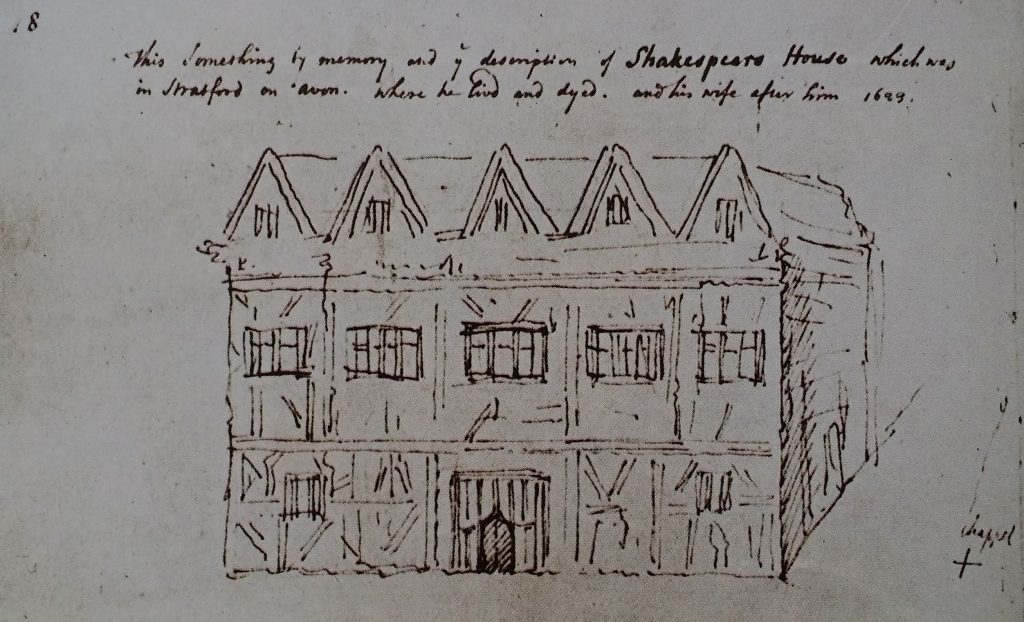
New Place, Shakespeare’s prestigious home in Stratford
Saturday 16 Apr 2022 7.00 pm
A Virtual Walk Through Shakespeare’s birthplace, Stratford-on-Avon
Borrowing my title from Daniel Defoe’s early chorography, my first Circuit is from Chester to Edinburgh. Now on our fourth stop we are taking a virtual tour of the capital of English Literature – Stratford-on-Avon.
We will be taking an in-depth walk around Shakespeare’s Birthday, visiting the sites in the market town associated with his history. We will look for his neighbours, friends and acquaintances to get an insight into life in a Tudor Town and find out how a provincial boy became London’s greatest playwright revered around the world as one of the most significant writers. Our walk will begin at the Birthplace, from here to the Market Cross and the shop ran by his daughter’s wayward husband.
We then walk past the house associated with John Harvard to the Guild Chapel where Shakespeare’s father had the Doomsday paintings whitewashed out. Shakespeare would have attended here when at the local school next door. Over the road is the site of the greatest house in Stratford, New Place, which Shakespeare purchased when at the height of his earnings as playwright.
We continue to the house of his first born daughter and her husband, the Doctor John Hall and examine his medical books. We finish across the road from his friend and money lender, John Combe at the Church where Shakespeare was buried.
Shakespeare’s London – Life & Work Virtual Tour Saturday 23rd April 2022 7.00 pm
St George’s Day Special
On , St George’s Day, said to be the Anniversary of Shakespeare birth as well as his death we take a long walk around Shakespeare’s London. Although many choose to take a pilgrimage to Stratford, London, his workplace is the right place to worship at the font of his genius.
We don’t know how Shakespeare got to London or began his involvement as a playwright, but we do have a lot of biographical details so that we can trace his life and career in London.
We will start at Liverpool Street and explore late 16th Century Shoreditch where the early Theatres – the Theatre and the Curtain were built. We then walk through Bishopsgate into St Helens where he lived and located scenes in his plays.
From there we explore the City of London which was in the midst of a massive population explosion and was full of young people shaking off their traditional lives to find a new one in the fleshpots of London. We walk through the French Quarter to the house where he lodged, near the Museum of London and to the ruins of St Mary. Here two of his fellow actors were church wardens and it was they who saved for posterity his plays and published the First Folio.
We go past the Guildhall where Jewish Doctor Lopez was found guilty of plotting to poison Queen Elizabeth a few years before the writing of the Merchant of Venice. At St Pauls we discover where Falstaff obtained his untrustworthy servant Bardolph. Then to Carter Lane, where the only letter that survives to Shakespeare was written. Around the corner, was the ruined Blackfriars where Shakespeare’s company set up their winter theatre.
We then cross the river to explore the Southbank and Theatres where Shakespeare found the height of his fame, before retiring to an early death in Stratford on Avon.
A VIRTUAL TOUR THROUGH THE WHOLE ISLAND OF GREAT BRITAIN. NO. 3 YORK
Saturday, March 19, 2022 7:00 pm
From Legionary Fortress to Medieval Castle
Borrowing my title from Daniel Defoe’s early chorography, my first Circuit is from Chester to Edinburgh. Now on our third stop we are taking a virtual tour of the capital of the North – the historic City of York.
One of Britain’s most important and, certainly, one of its most atmospheric Cities, York has everything a lover of history could want. Founded as a legionary Fortress as the Roman invasion proceeded northwards. Its strategic situation soon facilitated an expansion beyond the circuit of the military fort. The City survived into the Anglian period before becoming the centre of Viking operations.
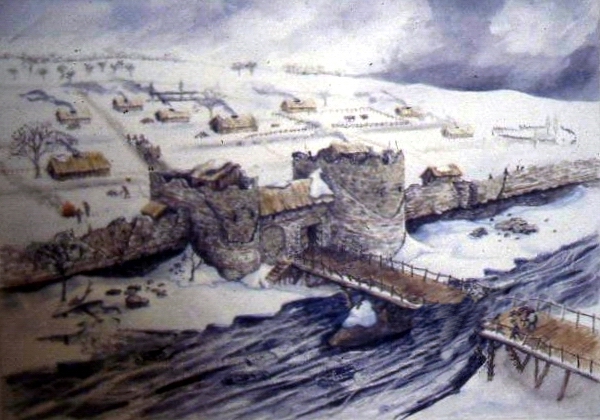
Following the Norman Invasion, the people of the North attacked William the Conqueror’s two new Castles, and destroyed them. In 1069 William spent Christmas in York and used it as his base to ‘harry’ the North one of the most devastating massacres Britain has seen. But York survived and eventually flourished as the bastion of the English Monarch’s power, and was an important factor in the rivalry between England and Scotland.
York did not become a powerhouse of the Industrial Revolution but retained a regional importance and attracted industries such as chocolate manufacturing, becoming the ‘Home of Chocolate’ hosting Rowntrees and Terry’s.
Our walk will take us around the Medieval Walls, to the Castle and the site of the Roman Fortress, through the streets, alleys and snickets to one of the great Churches of Great Britain, the York Minister.
ROMAN LONDON – A LITERARY & ARCHAEOLOGICAL WALK
Sunday 20th March 20/22 11.30 am Monument Underground Station
This is a walking tour features the amazing archaeological discoveries of Roman London, and looks at life in the provincial Roman capital of Londinium.
Our Guides will be Publius Ovidius Naso and Marcus Valerius Martialis who will be helped by Kevin Flude, former Museum of London Archaeologist, Museum Curator and Lecturer.
We disembark at the Roman Waterfront by the Roman Bridge, and then explore the lives of the citizens as we walk up to the site of the Roman Town Hall, and discuss Roman politics. We proceed through the streets of Roman London, with its vivid and cosmopolitan street life via the Temple of Mithras to finish with Bread and Circus at the Roman Amphitheatre.
This is a London Walks Guided Walk. Look at their web site for a list of other of their amazing walks.
REVIEWS (from London Walks website) “Kevin, I just wanted to drop you a quick email to thank you ever so much for your archaeological tours of London! I am so thrilled to have stumbled upon your tours! I look forward to them more than you can imagine! They’re the best 2 hours of my week! 🙂 Best, Sue
The London Spring Equinox Walk Sunday 20 March 2022 2.30 pm Tower Hill Underground
Tailored to each season we explore London’s History through its celebrations, festivals, calendars and almanacs
As the Sun and Moon move around our skies we look at how Londoners organised and celebrated their year throughout history.
The tour is led by Kevin Flude, a former archaeologist at the Museum of London, Curator and Lecturer
One of the most popular forms of publication in London was the Almanac. It was full of seasonal advice, of prophecy, traditional wisdom, and important events past and future. Different cultures, religions and institutions had their own methods of organisation and celebrations. We explore the varied calendars that ruled people’s lives from the prehistoric period to the present.
On the way we look at customs, and folklore of the Celts, Romans, Saxons, and into the Medieval and Modern period. We look at different calendars such as the Pagan year, the Egyptian year, the Roman, Christian, Jewish, Church and Financial years.
On the route we discover the people who lived in London and walk through fascinating areas with their deep histories. Each walk will be customised to fit the particular Solstice or Equinox they fall on.
This is a London Walks Guided Walk. Look at their web site for a list of other of their amazing walks
THE SPRING EQUINOX LONDON VIRTUAL TOUR Sunday 20 March 2022 6.30 pm
In the spirit of the old almanacs we take a seasonal look at London at the Equinox, its calendars, folklore and the beginning of Spring
The tour is led by Kevin Flude, a former archaeologist at the Museum of London, Curator and Lecturer
One of the most popular forms of publication in London was the Almanac. It was full of seasonal advice, of prophecy, traditional wisdom, and remembering important events to mark in the year. So we tour London to create our own Spring Equinox Almanac looking at the Equinox and the various calendars associated with the end of Winter and the beginning of Spring, from the prehistoric period to the present.
On the way we look at customs of the Celts, Romans, Saxons, and into the Medieval and Modern period. We look around the City of London in search of evidence of how the celestial bodies and the calendar affect our legal, financial, religious, educational, political, agricultural and human systems.
We look at different calendars such as the Pagan year, the Egyptian year, the Roman year, the Christian year, the Jewish year, as well as the various secular years, and explore how they began and how they relate to each other.
On the route we examine folk traditions & customs, spring & Easter Festivals and events. We find interesting and historic places in the City of London to link to our stories of the Equinox.
This is a London Walks Virtual Tour. . Look at their web site for a list of other of their amazing walks
Conwy View from the Castle – photo by Kevin Flude
A VIRTUAL TOUR THROUGH THE WHOLE ISLAND OF GREAT BRITAIN. NO. 2 CONWY
Monday 7th March 2022 7.00 pm
See the gateway to Snowdonia and its magnificent Medieval Castle, Town and Bridges
Borrowing my title from Daniel Defoe’s early chorography, my first circuit is from Chester to Edinburgh. Now on our second stop we are taking a virtual tour of the gateway to North Wales – the delightful town of Conwy.
For a small town Conwy has everything – an absolutely magnificent Medieval Castle, a City Wall that is still intact around the entire Circuit. Some of the great feats of bridge and tunnel engineering, and a pocket sized town containing historic buildings, nice pubs, and the ‘smallest house in Great Britain.’
It is not only picturesque but was a settlement of enormous strategic importance in the invasions by the Romans and the English. And to finish the tour we will take a small excursion into Snowdonia to see what it guarded.
A VIRTUAL TOUR THROUGH THE WHOLE ISLAND OF GREAT BRITAIN. NO. 1 – CHESTER
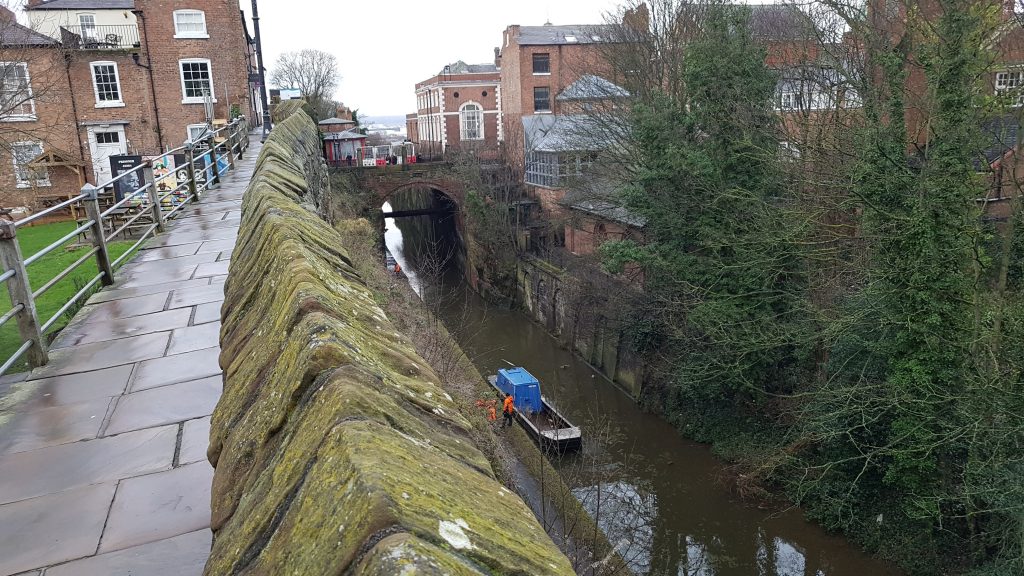
Chester City Wall and the Shropshire Union Canal
Sunday 20th February 2022 7.30pm
A Virtual Walk Through Chester from Amphitheatre to Canal
Borrowing my title from Daniel Defoe’s early chorography, my first Circuit is from Chester to Edinburgh. We begin with a virtual walk around Chester.
Chester is one of Britain’s best known historic Cities. One of those places where the history of Britain can be told in one town. It was founded as a Legionary Fortress when the Romans sought to expand their imperium into the North and West of Britain. It remained an important military town with a thriving port. It is not clear exactly what happened in the centuries following the Roman withdrawal from Britannia but it retained its importance in the Saxon and Medieval periods before being besieged by the King’s Forces in the English Civil War.
The Industrial Revolution largely by-passed Chester but helped bring on the decline of its traditional industries, and soon it was relegated to a secondary status to Liverpool and Manchester in the North West. However, this meant the City retained much of its historic character, and we will enjoy the surviving Wall circuit, the timber framed shops and houses as we walk from the Station to the Amphitheatre, through the Roman town and into the Medieval Cathedral, before leaving by the Canal.
THE ARCHAEOLOGY OF LONDON BRIDGE, SOUTHWARK & BANKSIDE GUIDED WALK
London in the 5th Century Reconstruction painting.
Sunday 6 February 2022 2.30pm Monument Underground
The walk explores the area around the Bridge and London Bridge’s history
London Bridge is not only an iconic part of London’s history but it is also the key to much of the History of London. On this walk we explore the area around the Bridge.
On the north side we explore evidence for the origins of the Bridge, and the early Roman Port of London. We then cross the Bridge discovering the many rebuilds and the wonder of the famous London Bridge with all its houses along it. On the south side we explore the Historic Borough of Southwark which, archaeology has revealed, is very much more than just the first suburb of London.
We range from the prehistoric finds in the River, to the excavation of the Theatres of Shakespeare’s London on Bankside.
This is a London Walks Guided Walk. Look at their web site for a list of other of their amazing walks. The walk needs to be booked via this London Walk link. To Book:
London Bridge
THE ARCHAEOLOGY OF LONDON BRIDGE, SOUTHWARK & BANKSIDE VIRTUAL WALK
MYTHS, LEGENDS, & CELTIC FESTIVALS LONDON GUIDED WALK
Sunday30th January 2022 2.30pm Tower Hill Underground
The walk tells the story of London’s myths and legends and the Celtic Festival of Imbolc.
The guided walk is led by Kevin Flude, a former archaeologist at the Museum of London, who has an interest both in the archaeological evidence as well as the myths and legends of London’s origin.
The walk is one of a series about London’s Myths and Legends which take place on or around one of the significant festivals of the Celtic calendar. On this tour we celebrate Imbolc, the festival half way between the winter and the Summer Solstice that celebrates the first signs of the coming of spring. The day is also dedicated to St Bridget, or St Bride.
The walk begins with the tale of London’s legendary origins in the Bronze Age by an exiled Trojan called Brutus. Stories of Bladud, Bellinus, Bran and Arthur will be interspersed with how they fit in with archaeological discoveries. As we explore the City we also look at evidence for ‘Celtic’ origins of London and how Imbolc may have been celebrated in early London.
The route starts at Tower Hill, then down to the River Thames at Billingsgate, to London Bridge and Southwark Cathedral, to the Roman Forum at the top of Cornhill, into the valley of the River Walbrook, passed the Temple of Mithras, along Cheapside to the Roman Amphitheatre, and finishing up at St Brides.
This is a London Walks Walk. Look at their web site for a list of other of their amazing walks.
MYTHS, LEGENDS, & CELTIC FESTIVALS LONDON VIRTUAL WALK
Sunday 30th January 2022 7.30pm
The virtual version of the walk starts at Tower Hill, then down to the River Thames at Billingsgate, to London Bridge and Southwark Cathedral, to the Roman Forum at the top of Cornhill, into the valley of the River Walbrook, passed the Temple of Mithras, along Cheapside to the Roman Amphitheatre, and finishing up at St Brides.This is a London Walks Virtual Walk. Look at their web site for a list of other of their amazing walks.
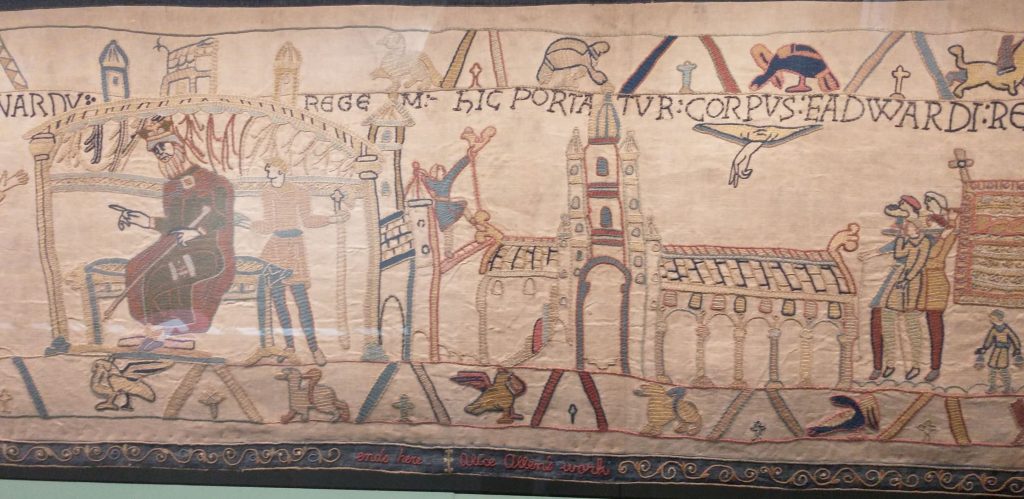
Westminster & Edward the Confessor on Reading Museum’s copy of the Bayeaux Tapestry
Virtual Zoom Walk 7.30pm on Sunday 9th January 2022
The Archaeological Walk that explores London at the end of the Saxon period and at the beginning of the Norman.
The Norman Conquest of 1066 defines Britain in a way unmatched by any other event. And on this walk we explore the London that William conquered and how he changed England for all time.
London was England’s most important City but not yet the capital. It was crucial to William in his attempt to conquer the realm but he failed to capture London. He failed to push his army across the heavily defended London Bridge after the defeat of the English King at the Battle of Hastings.
The future of the country was in the balance as he sought to find a way across the river and to persuade the English that resistance was hopeless. Eventually, the English leaders sued for peace, and William was crowned at the newly built Westminster Abbey. But as the Saxons acclaimed the new King, his guards became alarmed and slaughtered the Saxons.
He then set about making sure he kept hold of his new Kingdom and its most important City. He and his sons not only transformed London that dealt a death blow to Anglo-Saxon culture.
This walks begins at Westminster Abbey, explores Late Saxon and Norman London and ends at the Tower of London
Walk is by Kevin Flude, former Archaeologist at the Museum of London
RING IN THE NEW YEAR VIRTUAL WALK
Druids at All Hallows, by the Tower
On this walk we look at how London has celebrated the New Year over the past 2000 years, and using our crystal ball look forward to what will befall London in 2022
Sunday January 2nd 2022 7.30pm
We look at London’s past to see where and how the Solstice might be celebrated. We also explore the different New Years we use and their associated Calendars – the Pagan year, the Christian year, the Roman year, the Jewish year, the Financial year, the Academic year and we reveal how these began. We look at folk traditions, Medieval Christmas Festivals, Boy Bishops, Distaff Sunday and Plough Monday, and other New Year London tradition and folklore.
At the end we use ancient methods to divine what is in store for us in 2022.
The walk finds interesting and historic places in the City of London to link to our stories of Past New Year’s Days. We begin, virtually, at Barbican Underground and continue to the Museum of London, the Roman Fort; Noble Street, Goldsmiths Hall, Foster Lane, St Pauls, Dr Commons, St. Nicholas Colechurch and on towards the River.
I have began to prepare my next set of tours both virtual and real. But here are the first two virtual tours, both with a seasonal theme.
The London Winter Solstice Virtual Tour
Wed, 21 Dec 2022 19:30
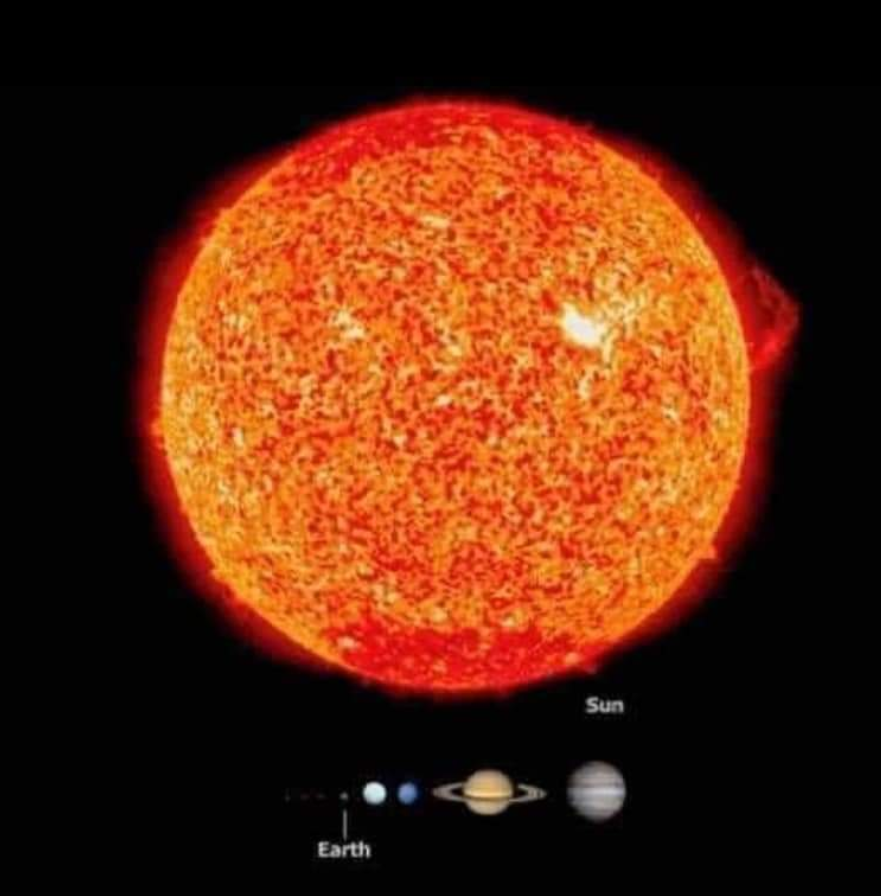
The Sun & the Solar System
We explore London’s History through its celebrations, festivals, calendars and almanacs of the Winter Solstice
Winter Solstice festivals have been a time of review, renewal and anticipation of the future from time immemorial. The Ancient Britons saw the Solstice as a symbol of a promise of renewal as the world entered bleak mid winter. The Roman season was presided over by Janus, a two headed God who looked both backwards and forwards, and Dickens based his second great Christmas Book on the renewal that the New Year encouraged.
We look at London’s past to see where and how the Solstice might be celebrated. We also explore the different Calendars – the Pagan year, the Christian year, the Roman year, the Jewish year, the Financial year, the Academic year and we reveal how these began. We look at folk traditions, Medieval Christmas Festivals, Boy Bishops, Distaff Sunday and Plough Monday, and other London winter traditions and folklore.
At the end we use ancient methods to divine what is in store for us in 2022.
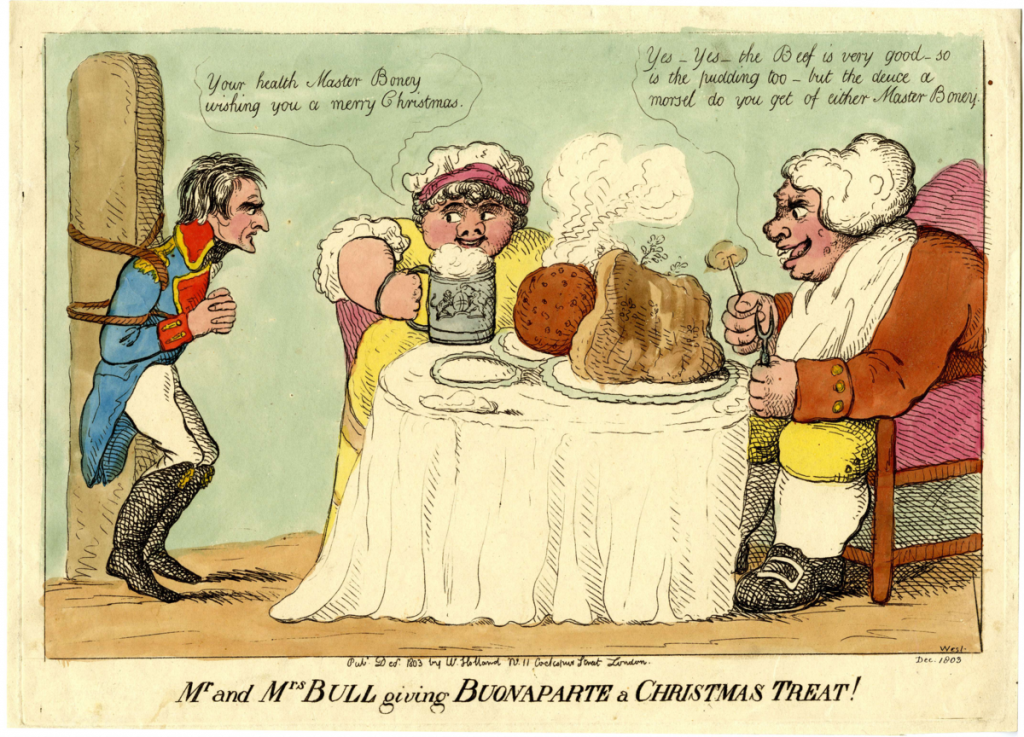
By William Holland 1803From ‘Old Christmas’ by Washington Irvingby Tjana Drndarski-via unsplash
Friday 23 December 2022 7.30pm
We look at how Jane Austen spent Christmas and at Georgian Christmas traditions and amusements.
“It is a truth universally acknowledged, that a Jane Austen devotee in possession of the good fortune of a couple of free hours must be in want of this virtual walk.”
This is a special walk, which looks at the traditions of Christmas during the Regency period and how Jane Austen might have celebrated it. It will give some background to Jane Austen’s life and her knowledge of London. We used her novels and her letters to find out what she might have done at Christmas, but also at how Christmas was kept in this period, and the range of ‘Curiosities, Amusements, Exhibitions, Public Establishments, and Remarkable Objects in and near London available to enjoy.
This is a London Walks Guided Walk by Kevin Flude, Museum Curator and Lecturer.
Review: ‘Thanks, again, Kevin. These talks are magnificent!’
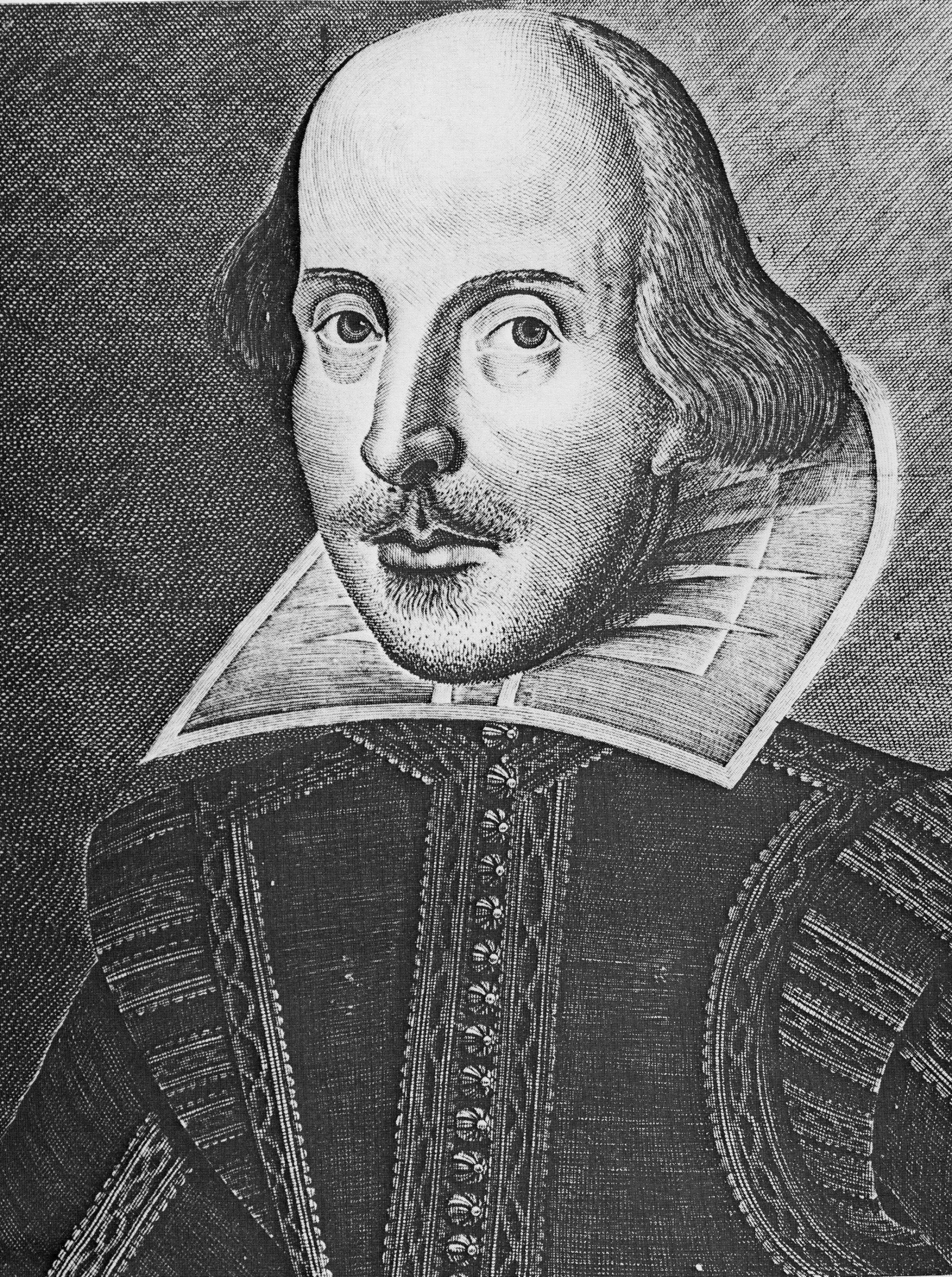
It’s not a ‘new’ portrait as it has been known about for many years, but it is in the news as it is about to be sold. Evidence for it being our main man, include:
In 1608 Shakespeare was 44 (as inscribed on the top of the painting)
He is balding
He has a long nose
He has a fold of the skin to the left of his left eye
The two had convincing connections (people and places) in common
The Peake family printed the Droeshout Portrait used in the First Folio
Testing shows it is not a forgery
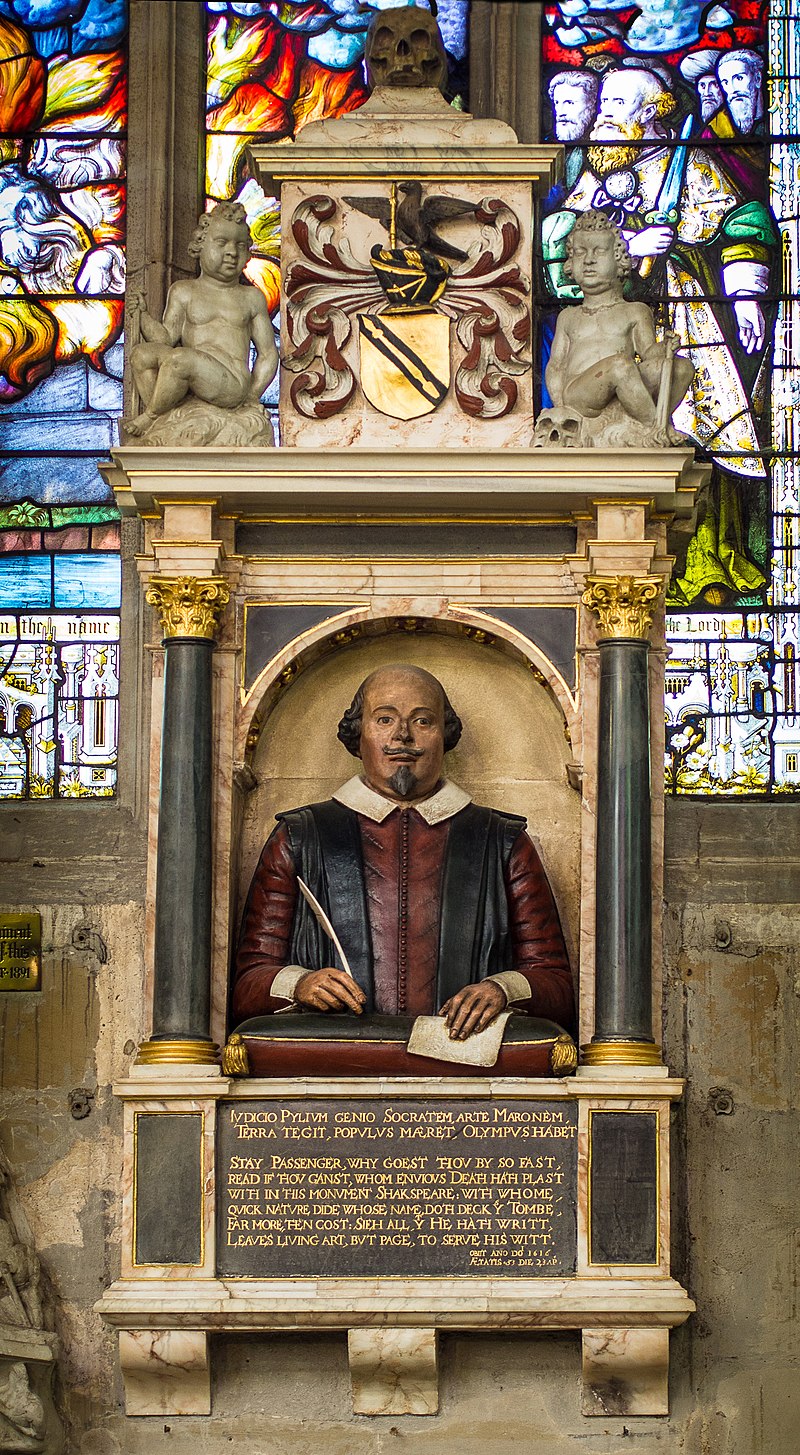
However, it doesn’t really look like the two Shakespeare portraits we can trust to be him (the Droeshout and the bust on his memorial in Holy Trinity Stratford where he was buried). But if someone pays £10m maybe we will change our minds?
Robert Peake Portrait of a Man aged 44 in 1608William Shakespeare by Martin Droeshout from the 1st FolioWilliam Shakespeare’s Memorial Stratford-upon-AvonLeft to right, Peake, Droeshout, Memorial
In 2018 the National Museum of Brazil in Rio de Janeiro suffered a devastating fire. The irreparable loss of its colonial period collection allowed the space for a new focus for the museum creating a display put together in cooperation with indigenous people.
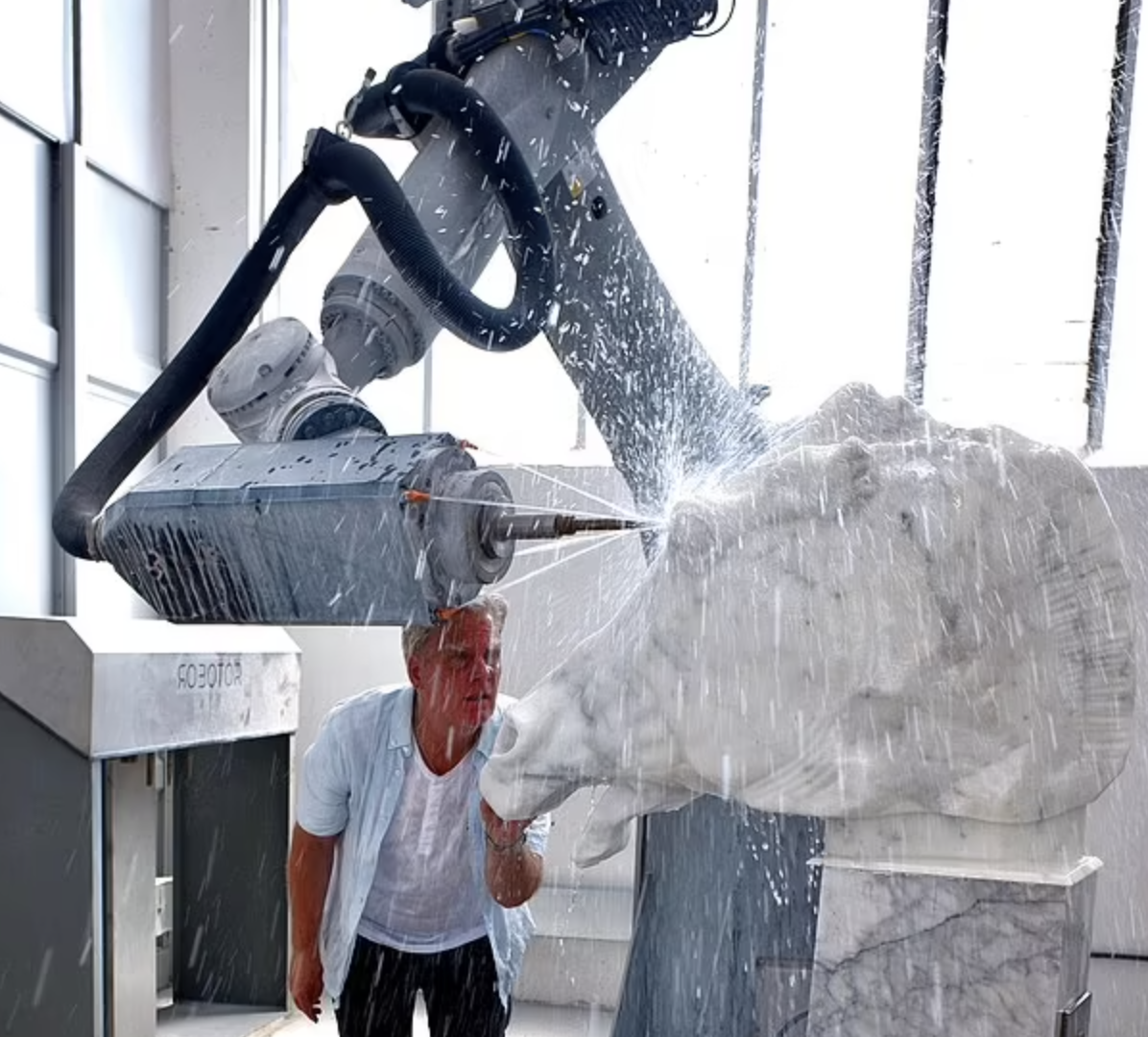
This is a really interesting story because the scans for the replica were made in a guerilla intervention. The BM did not give permission for it, and the Oxford-based Institute for Digital Archaeology (IDA) undertook the scanning surreptitiously. Salon (see below) says ‘Roger Michel, the founder of the Institute and Alexy Karenowska, the Institute’s Director of Technology, used Lidar cameras to generate an accurate scan.’
I’ve heard it said that the robot created an absolutely faithful replica.
‘The sculptures are accurate to a fraction of a millimetre.’
Photo from Salon: The Society of Antiquaries of London Online Newsletter (see below) mage credits: Roger Michel watches as the head is carved, Institute for Digital Archaeology (IDA)
So, critics of the BM can then say ‘Why not return the original if you have faithful replicas?’
Well, yes but it is still a replica (albeit made of the same Pentelic Marble as the original) and museums are testament to the power of the original. I can see a great reproduction of the Mona Lisa anytime, but it didn’t stop me going to the Louvre to stand with the hordes to see the original. Further, the robot produced sculpture was then finished off with extensive work by a team of humans.
The issue has never been about the quality of a possible copy to replace the returned originals. It is about who owns the originals.
However, this is still a coup of propaganda that has created one more chip in the defensive wall the BM has put up around the issue.
Is the question that Terry Cook asked me, and this is my answer.
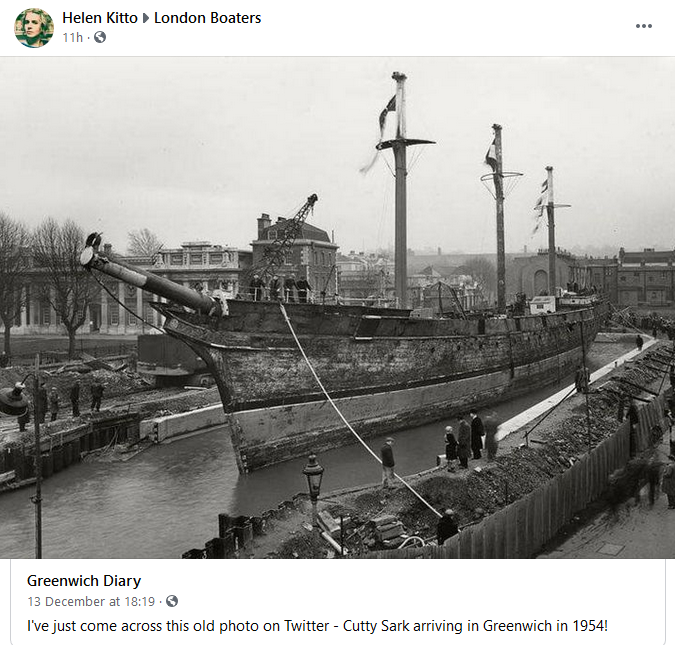
Image of the Cutty Sark (from Facebook)
So the Cutty Sark is twice famous. Firstly as one of the first Tea Clippers and secondly, on account of the Witch nicknamed Cutty Sark (short skirt) in Tam O’Shanter, one of Robert Burns’ greatest poems. written in 1791. And everyone knows of Robert Burns, Scotland’s national poet. Burns night has become world famous for anyone interested in Scotland.
The rest of this content has been reposted to March 27th
So, my Halloween walks depend heavily on almanacs for at least some of their content. I explain almanacs on another page, but they were a way of helping people keep track of the year, both reviewing past events, and looking forward to future ones.
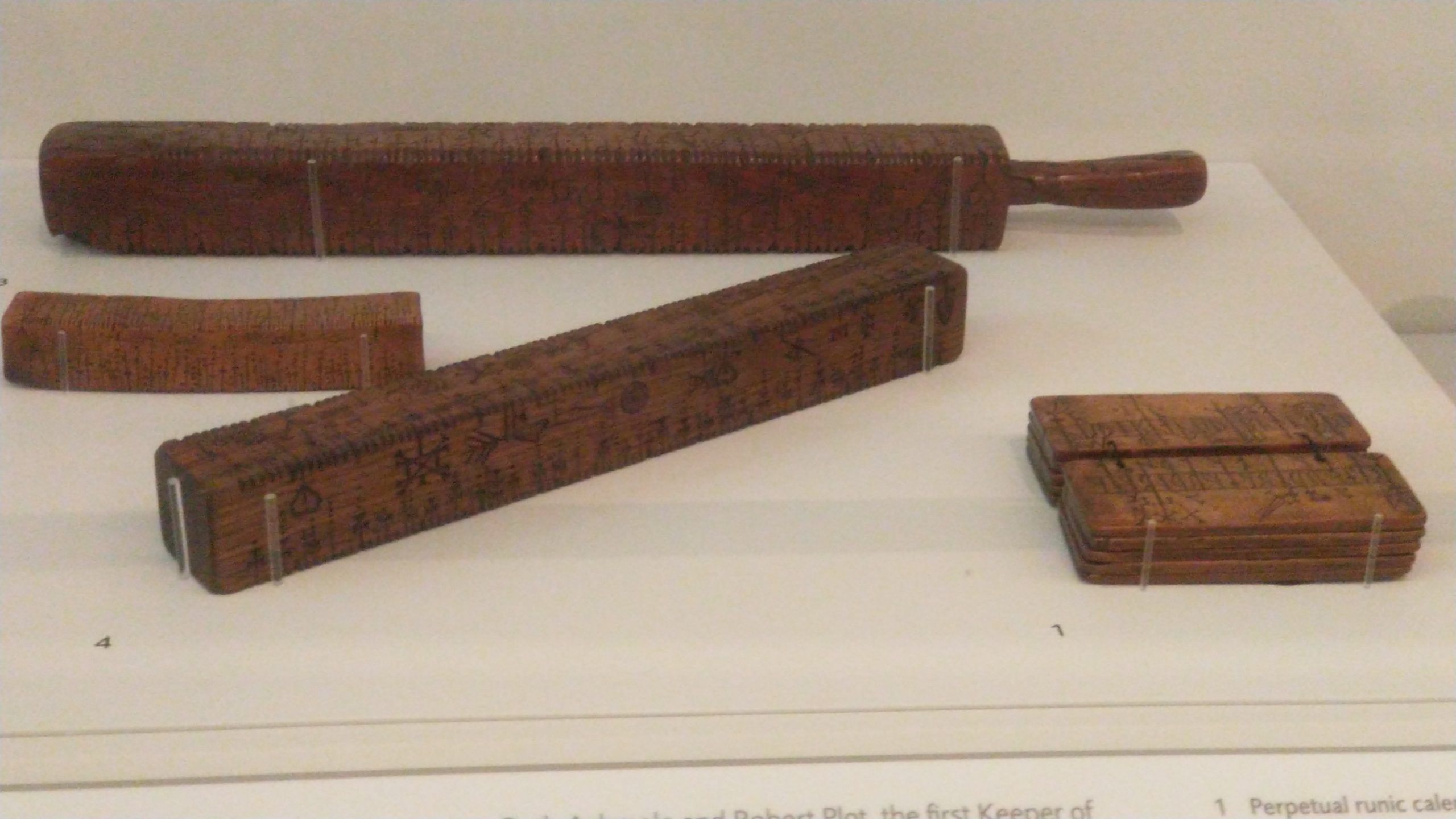
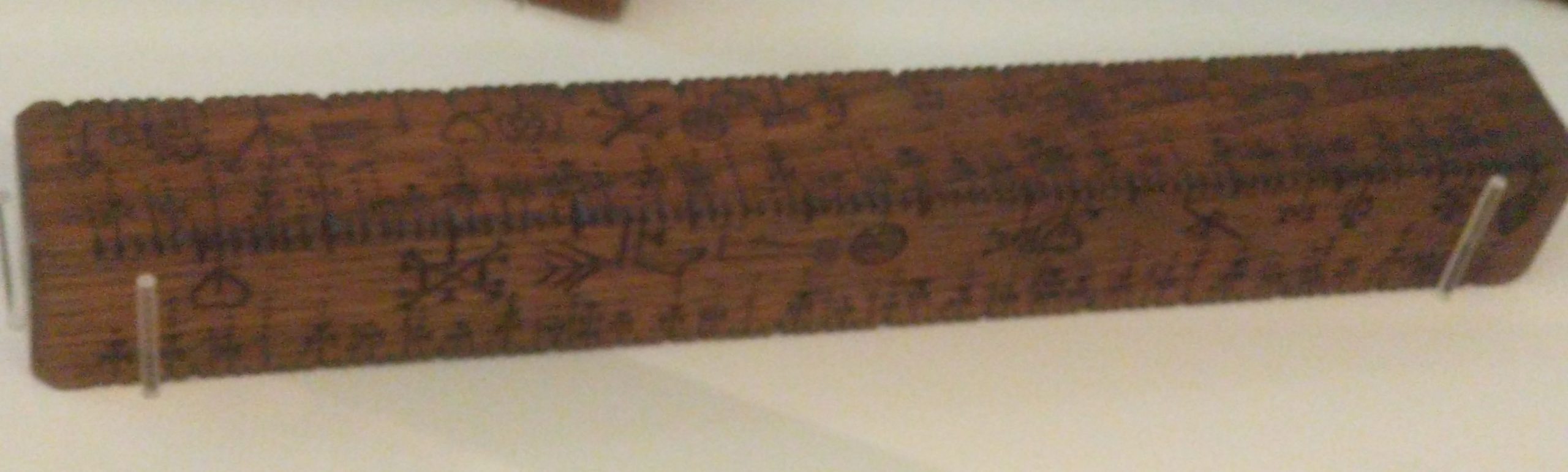
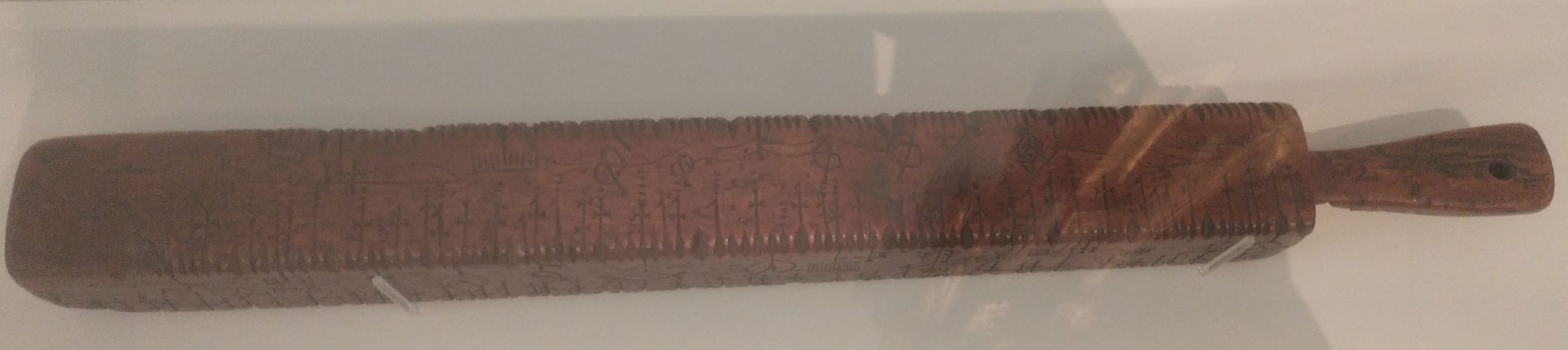
One third of books published in London in the Stuart period were almanacs, but if you could not read or did not have the money you could buy or make a cog almanac.
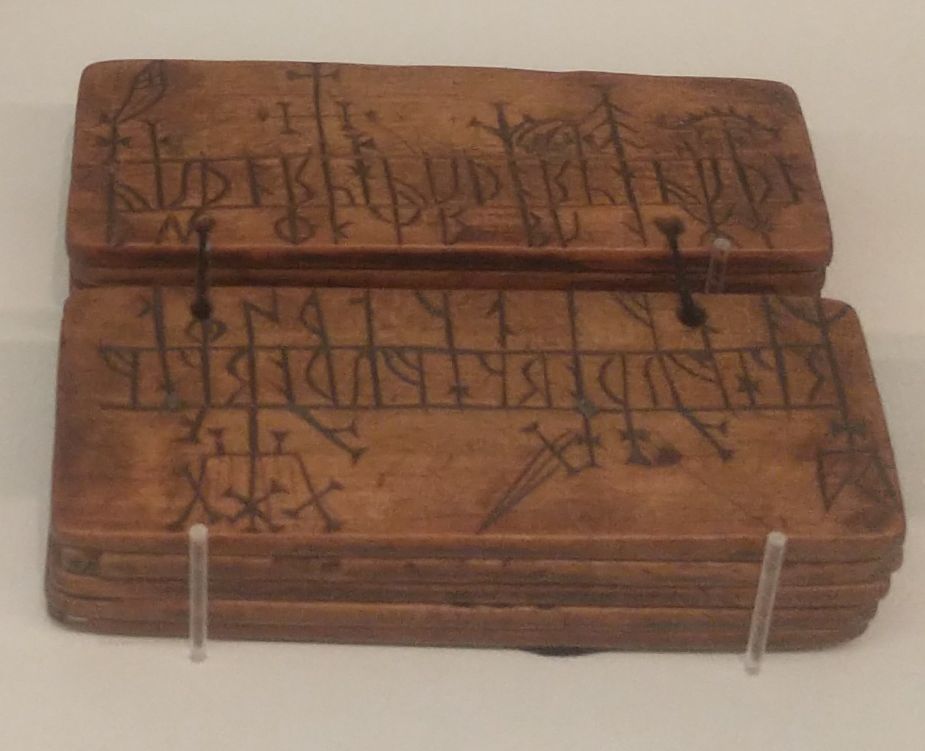
British Museum, 17th CenturyAshmolean MuseumAshmolean MuseumAshmolean MuseumAshmolean MuseumClog Almanacs
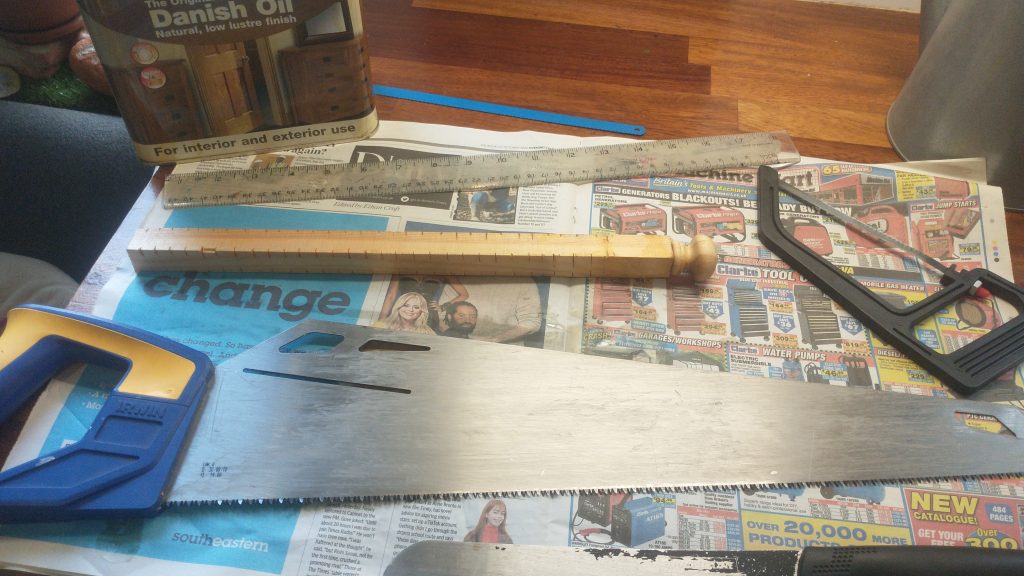
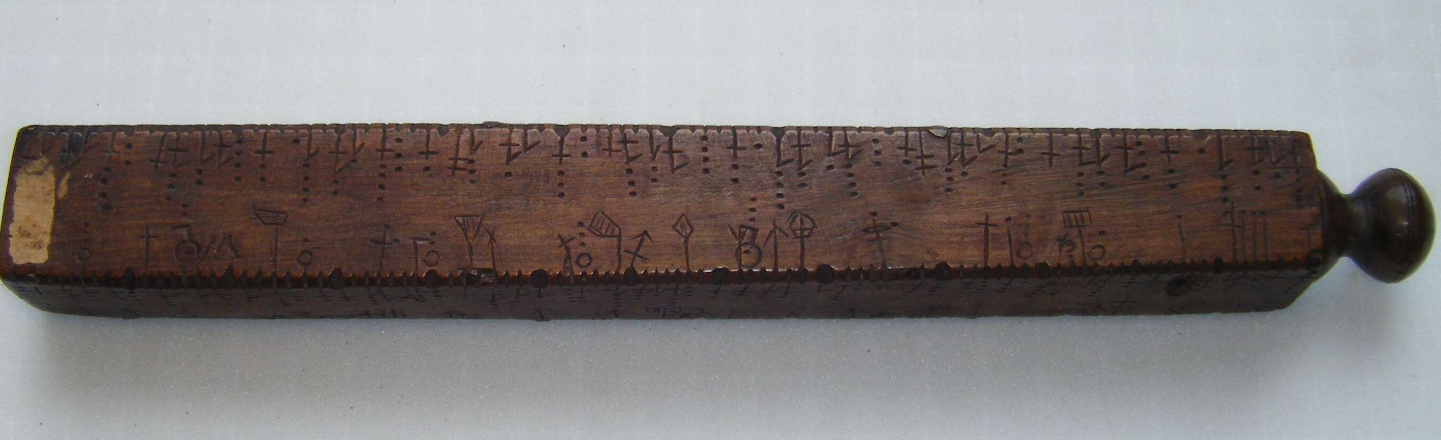
So, I was printing out some images to show my walkers and thought why not make one? So I did.
Home made Clog Almanac (not yet finished!)
Bit of wood, saw off 35cms. Each edge needs to represent a quarter of the year, so each centimetre mark represents 3 days, and one day extra 30 * 3 +! = 91 days per quarter. Use bread knife or hacksaw to mark the days off. Buy wooden drawer knob and double ended screw, fit to end of the piece of wood, stain or vanish the wood.
Then I need to find out what all the symbols mean, but they represent notable days like Saint’s Days (Michaelmas, Martinmas, Candlemas etc. , equinoxes, solstices, Christmas, Easter etc. etc..
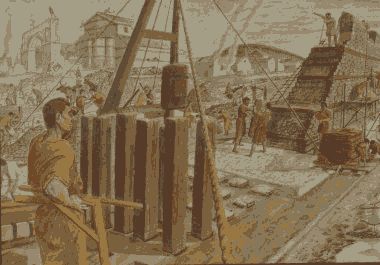
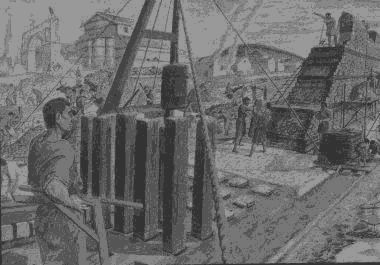
Reconstruction View of Roman Riverside Wall being built
Saturday 30 October 20/22 11.30 am Monument Underground Station
This is a walking tour features the amazing archaeological discoveries of Roman London, and looks at life in the provincial Roman capital of Londinium.