Yesterday was Almanac of the Past Misinformation Day! I have just found out that you received a post which was not only empty of content but also wrong! Details of that below. But, here are a couple of interesting archaeology projects I have been planning to post about.
Lost Books from the Ancient World
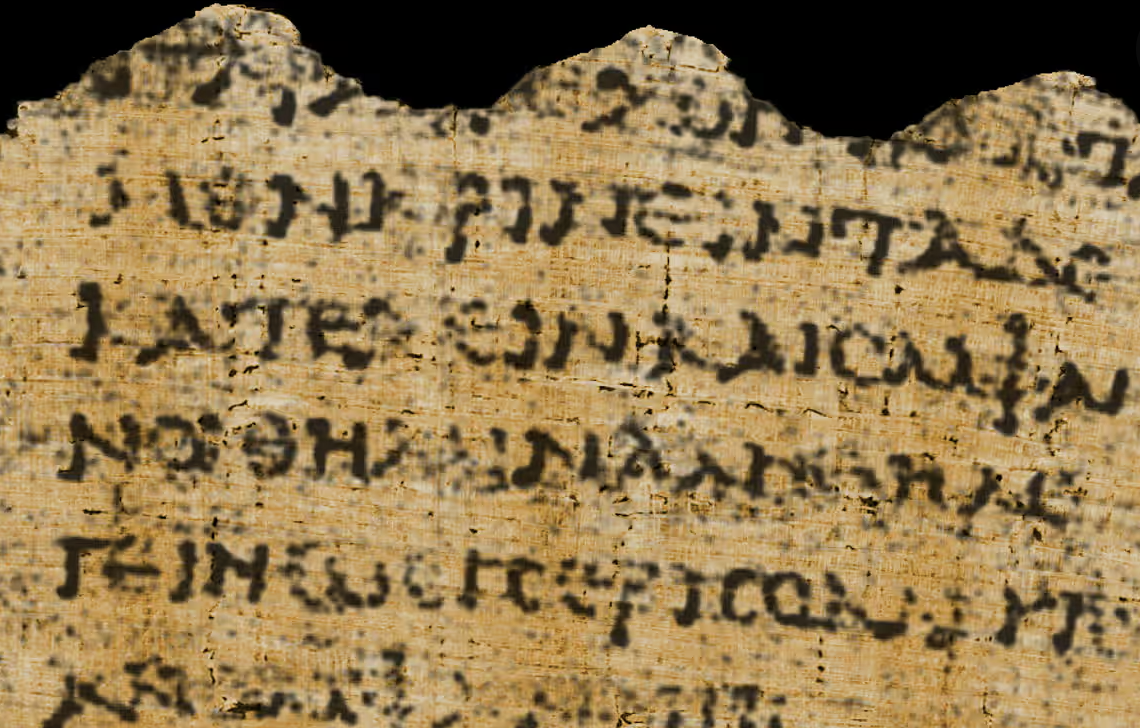
What has excited me most is the news that burnt scrolls from Heraculeum have been digitally unrolled. Then ‘read’ using AI. The scroll was in the library of Julius Caeser’s father in law it is thought. There are over 1,000 carbonised scrolls found in 1750 in the Villa of the Papyri. And this one reveals details of Plato’s last hours. But more than that, the technology opens the possibility of other lost books being discovered. Of the ‘known unknowns’ I would like to see are the lost history books of Tacitus. But perhaps the ‘unknown unknowns’ are even more exciting. What might we find out?
Here is an excellent introduction to the discoveries:
Cerne Abbas Giant
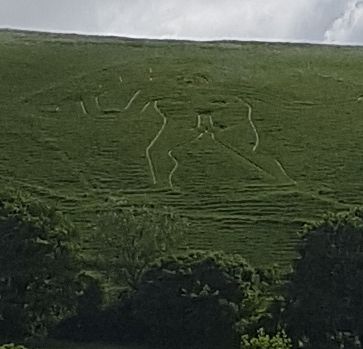
The giant is one of the icons of Hardy’s Dorchester. It is ‘drawn’ or sculpted by cutting the turf to reveal the white chalk below. Chalk Cut figures appear particularly in the South West. The Vale of the White Horse chalk cut figures has been dated to the Late Bronze Age. Most people thought the Cerne Abbas Giant was in the Romano-Celtic tradition so was either pre-Roman, or perhaps Hercules and Roman.
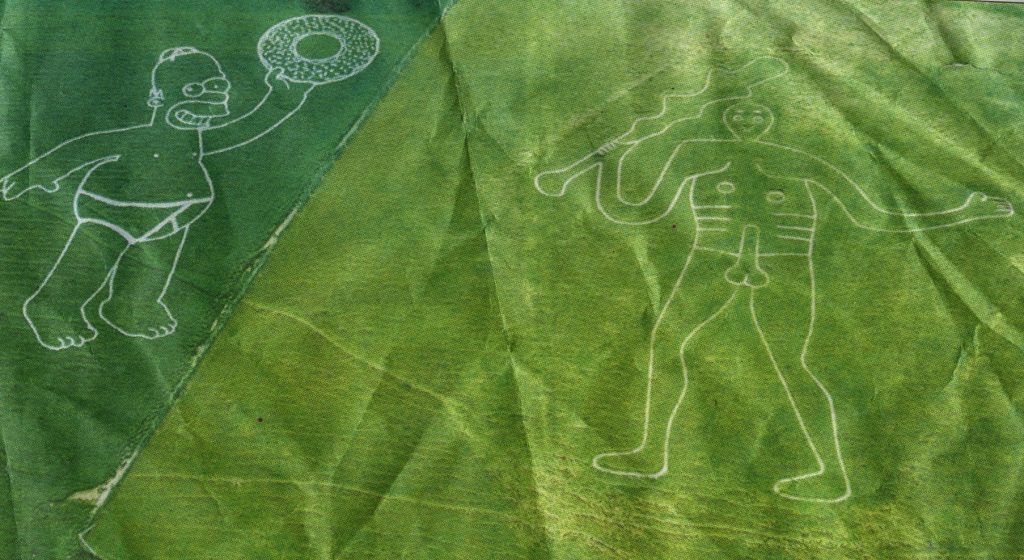
Some dissenters believed the lack of references to the Giant showed that it could not have been cut until the 17th Century. Some even thought it might be a ‘cartoon’ of Oliver Cromwell!
How we laughed!
The National Trust embarked on a project to get the Giant properly dated. They used Optically Stimulated Luminescence (OSL) dating which had also been used on the White Horse. But the results came back were shocking. It appears to have been cut in the Late Saxon period.
I do admit to a certain amount of scepticism. The art style is similar to British Art of the Iron Age, part of the Celtic Art tradition. Also, how reliable is OSL dating? The process depends on taking soil samples from the soil nearest the chalk, and OSL measures the time since the soil was last exposed to light. It’s a relatively new technology although based on Thermoluminescence dating of pottery which has been around since the 1970s. There was also some corroboration in the form of snails which were not indigenous to the UK?. So a date of 700-1100AD is suggested. And I have nothing other than a gut reaction to the date they propose. Maybe I’m just disappointed by a Saxon date as I have no way of understanding the context.
https://www.nationaltrust.org.uk/visit/dorset/cerne-giant/history-of-the-cerne-giant
Here is a cartoon I really like:
Not the Archaeology Day but the Festival of Archaeology?
So, yesterday was not Archaeology Day. But it was last year and run on February 10th by the Council for British Archaeology. This year (2025) they are running their normal Festival of Archaeology from the 19th July to the 3rd of August. It is nationwide, and they have numerous local events which you can check out on their website here.
So how did this happen? I must have seen a reference to an archaeology Day on February 10th, assumed it would be an annual event. So, I added a ‘stub’ post to remind me about it. These, normally are stored in the ‘drafts’ folder, which I will then develop and post. But for some reason, this one got in the ‘Scheduled Posts’ Folder. And as I was working flat out preparing my ‘Jane Austen’s Bath’ Virtual Tour, I did not spot it. So, it was automatically posted. (The VT went very well, thank you very much).
Today, I looked up ‘Archaeology Day 10th February’ and found my post was the number one google source. In normal circumstances, this would be a matter of chest beating. I have been putting significant effort into improving my ‘SEO’ (search engine optimisation). Sadly, I got to the top of Google only because there are only two posts referring to an Archaeology Day on the 10th of February. Mine and a Council of British Archaeology, post who ran the event in York.
So, today is the Not Archaeology Day.
First published on February 10th 2025, and republished on February 11th 2025, text copied to Gemini Post on February 10th, 2026