Almost ‘one in three women have been subjected to physical and/or sexual violence at least once in their life.’ says the UN on its page Ending Violence Against Women Day.
In writing my Almanac of the Past, I have been struck by how violent are most of the stories of the Saints of the early Catholic Church. At the bottom of this post, you will find an essay touching upon this thorny subject. And click here for research on violence against women. Their results are not good news countries that speak English. South Africa is the worst, the USA 7th, Australia 11th, UK 12th, and New Zealand 15th. They admit the figures are difficult to interpret as what is being counted is reported crimes. It is likely that the worst countries are those where women do not feel free to report sexual violence.
Today is St Catherine of Alexandria’s Day, which makes an appropriate Saint for the UN Day. So I have updated this very interesting story and republished it today. Have a read.
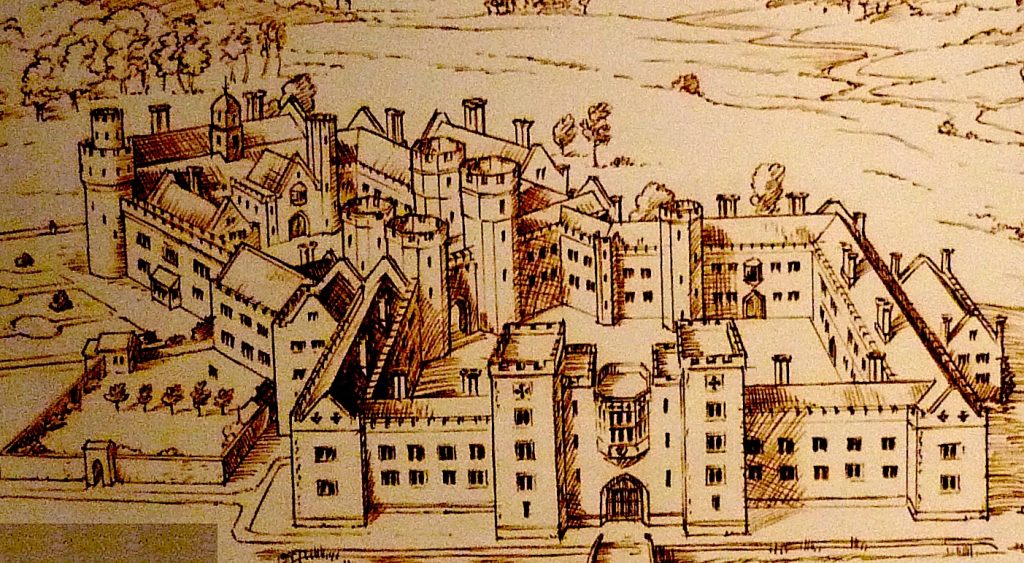
I was interested in this site because it was one of the many palaces owned by Henry VIII, and it began as a moated manor house before a transition into a small red brick courtyarded Palace, as seen above. Henry had, if my memory serves me well, approximately 57 Palaces and Manor Houses. 16 in the London area and 11 along the River Thames
But what I really liked when I visited the website was the charm of this lovely video by the Enfield Archaeology Society. Now those who know the wonderful TV Sitcom called the ‘Detectorists’ starring Toby Jones, Mackenzie Crook, Diana Rigg and others, will recognise the styling of the amateur archaeologists – all looking like rumpled would be Indiana Jones’s! Very English.
I have revised and updated three fascinating posts!
The first on the legacy of the Anglo-Saxon princess who changed Scotland when she became Queen.
The second is on the joy the Accession of Queen Elizabeth 1 gave to Protestants, with a description of the martyrdom of Thomas Tomkins of Shoreditch, London.
Almanacs and household guides of the 16th and 17th Century provide a list of seasonal things to do. These posts I have revised and reposted for your updated enjoyment. If you have to choose one, I suggest either the Old Parr post or have a look at the one on exercise, which will give you an excellent idea of early ideas of exercise.
Recent discoveries from Pompeii are being reported in a timely fashion on an interesting website – one of the recent posts is about the discovery of a Roman Electoral Poster. Please enjoy the read! electoral-inscriptions-discovered-in-pompeii
Below, I enclose a short section of my book ‘In Their Own Words – A Literary Companion To The Origins Of London‘ on Roman Elections, which might be of interest. But first, I have updated and republished my Almanac of the Past Blog posts for November 4th and November 5th, which you can see my following these links:
Extract from ‘In Their Own Words – A Literary Companion To The Origins Of London‘ about Roman Local Politics.
The forum in a Roman town was the central meeting place, used for offices, shops, market, meetings and political elections. Inscriptions show that the Londinium forum was the home of the provincial assembly, and that local government in London continued down to the ward (vicus) level. Surviving political `posters’ and graffiti from Pompeii provides some idea of the concerns of the Roman citizens:
Neighbours! Vote L Status Receptus for duumvir. He is fine. Posted by Aemilius Celer Vicinus.
A Plague on any wretch who scrubs this out!
Vote for M Casellius Marcellus ,a good aedile. He will grant great Games!
Bruttius Balbus for duumvir. Genialis supports him. He will conserve the treasury.
Trebius for aedile! The barbers support him.
M.Cerrinius Vatia for aedile! All night drinkers back him. Vatia for aedile! The pick pockets back him!
Spend for the public welfare! Keep the rates down!
— John Morris,‘londinium’22
A duumvir was the chief magistrate of the town, the equivalent of the Consul in Rome, and he was helped by `junior’ magistrates including aediles. As magistrates, they were expected to fund public works and entertainments from their pocket, so they had to be independently wealthy or backed by wealthy interests.
In addition, a property qualification could be imposed. A surviving charter provides:
A councillor of Tarentum…shall possessa buildingwithin the borders of the territory of Tarentumthat shall beroofedwithno fewer than1,500tiles.
Voting was strictly controlled, with returning officers, supervision by independent witnesses, and ballot boxes.
In Their Own Words – A Literary Companion To The Origins Of London‘ D A Horizons, 2009. Kevin Flude
To buy Kindle version click here. To buy paperback click on the paypal link below or email kpflude AT anddidthosefeet.org.uk
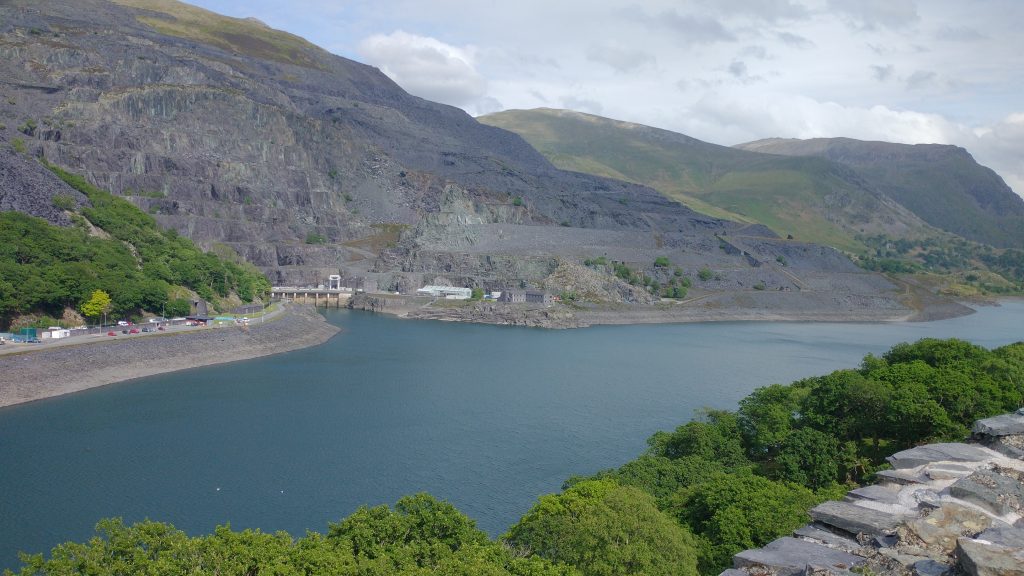
Electric Mountain Dinorwig Power Station, Llyn Peris (photo: K Flude)
I have revised the post on All Souls’ Day. If you follow the link you will read about ‘Souling’, Purgatory, and English, Mexican and Polish Customs for 2nd November.
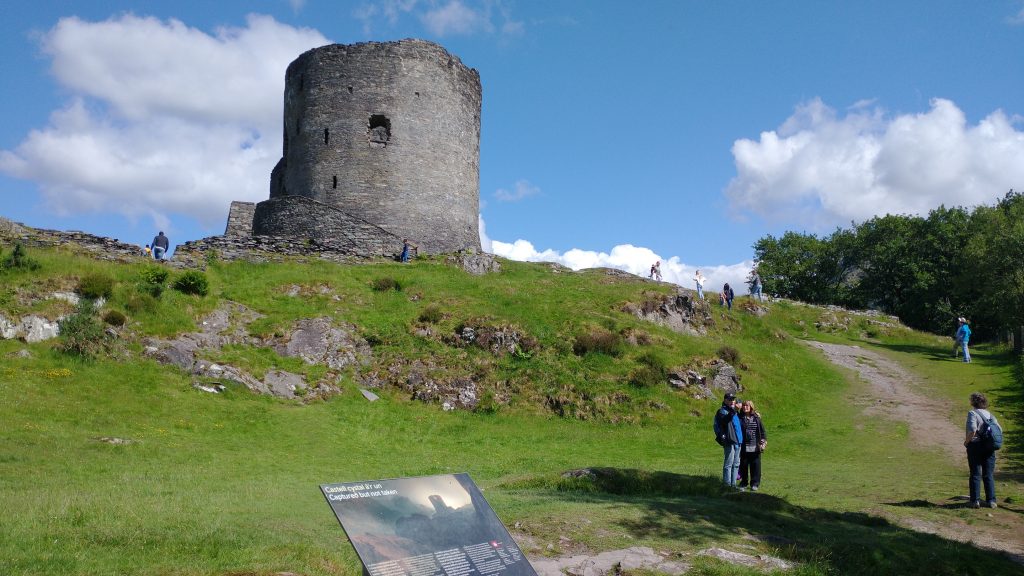
But this post is prompted by an interesting article in the Guardian about the Dinorwig Power Station in North Wales. It’s a place I visit regularly. The photograph is from a Medieval Welsh Castle, Dobaldarn Castle, near the National Slate Museum in the new Unesco World Heritage Site of the Slate Landscape of North West Wales. The photo above gives an idea of the majesty of the destructive power of quarrying for slate.
Dobaldarn Castle, North Wales (photo by K Flude)
The Power Station is remarkable. It is a huge cavern in the mountain. When the National Grid has a lot of cheap energy, water is pumped to the top, and when electricity is in short supply, the water runs turbines to provide extra power. It is, in effect, a giant battery, and what makes it even more worthy of a part in a James Bond film is that it has the capability of initiating a Black Start to the Grid. If some cosmic catastrophe turns off the entire grid, Dinorwig can restart the Grid.
The article in the Guardian has some great pictures of it and the text is very interesting. You might want to start reading a third of the way down the article which has a long preamble.